DMX512 Lighting Control Essentials
Introduction to DMX512
The Universal Language of Light
Stage lighting can transform a space. It sets the mood for a concert, focuses attention in a play, and adds energy to a dance floor. But how do all those different lights, from various manufacturers, work together in perfect sync? The answer is a protocol called DMX512.
Think of DMX512 as a universal language for stage lighting and effects equipment. Before it existed, lighting control was chaotic. Each brand of light had its own proprietary controller and cables. If you wanted a light from Company A and a fog machine from Company B, you needed two separate control systems. It was expensive, complicated, and limited creativity.
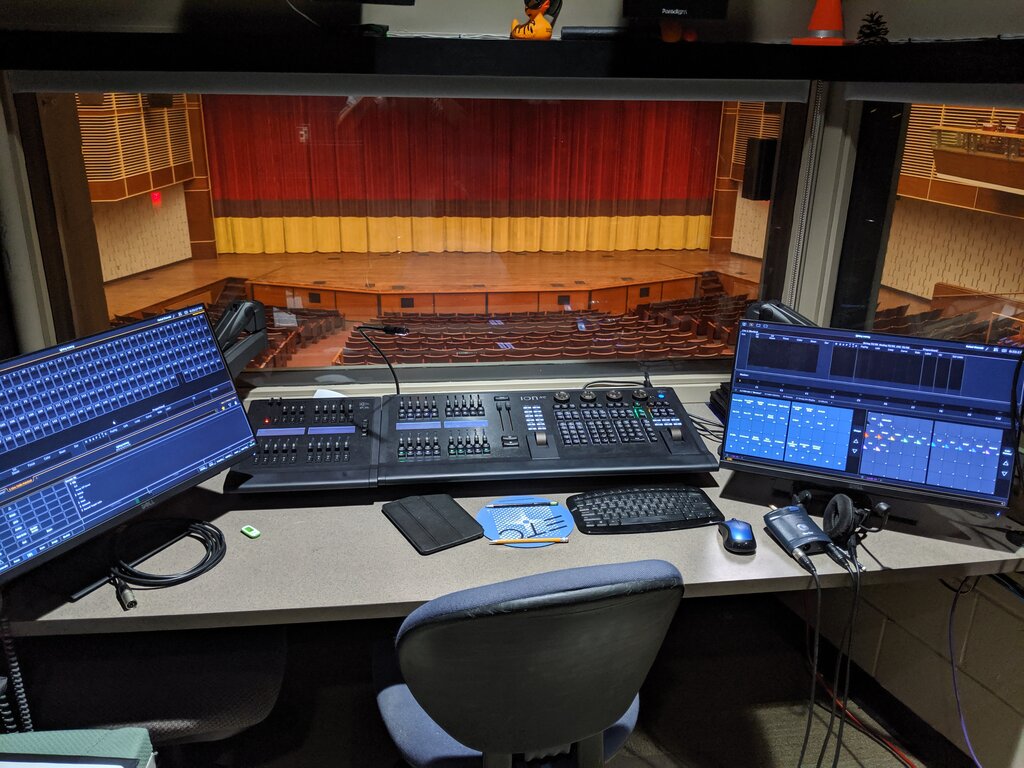
In 1986, the United States Institute for Theatre Technology (USITT) developed DMX512 to solve this problem. The goal was to create a standardized method for different pieces of equipment to communicate. The name itself offers a clue to how it works: Digital MultipleX with 512 pieces of information.
This standard revolutionized the industry. Suddenly, a single controller could operate a wide variety of fixtures, regardless of who made them. This opened up new creative possibilities for lighting designers and made professional lighting setups more accessible and affordable.
Channels and Universes
DMX works by sending instructions from a controller (like a lighting board) to various fixtures (lights, strobes, fog machines). These instructions are sent across a network of connected devices in what's called a "DMX universe."
A single DMX universe can carry 512 individual channels of information. Each channel is like a single slider on a mixing board, controlling one specific parameter of a fixture. A channel's value can range from 0 (off) to 255 (full intensity).
Channel
noun
A single stream of information within a DMX universe that controls one specific attribute of a fixture, such as color intensity, pan, or tilt.
A very simple fixture might only need one channel to control its brightness. A more complex moving-head light, however, could require dozens of channels to manage its color, pattern, focus, movement (pan and tilt), and other features.
Let's look at a basic RGB LED light. This fixture needs three channels to mix colors.
| Channel | Function | Value Range |
|---|---|---|
| 1 | Red Intensity | 0-255 |
| 2 | Green Intensity | 0-255 |
| 3 | Blue Intensity | 0-255 |
To create a purple color, a lighting designer would send a command from the controller to set channel 1 (Red) to a high value (like 200), channel 2 (Green) to a low value (like 10), and channel 3 (Blue) to a high value (like 200).
Addressing and Connections
For this system to work, each fixture must know which channels it should listen to. This is done by setting a "start address" on each device. If we set our RGB light's start address to 1, it will occupy channels 1, 2, and 3.
If we add a second identical light to our setup, we can't give it the same address, or it would just mimic the first one. Instead, we would set its start address to 4. It would then listen to channels 4 (its red), 5 (its green), and 6 (its blue). This allows for independent control of every light in the system.
The DMX signal is sent from the controller through a series of connected fixtures. The devices are linked in a daisy-chain fashion using 3-pin or 5-pin XLR cables. The signal goes from the controller's "DMX Out" port to the first fixture's "DMX In" port. Then, a cable runs from that fixture's "DMX Out" to the next fixture's "DMX In," and so on.
At the very end of the chain, it's important to plug in a DMX terminator. This small device prevents signal reflections that can cause the lights to flicker or behave erratically. It ensures the data is received cleanly by every fixture in the line.
Let's check your understanding of these core concepts.
What does the '512' in DMX512 refer to?
An RGB LED light requires 3 channels (Red, Green, Blue). If its start address is set to 25, which channels will it occupy?
By establishing a common standard, DMX512 unlocked the potential for complex and synchronized lighting designs that were once impossible.