DIY Solar Panel Assembly
Solar Energy Basics
Energy from the Sun
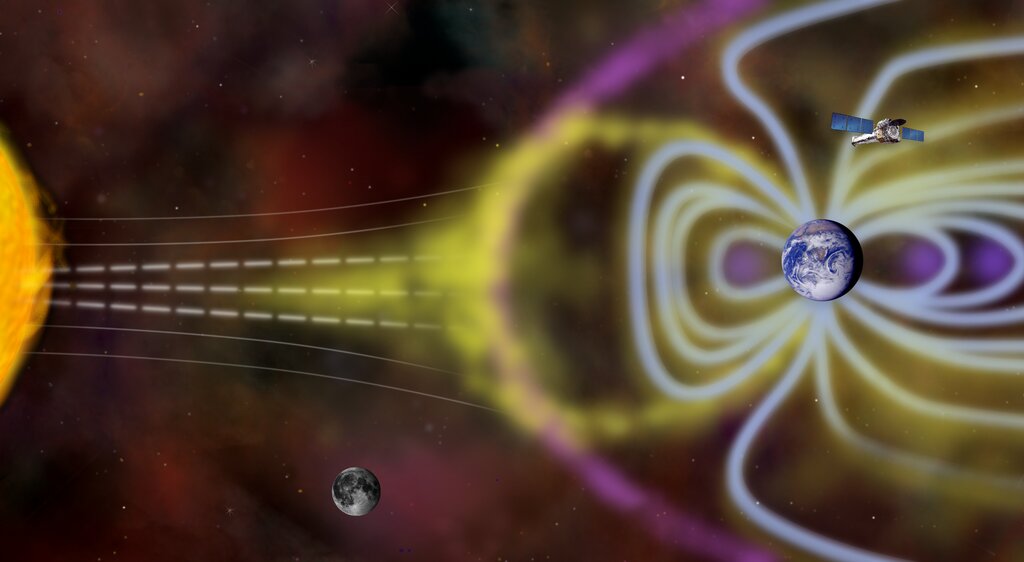
Sunlight might seem simple, but it's a powerful stream of energy. This energy travels from the sun in tiny packets called photons. Each photon carries a specific amount of energy, and together they make up the sunlight that reaches Earth.
Think of it like a showerhead spraying water. You feel the whole stream, but it's actually made of countless individual droplets. Sunlight is similar, composed of countless individual photons.
These photons aren't all the same. Some have more energy than others. The amount of energy determines the type of light, from invisible ultraviolet (UV) light that can cause sunburns, to the visible light we see, to the infrared light we feel as heat.
The Photovoltaic Effect
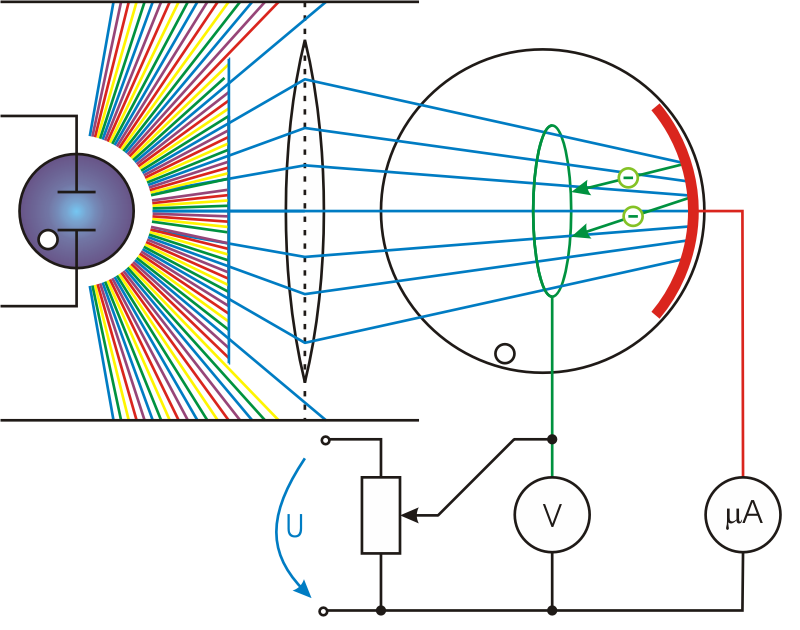
So how do we turn these photons into electricity? The magic happens through a process called the photovoltaic effect. It sounds complex, but the basic idea is straightforward: when a photon with enough energy strikes a specific type of material, it can knock an electron loose.
A freed electron moving in a specific direction is the basis of electric current. The photovoltaic effect is the first step in creating that flow.
Imagine a photon as a fast-moving cue ball. When it hits a billiard ball (an electron), it transfers its energy and sends the billiard ball flying. In a solar cell, this
They convert sunlight into electricity using the photovoltaic effect, where sunlight excites electrons in the solar cell’s semiconductor material, creating an electric current.
This creates an 'electron-hole pair.' The freed electron needs somewhere to go, and the spot it left behind is called a 'hole.' The key is to separate these two and guide the electrons to flow in one direction, creating an electric current we can use.
The Role of Semiconductors
Not just any material can produce the photovoltaic effect efficiently. We need special materials called semiconductors. As the name suggests, they're not great conductors like copper, nor are they great insulators like rubber. They're somewhere in between.
semiconductor
noun
A material which has an electrical conductivity value falling between that of a conductor, such as metallic copper, and an insulator, such as glass.
Silicon is the most common semiconductor used in solar panels. On its own, pure silicon is a neutral material. To make it useful, it's modified through a process called 'doping,' where tiny amounts of other elements are added.
Doping creates two types of silicon:
- n-type: Has a surplus of free electrons (negative charge).
- p-type: Has a deficit of electrons, creating 'holes' (positive charge).
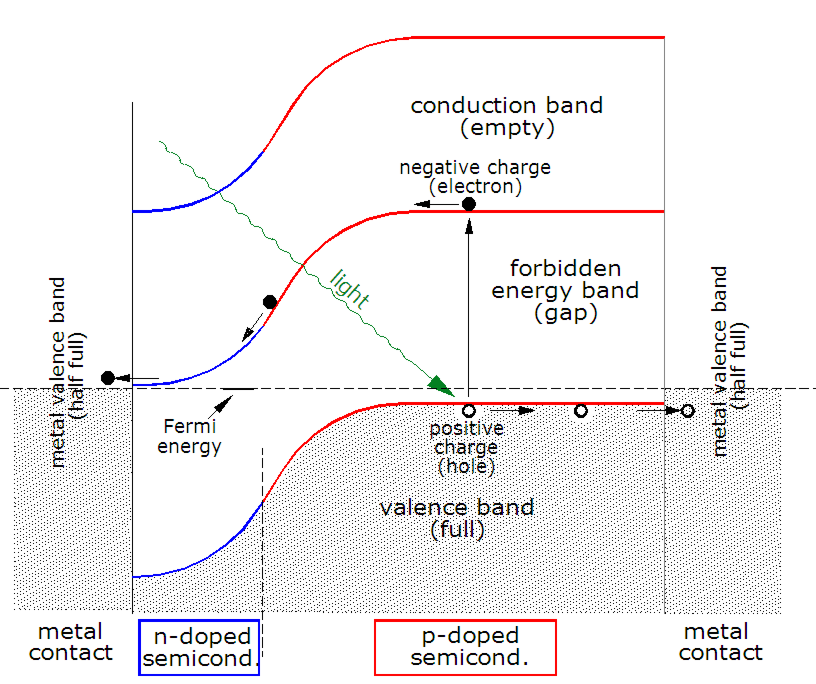
When a layer of n-type silicon is placed against a layer of p-type silicon, they form what's called a p-n junction. At this junction, the excess electrons from the n-type side rush to fill the holes on the p-type side. This movement creates a permanent electric field across the junction.
This built-in electric field is the secret to a solar cell. When a photon strikes the silicon and creates an electron-hole pair, the field acts like a slide, pushing the electron to the n-side and the hole to the p-side. This separation prevents them from simply recombining and forces the electrons to travel through an external circuit, generating a current.
By understanding photons, the photovoltaic effect, and the properties of semiconductors, we can see how sunlight is cleanly and silently converted into useful electricity.
What are the tiny packets of energy that travel from the sun and make up sunlight called?
What is the fundamental process that allows a solar cell to convert light into electricity?