DIY Cabin Construction Essentials
Site Selection and Preparation
Finding the Right Spot
Before you can even think about walls and a roof, you need to choose the perfect piece of land. The right site makes construction easier and ensures your cabin will last for generations. The wrong one can lead to constant problems with stability and water.

Start by looking at the terrain. A perfectly flat spot might seem ideal, but a gentle slope is often better because it helps water drain away naturally. Avoid steep slopes, which can be difficult and expensive to build on, and stay away from low-lying areas or depressions where water will collect every time it rains. A soggy foundation is a recipe for disaster.
Next, consider the soil itself. You want firm, stable ground that can support the weight of your cabin. Dig a small test pit, maybe a few feet deep, to see what you're working with. Ideally, you’ll find well-draining soil like a mix of sand, gravel, and clay. Be wary of soil that is pure clay (which holds water and can shift) or overly sandy (which might not be stable). Marshy, waterlogged ground is a definite red flag.
A simple way to check drainage is a percolation test. Dig a hole, fill it with water, and see how long it takes to drain. If the water is still sitting there hours later, you may have drainage issues.
Finally, think about logistics. How will you get building materials to your site? Is there an existing road, or will you need to clear a path? The more remote the location, the more challenging this becomes. Also, consider utilities. Will you connect to the grid for electricity and water, or are you planning an off-grid system? Knowing this upfront helps narrow down your options significantly. Proximity to a well or the electrical grid can save you thousands of dollars.
Prepping the Ground
Once you've chosen your site, it's time to get it ready for construction. This stage is all about creating a clean, stable, and dry base for your cabin.
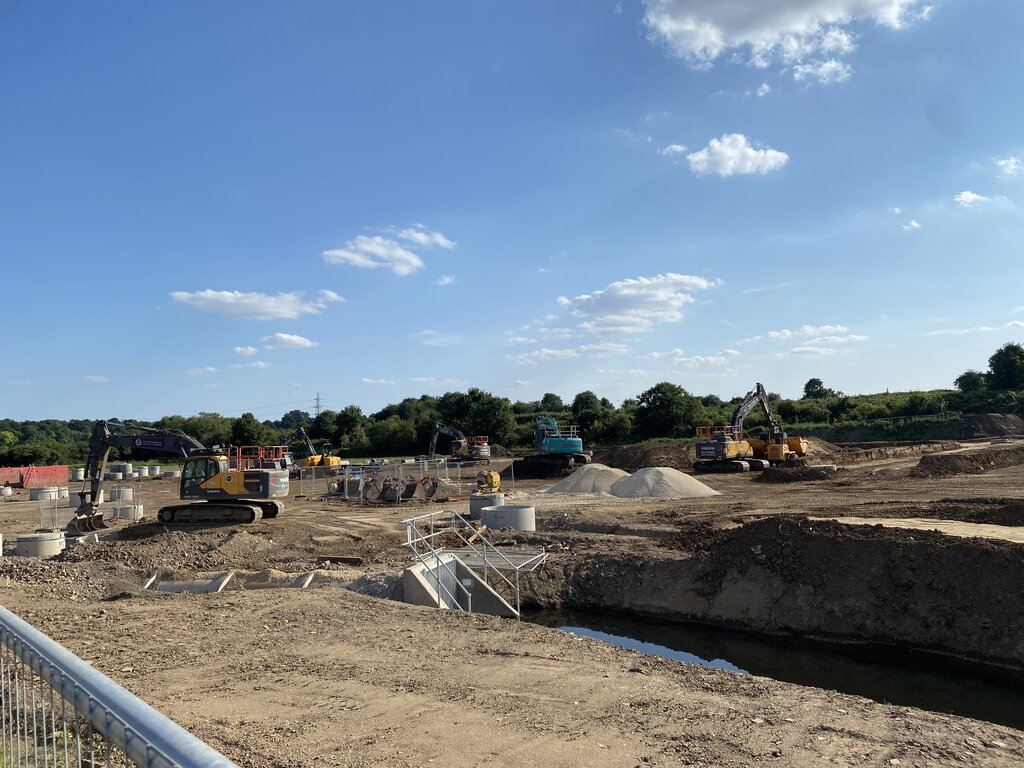
The first step is clearing the building footprint—the area where your cabin will actually sit—plus a buffer of at least 10 feet on all sides. This involves removing any trees, stumps, large rocks, and brush. It’s hard work, but a clear space is essential for safety and for moving materials around during the build.
After clearing comes leveling. Your cabin's foundation needs to sit on a perfectly flat pad. Start by scraping away the topsoil, which is rich in organic matter and not stable enough for building. Set it aside to use for landscaping later. Then, grade the area to make it level. This might involve digging out high spots and using that soil to fill in low spots, compacting the ground as you go. For a small cabin, this can be done with shovels and a lot of effort, but for larger sites, renting a small excavator or bulldozer is worth it.
The goal is to create a building pad that is both level and solid, built on undisturbed subsoil or compacted fill.
With a level site, the final piece of the puzzle is drainage. You must ensure that rainwater and snowmelt flow away from your cabin, not toward it. The ground around your building pad should be sloped gently away from the center on all sides. A grade of about a half-inch drop for every foot of distance is a good rule of thumb.
In areas with heavy rainfall or poorly draining soil, you may need to add a drainage system like a French drain. This is essentially a trench filled with gravel and a perforated pipe that collects water and channels it away from your foundation.
With a well-chosen, cleared, leveled, and properly drained site, you've set the stage for a smooth and successful cabin build.