Distributed Systems Engineering Core Concepts
Distributed Systems Basics
What Makes a System Distributed?
When you use a search engine or stream a video, you're not interacting with a single, giant computer. Instead, you're using a distributed system. It's a collection of separate computers, connected by a network, that work together to appear as one seamless system to you, the user.
Think of a team of chefs cooking a large, complex meal. Each chef has their own station and tools, but they communicate and coordinate to prepare the final dishes. No single chef does everything, and if one needs to step away, the others can often cover for them. The diner just experiences a delicious meal, unaware of the complex coordination happening in the kitchen. That's a distributed system in a nutshell.
These systems have a few key characteristics:
- No Shared Memory or Clock: Each computer (often called a node) has its own memory and internal clock. They can't directly access each other's resources; they must communicate by sending messages over the network.
- Concurrency: Operations happen on multiple nodes at the same time. The chefs are all chopping, sautéing, and plating simultaneously.
- Independent Failures: One node can fail while the others keep running. A single chef burning a dish doesn't stop the entire meal service.
The Big Challenges
Building a distributed system is much harder than writing a program for a single computer. The kitchen analogy highlights the challenges: the chefs need to coordinate perfectly to ensure all parts of the meal are ready at the same time, even if one of them makes a mistake or their stove stops working.
One of the biggest hurdles is fault tolerance. What happens when a node crashes or the network connection between two nodes breaks? A well-designed system must handle these failures gracefully without bringing the entire service down. This is like having backup chefs or duplicate cooking stations ready to go at a moment's notice.
Another challenge is concurrency. When multiple nodes try to read and write the same piece of data at the same time, things can get messy. Imagine two chefs trying to update the same recipe card simultaneously. Without a clear system for taking turns, they might overwrite each other's changes, leading to a nonsensical recipe. In computing, this requires synchronization mechanisms to control access to shared resources and prevent data corruption.
The goal is to build a reliable system from unreliable parts.
The CAP Theorem
When designing a distributed system, you can't have everything. The CAP theorem is a fundamental principle that states a system can only guarantee two out of three desirable properties at the same time during a network failure.
Let's break down the three properties:
| Property | Description | Example |
|---|---|---|
| Consistency | Every read receives the most recent write or an error. All nodes have the same data at the same time. | A bank balance. You always want to see the most up-to-date amount. |
| Availability | Every request receives a (non-error) response, without the guarantee that it contains the most recent write. | A social media feed. It's better to see slightly old content than nothing at all. |
| Partition Tolerance | The system continues to operate despite an arbitrary number of messages being dropped (or delayed) by the network between nodes. | A system with servers in both North America and Europe must function even if the transatlantic cable is temporarily cut. |
Since network failures (partitions) are a fact of life in distributed systems, you must design for them. This means every real-world distributed system must be Partition Tolerant. The real trade-off, then, is between Consistency and Availability.
-
CP (Consistency and Partition Tolerance): If a network partition occurs, the system will shut down the non-consistent part to avoid serving stale data. A bank's ATM network might go offline in a certain region rather than risk showing incorrect balances.
-
AP (Availability and Partition Tolerance): If a partition occurs, the system keeps running, but it might serve older data to some users until the partition is resolved. This is often acceptable for things like social media likes or comment sections.
System Architectures
There are different ways to organize the nodes in a distributed system. The two most common models are client-server and peer-to-peer.
In the client-server model, some computers are designated as servers, which provide resources or services. Other computers, the clients, request those services. This is the model used by the web. Your browser is a client that requests a webpage from a web server.
In the peer-to-peer (P2P) model, all nodes are equal and act as both clients and servers. They can both request and provide services. File-sharing applications like BitTorrent are a classic example, where each user downloading a file is also helping to upload it to others.
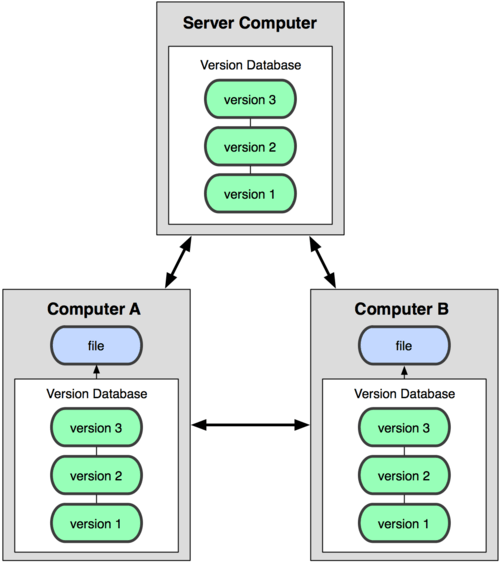
Understanding these basic concepts—what a distributed system is, the challenges of building one, the trade-offs of the CAP theorem, and common architectures—is the first step toward designing robust, scalable applications.
Time to check your understanding.
What is the defining characteristic of a distributed system?
A financial application must guarantee that a user's bank balance is always accurate and up-to-date across all access points. During a network failure that separates some data centers, the system chooses to make certain regions temporarily unavailable rather than risk showing an incorrect balance. This system prioritizes:
Now you have a solid foundation in the core ideas behind distributed systems.