Distillation Column Fundamentals
Introduction to Distillation
Separating Liquids by Boiling
Distillation is a powerful method for separating components in a liquid mixture. The entire process hinges on a simple fact: different liquids boil at different temperatures. By carefully heating a mixture, we can turn one liquid into vapor while leaving others behind.
Imagine you have a mixture of salt and water. If you boil it, the water turns into steam, but the salt stays in the pot. If you could capture that steam and cool it down, it would turn back into pure water, completely separated from the salt. That's the core idea of distillation. It's used to purify liquids and separate them from non-volatile solids, or to separate two or more liquids with different boiling points.
Vapor-Liquid Equilibrium
To understand distillation, we need to look at what happens when a liquid boils. As you heat a liquid, its molecules gain energy and move faster. Eventually, they have enough energy to escape the liquid's surface and become a gas, or vapor. The temperature at which this happens is the boiling point.
This state where a liquid and its vapor can coexist is called vapor-liquid equilibrium. For any given pressure, there's a specific temperature where the liquid is turning into vapor at the same rate the vapor is condensing back into liquid.
The key to distillation is that each pure substance in a mixture has its own unique boiling point.
For example, ethanol boils at 78.4°C (173.1°F), while water boils at 100°C (212°F). If you have a mixture of ethanol and water, and you heat it to just above 78.4°C, the ethanol will begin to vaporize much more readily than the water. We call the substance with the lower boiling point the more volatile component.
Visualizing the Phases
Scientists use phase diagrams to show how a substance changes between solid, liquid, and gas states at different temperatures and pressures. The line separating the liquid and vapor phases shows us all the possible combinations of temperature and pressure at which the substance can boil.
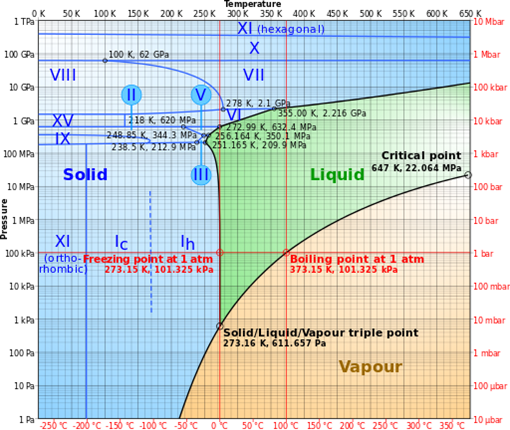
When we mix two liquids, things get a bit more complex. The boiling point of the mixture is usually somewhere between the boiling points of the two pure components. A different type of phase diagram, called a boiling point diagram, can show how the composition of the vapor is different from the composition of the liquid at any given temperature. The vapor will always be richer in the more volatile component.
The basic distillation process is straightforward:
- Heating: The liquid mixture is heated in a flask.
- Vaporization: The most volatile component turns into vapor first and rises.
- Condensation: The vapor travels into a cooled tube, called a condenser, which turns the vapor back into a liquid.
- Collection: This purified liquid, called the distillate, drips into a separate collection flask.
Industrial Applications
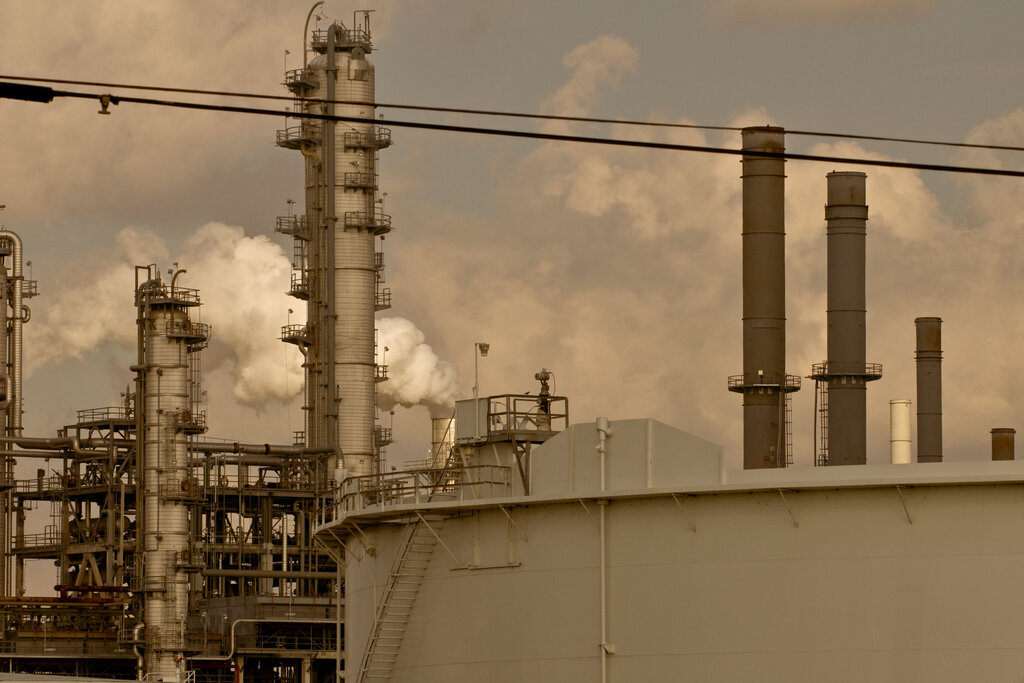
Distillation isn't just for the chemistry lab. It's a cornerstone of many major industries. The scale is massive, often involving towering distillation columns that can be several stories high.
Here are a few examples:
-
Oil Refining: Crude oil is a complex mixture of thousands of different hydrocarbons. Distillation (specifically, fractional distillation) is used to separate this mixture into useful products like gasoline, diesel fuel, jet fuel, and lubricating oils.
-
Alcoholic Beverages: The production of spirits like whiskey, vodka, and rum relies on distillation. After fermentation creates a low-alcohol mixture, distillation is used to concentrate the alcohol to a higher proof.
-
Water Purification: Large-scale distillation is one method used to desalinate seawater, turning it into fresh drinking water, especially in arid regions.
-
Chemical Manufacturing: Distillation is used constantly in chemical plants to separate products from reactants or to purify chemicals to the high standards required for manufacturing.
In all these applications, the principle remains the same: separating substances based on their different boiling points.