Disney's Digital Philosophy Shift
Digital Philosophy Foundations
What Is Digital Philosophy?
Let's start with what digital philosophy is not. It's not an academic field about the ethics of computers. It’s a mindset, a way of approaching problems and creating things in a world shaped by digital technology.
Digital philosophy is a framework for thinking. It applies the core principles of the digital world, like modularity, systems, and data, to challenges in the physical world.
Think about a set of LEGO bricks. You can follow the instructions to build a specific model. That's a traditional approach. Or, you can understand the properties of each brick, how they connect, and the system they create. This lets you build anything you can imagine. Digital philosophy is like understanding the bricks, not just following the instruction manual.
It’s about breaking down big, complex challenges into smaller, interconnected parts. You look at how information flows, where value is created, and how different components of a system interact. This way of thinking allows you to build more flexible, adaptable, and innovative solutions, whether you're designing a business, a product, or a creative project.
Digital Philosophy
noun
A strategic mindset that applies the principles of digital systems (like data, modularity, and networks) to solve problems and create value in both the digital and physical realms.
Thinking vs. Computerizing
It's easy to confuse having a digital philosophy with simply computerizing. The two are fundamentally different. Computerization is about changing the tool; digital thinking is about changing the entire process.
Computerization is taking something that exists in the analog world and making a digital copy. Think of scanning a paper document to create a PDF file. You've changed the format, but not the function. It's still just a document.
| Feature | Computerization (The Tool) | Digital Thinking (The Mindset) |
|---|---|---|
| Focus | Technology and efficiency | Strategy and transformation |
| Goal | To do the same things faster | To do entirely new things |
| Example | Replacing paper forms with digital ones | Reimagining the entire data collection and approval workflow |
Digital thinking asks, "Now that this document is a PDF, what can we do differently?" Suddenly, you can make the text searchable, analyze its contents, link it to a database, or have an AI summarize it. You’re not just storing information; you’re unlocking its potential.
This shift from simply digitizing a task to completely rethinking it is the core of a digital philosophy. It’s the difference between automation and true innovation.
Strategy and Creativity Reimagined
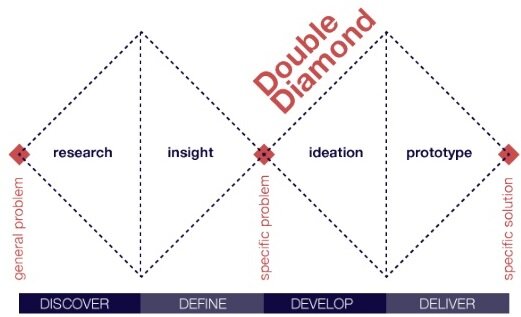
When a business adopts a digital philosophy, it affects everything. Strategy is no longer about predicting the future five years out. Instead, it becomes about building an organization that can adapt and evolve quickly. The focus shifts from rigid plans to creating flexible systems that can respond to new data and changing customer needs.
Businesses start seeing their products not as finished goods, but as services that are constantly updated and improved. They gather data, learn from user behavior, and iterate. This approach allows for continuous innovation rather than occasional big breakthroughs.
Digital strategy encompasses the series of actions you take to help achieve your business objectives through the use of digital technologies and media.
This philosophy also transforms creative processes. Instead of a linear path from idea to final product, creativity becomes a more modular and collaborative endeavor. A film's visual effects, for example, aren't just added at the end. They're part of a digital pipeline where creative assets can be shared, modified, and reused across different teams and even different projects.
This system-based approach allows for greater experimentation. You can test new ideas on a small scale, get feedback, and build on what works. It makes the creative process less about a single stroke of genius and more about building an ecosystem where great ideas can emerge and thrive.
Let's check your understanding of these foundational ideas.
According to the text, what is the key difference between applying a digital philosophy and simple computerization?
The text uses an analogy of LEGO bricks. In this analogy, what does "following the instructions to build a specific model" represent?
This shift in thinking from simply using digital tools to fundamentally rethinking processes is a powerful concept. It’s the foundation for building modern, resilient, and innovative organizations.