Discovering the Number 44
Understanding Numbers
What Are Numbers?
At its heart, a number is just a symbol we use to represent a quantity. It’s an idea that answers the question “how many?” or “how much?”. Instead of saying you have “apple, apple, apple,” you can just say you have 3 apples. Numbers give us a shared language to talk about amounts.
The first step in using this language is counting. When we count, we're matching a set of objects with a set of number words or symbols in a specific order: one, two, three, and so on. Each number represents one more than the one before it. This simple process is the foundation for almost all of mathematics.
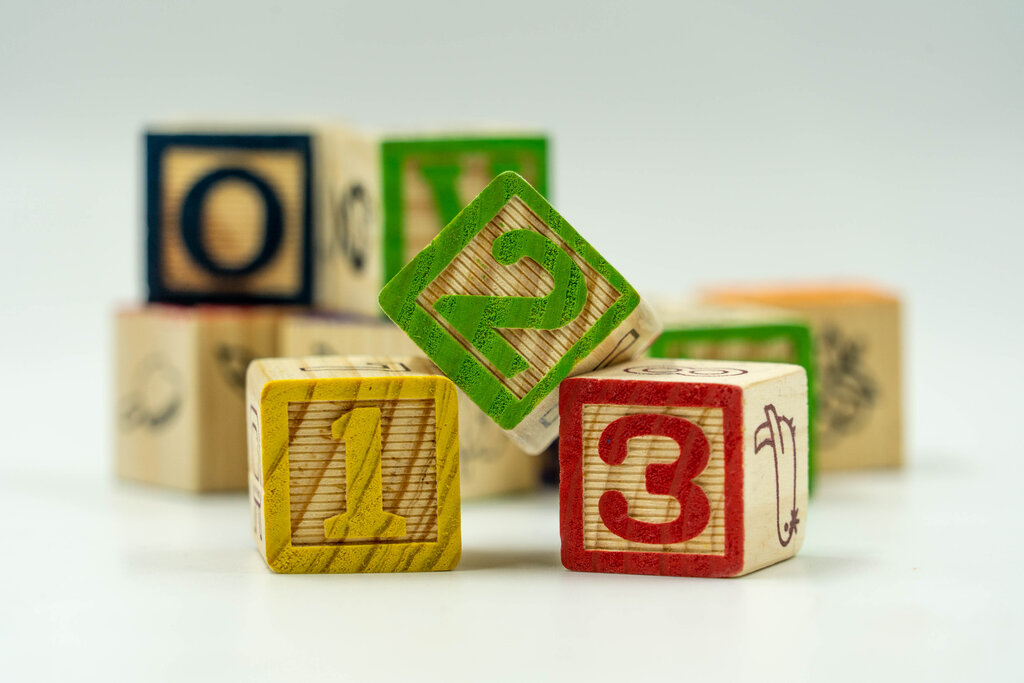
Types of Numbers
As you start exploring math, you’ll find there are different families, or sets, of numbers. Let's start with the most basic ones.
Natural Numbers
noun
The numbers you use for counting objects. They start at 1 and go on forever.
Natural Numbers: {1, 2, 3, 4, ...}
But what if there are no chairs in the room? For that, we need the number zero.
Whole Numbers
noun
The set of natural numbers plus zero. They represent the idea of 'none' or a complete unit.
Whole Numbers: {0, 1, 2, 3, ...}
So, whole numbers are simply all the natural numbers with the number zero added to the group.
Now, let's expand our number family again. What about values less than zero, like a temperature that drops below freezing or being in debt?
Integers
noun
The set of all whole numbers and their negative opposites.
Integers: {..., -3, -2, -1, 0, 1, 2, 3, ...}
You can think of these number sets as nested boxes. The natural numbers are in the smallest box. That box is inside a slightly larger box of whole numbers. And that box is inside an even larger box of integers.
Numbers in Daily Life
We use these numbers constantly, often without thinking about it.
- Natural numbers help us count anything: the number of eggs in a carton, the number of people on a bus, or the number of days until a vacation.
- Whole numbers are used when zero is a possible answer. How many mistakes did you make on a test? Hopefully, zero.
- Integers are essential for things that can go below zero. Think about temperatures in winter, floors in a parking garage (P1 is like -1), or your bank account balance after a big purchase.
Understanding these basic types of numbers is the first step. They are the building blocks we'll use to explore more complex and interesting ideas in math.
Ready to check your understanding?
What is the primary purpose of a number?
Which of the following scenarios is best described using integers, but not whole numbers?
Grasping these fundamental number types provides a solid base for everything that comes next.