Discovering Our World
Introduction to Geography
What is Geography?
Geography is the study of places and the relationships between people and their environments. It’s not just about memorising maps or the capitals of countries. It's about asking why things are where they are, how they got there, and how they connect to everything else.
Geography
noun
The study of the physical features of the Earth and its atmosphere, and of human activity as it affects and is affected by these, including the distribution of populations and resources, land use, and industries.
Think of it as the science of our world. It helps us understand the planet's physical systems, like weather patterns and oceans, as well as the human societies spread across its surface. Studying geography gives us a framework for understanding complex global issues, from trade and migration to environmental challenges.
Geography is more than just maps and country names; it’s a dynamic subject that helps students understand the world and their place in it.
The Five Themes
To make sense of such a big topic, geographers use five key themes. These themes are like lenses that help us look at any place on Earth and ask the right questions. They provide a simple structure for organising information about the world.
Let's break down each theme.
1. Location: Where is it?
This is the most basic question in geography. Location can be absolute or relative.
- Absolute location is a precise spot on Earth, often given in coordinates like latitude and longitude. Your home address is another example of an absolute location.
- Relative location describes where a place is in relation to other places. You might say Mumbai is on the west coast of India, or the cafe is next to the cinema.
2. Place: What's it like there?
This theme describes the unique human and physical characteristics of a location. Physical characteristics are natural features like mountains, rivers, climate, and wildlife. Human characteristics are things that people have created, such as buildings, roads, culture, and language. No two places are exactly alike.
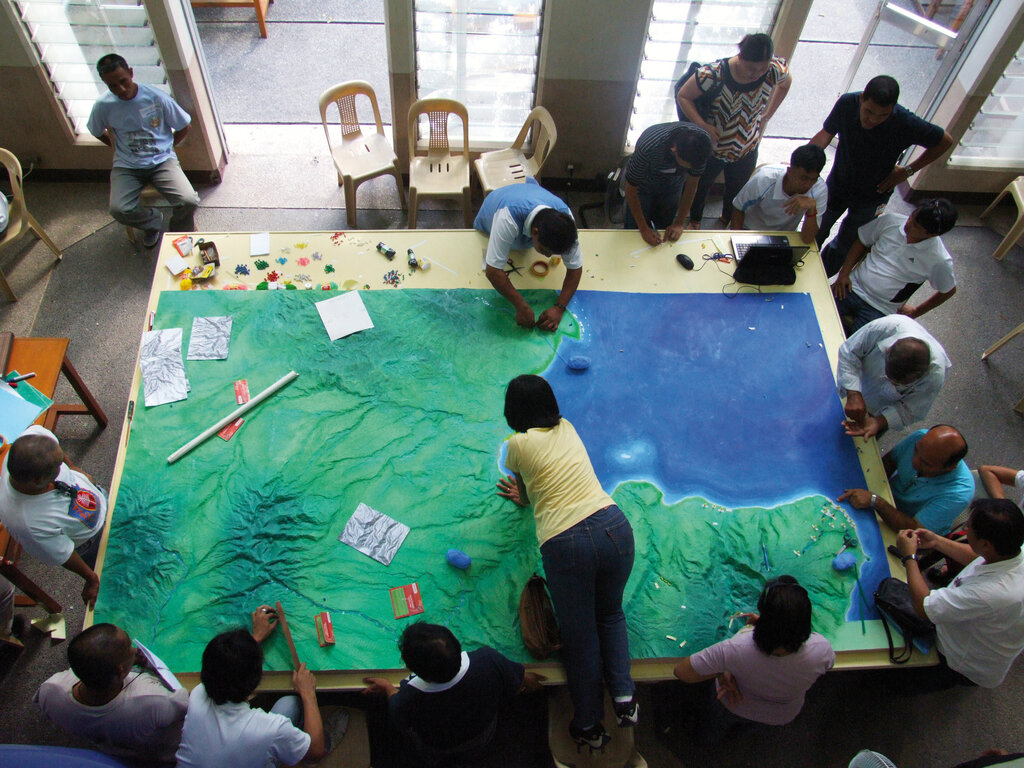
3. Human-Environment Interaction: What is the relationship between people and their environment?
This theme explores how people depend on, adapt to, and modify their environment. For example, people living in a desert must adapt to the heat and lack of water. They might depend on an oasis for survival and modify the land by building irrigation canals to grow crops.
4. Movement: How are people, goods, and ideas connected?
People, products, and information are constantly moving around the globe. This theme examines these movements and their effects. It includes the migration of people, the transportation of goods in trucks and ships, and the spread of ideas through the internet.
5. Region: How are areas similar or different?
A region is an area of the Earth's surface with unifying characteristics. These characteristics can be physical (like the Himalayan mountain region), human (like countries where a certain language is spoken), or a combination of both. Regions help us simplify and understand our complex world by grouping places together.
Using the Themes
These five themes are not separate boxes; they are interconnected. To truly understand a place, geographers use all of them together. By asking questions based on these themes, we can analyse any place, from our own neighbourhood to a country on the other side of the world.
This framework helps us see the bigger picture. It shows how the physical world influences human life and how human actions, in turn, shape the world around us.
The statement 'Delhi is north of Mumbai' describes which geographical theme?
Building irrigation canals to grow crops in a dry area is a clear example of which theme?
Thinking geographically helps us make sense of the world and our role within it.