Discovering 6th Grade Geography
The Earth in the Solar System
Our Place in Space
Our home, the planet Earth, is part of a vast and busy neighborhood called the Solar System. It's a system because everything in it is connected to one central object: the Sun. The Sun isn't a planet; it's a star, a massive ball of hot gas that produces an incredible amount of energy. This energy travels through space as light and heat, making life on Earth possible.
Everything in our solar system, from the largest planet to the smallest speck of dust, orbits the Sun. This is due to the Sun's immense gravity, which pulls everything towards it.
A Tour of the Planets
There are eight planets orbiting the Sun. They follow a specific order, starting with the one closest to the Sun and moving outward. A helpful way to remember the order is with a mnemonic like "My Very Educated Mother Just Served Us Noodles."
The planets are: Mercury, Venus, Earth, Mars, Jupiter, Saturn, Uranus, and Neptune.
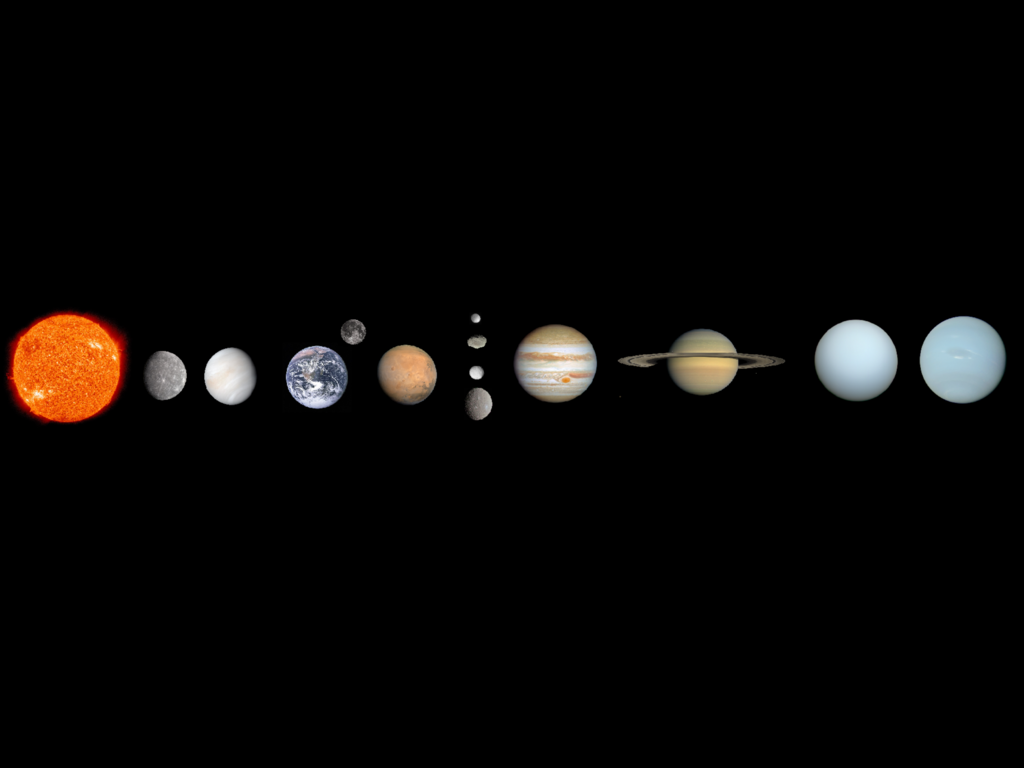
These planets can be split into two groups. The first four—Mercury, Venus, Earth, and Mars—are called terrestrial planets. They are smaller, rocky, and dense. The next four—Jupiter, Saturn, Uranus, and Neptune—are the gas giants. They are much larger and made mostly of gas and ice, with no solid surface to stand on.
Earth's Special Spot
Earth is the third planet from the Sun, and this position is crucial. It's not too hot and not too cold for liquid water to exist on its surface, which is essential for life as we know it. This special region around a star is often called the "Goldilocks Zone."
terrestrial
adjective
Relating to the Earth or to land; of a rocky or solid nature.
Besides its perfect location, Earth has two other key features. First, it has a substantial atmosphere that traps heat, protects us from harmful solar radiation, and contains the oxygen we breathe. Second, it's the only place we know of where life has developed. These factors make our planet a unique oasis in the vastness of space.
Smaller Neighbors
Planets aren't the only things circling the Sun. Our solar system is also home to many smaller objects.
Moons are natural satellites that orbit planets. Earth has one moon, but some planets have dozens. Jupiter and Saturn, for example, have a huge number of moons, some of which are larger than the planet Mercury.
Asteroids are chunks of rock and metal. Most of them are found in the Asteroid Belt, a region between Mars and Jupiter. They range in size from tiny pebbles to massive objects hundreds of miles across.
meteoroid
noun
A small body moving in the solar system that would become a meteor if it entered the earth's atmosphere.
Meteoroids are even smaller pieces of rock or dust. When a meteoroid enters Earth's atmosphere, it burns up and creates a bright streak of light we call a meteor, or a shooting star. If a piece of it survives the journey and hits the ground, it's called a meteorite.
Ready to check your understanding of our solar system?
What is the massive ball of hot gas at the center of our Solar System that provides light and heat?
Which of the following is considered a terrestrial planet?
From our central star to the smallest meteoroid, every part of the Solar System plays a role in the cosmic neighborhood we call home.