Discover the French Language and Culture
French Pronunciation
The Sounds of French
French pronunciation can seem challenging at first, especially since the spelling doesn't always match the sound. Unlike English, where pronunciation can be inconsistent, French follows a fairly regular set of rules. Once you learn them, you'll find that sounding out new words becomes much easier.
Although all those silent letters can seem confusing at first, once you learn the rules and patterns, you’ll realise that French pronunciation is actually a lot more logical and regular than English pronunciation.
The key is to stop thinking in English sounds and start fresh. Let's break down the core components of French pronunciation: vowels, consonants, and the famous nasal sounds.
Mastering French Vowels
French has a richer palette of vowel sounds than English. Some will feel familiar, while others require a bit of practice. The position of your tongue and the shape of your lips are crucial for getting these sounds right.
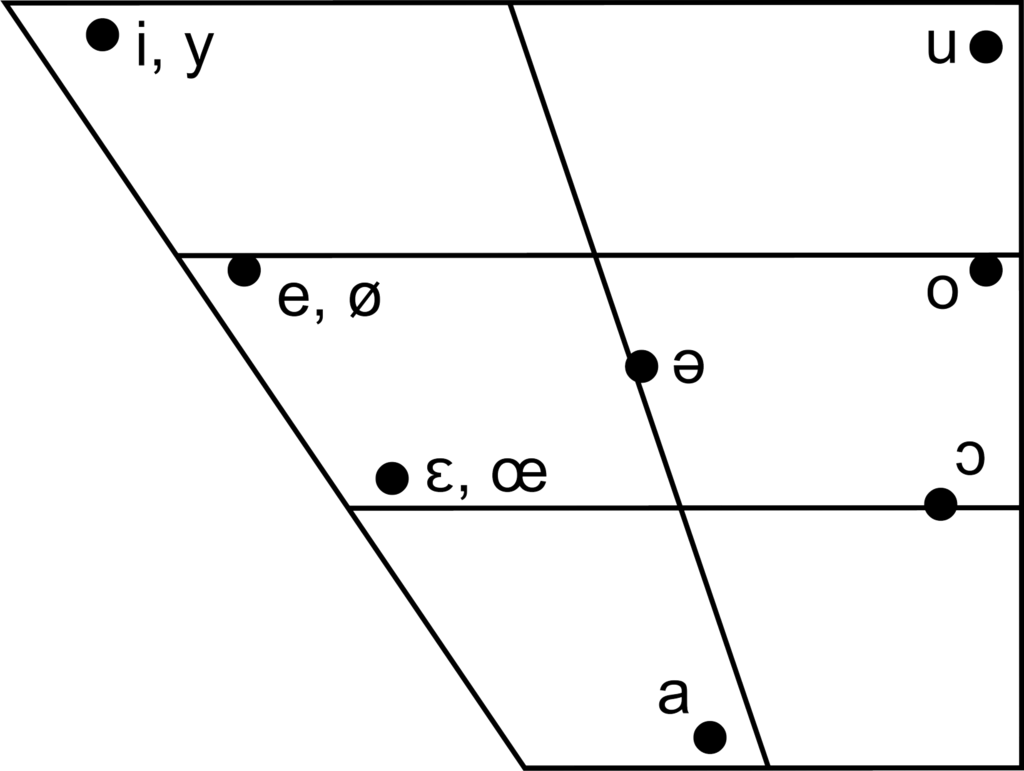
Let's look at some of the most common vowels. The symbols in the brackets come from the International Phonetic Alphabet (IPA), which is a system for representing speech sounds.
| Vowel Sound (IPA) | Common Spelling | English Approximation | French Example |
|---|---|---|---|
| [i] | i, y | "ee" as in see | ami (friend) |
| [e] | é, -er, -ez | "ay" as in say | été (summer) |
| [ɛ] | è, ê, ai, ei | "e" as in bed | mère (mother) |
| [a] | a, à | "ah" as in father | chat (cat) |
| [u] | ou | "oo" as in food | vous (you) |
| [o] | o, ô, au, eau | "o" as in boat | eau (water) |
| [ɔ] | o | "o" as in cot | botte (boot) |
One of the trickiest vowels for English speakers is the French u sound, represented by [y]. It doesn't exist in English. To make this sound, try saying the English sound "ee" but round your lips tightly as if you were about to whistle.
Practice it now: tu (you), rue (street), salut (hi).
The Nasal Vowels
Nasal vowels are a signature of the French language. They are produced by passing air through both the nose and the mouth. When you see a vowel followed by an 'n' or 'm' at the end of a syllable, it usually signals a nasal sound. The key is not to pronounce the 'n' or 'm' itself. Instead, it changes the quality of the vowel before it.
Les sons nasaux (nasal sounds) are one of the most challenging aspects of French pronunciation.
There are four main nasal sounds in French.
| Nasal Sound (IPA) | Common Spelling | French Example |
|---|---|---|
| [ɑ̃] | an, am, en, em | maman (mom) |
| [ɛ̃] | in, im, ain, ein, yn, ym | vin (wine) |
| [ɔ̃] | on, om | bon (good) |
| [œ̃] | un, um | brun (brown) |
A common mistake is to break the nasal sound into a vowel plus an 'n' sound. For example, the word bon is one smooth sound, not "bo-nuh."
Consonants, Simple and Tricky
Many French consonants sound similar to their English counterparts, but there are some major differences to watch out for. Two of the biggest hurdles are the French 'r' and the prevalence of silent final letters.
The French 'R' can be intimidating for beginners because it’s pronounced at the back of the throat, unlike the English 'R' which is pronounced with the tongue near the front of the mouth.
The French 'r' sound, or uvular fricative [ʁ], is made by vibrating your uvula at the very back of your throat. It's similar to the sound you make when gargling, but much softer. Start by trying to make a 'k' sound, but don't stop the airflow. The sound should feel like a light, throaty rumble. Practice with words like rue (street), très (very), and père (father).
Another major aspect of French pronunciation is silent final consonants. As a general rule, the consonants -d, -p, -s, -t, -x, and -z are not pronounced when they appear at the end of a word.
For example: un grand garçon (a tall boy) trop (too much) les chiens (the dogs) petit (small)
There are exceptions, of course. The letters c, r, f, and l are often pronounced at the end of a word. A helpful mnemonic is CaReFuL. For example, sac (bag), cher (expensive), neuf (nine), and avril (April).
Ready to test what you've learned? This quiz will help you check your understanding of these core pronunciation concepts.
How is the French 'u' sound (as in 'tu') typically produced?
In a French word with a nasal vowel, such as 'bon' (good), what happens to the 'n' or 'm' that follows the vowel?
Mastering French pronunciation takes time and practice. Listening to native speakers and repeating what you hear is one of the best ways to improve. Don't be afraid to make mistakes—they are a natural part of the learning process.