Discover Singapore
Geography
A Tiny Dot on the Map
Singapore is a small island city-state in Southeast Asia, located just one degree north of the equator. It sits at the southern tip of the Malay Peninsula, nestled between Malaysia to the north and Indonesia to the south. The country's total area is only about 734 square kilometers, making it one of the smallest nations in the world. For perspective, you could fit Singapore into New York City with room to spare.
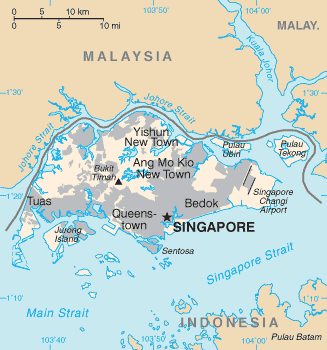
The nation isn't just one island. It's an archipelago made up of one main island, Pulau Ujong, and 63 smaller satellite islands. Many of these smaller islands are uninhabited, but some, like Sentosa and Pulau Ubin, are popular recreational spots. Its strategic position at the entrance of the Strait of Malacca, a major maritime route, has been a key factor in its development as a global trade hub.
Building a Nation, Inch by Inch
Singapore's natural topography is relatively flat. The highest natural point, Bukit Timah Hill, is just 163 meters tall. This lack of challenging terrain has made urban development easier, but the country's small size presents a constant challenge. How do you fit a growing population and a thriving economy onto a tiny island?
Singapore's answer is land reclamation. This is the process of creating new land from the sea. By draining wetlands or filling in coastal areas with sand and rock, the country has expanded its landmass by over 25% since its independence in 1965. Areas like Marina Bay, Changi Airport, and the Jurong Island industrial complex all sit on land that was once underwater.
This ambitious engineering feat has been crucial for housing, infrastructure, and industrial growth. It's a continuous process that reflects Singapore's proactive approach to overcoming its physical limitations.
Life in the Tropics
Singapore's location near the equator gives it a tropical rainforest climate. This means the weather is consistently hot and humid year-round. There are no distinct seasons like spring, summer, autumn, or winter. Instead, the year is divided by two monsoon seasons.
The Northeast Monsoon (December to early March) brings the wettest period, while the Southwest Monsoon (June to September) is typically drier and warmer.
Rain is a regular feature of life in Singapore, often arriving in the form of sudden, heavy thunderstorms in the afternoon. Despite the rain, the country enjoys plenty of sunshine. This consistent climate influences everything from architecture, which often incorporates features for ventilation and shade, to daily routines.
| Feature | Description |
|---|---|
| Average Temperature | 25°C to 31°C (77°F to 88°F) |
| Average Humidity | 70% - 80% |
| Annual Rainfall | Around 2,166 millimeters (85 inches) |
| Seasons | None; defined by Northeast & Southwest monsoons |
A City in a Garden
For a country so densely populated, Singapore is remarkably green. This is no accident. From the early days of its development, the government has pursued a vision of being a "Garden City," which has since evolved into a "City in a Garden." This philosophy integrates greenery into every aspect of urban planning.
The goal is to create a livable and sustainable environment for its residents. You can see this in the numerous parks, nature reserves, and the tree-lined streets. Even the skyscrapers are getting in on the act, with vertical gardens and green rooftops becoming common features of the city's architecture.
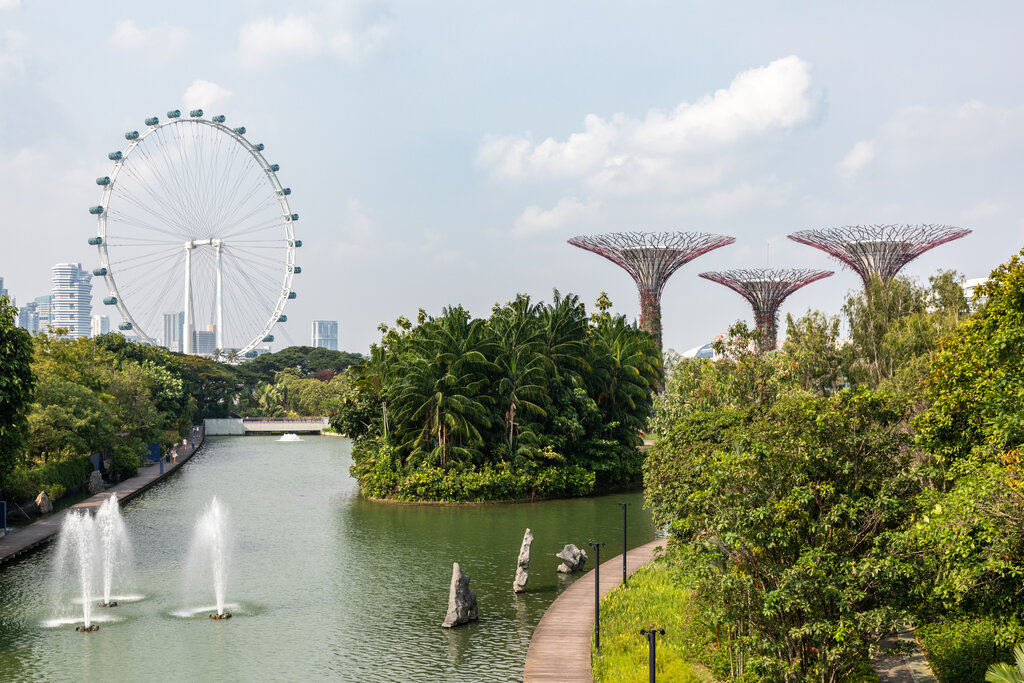
These green spaces aren't just for looks. They play a vital role in mitigating the urban heat island effect, where concrete and asphalt make cities hotter than surrounding rural areas. They also improve air quality, manage stormwater, and provide residents with spaces for recreation and relaxation, enhancing the overall quality of life.
Ready to test your knowledge?
Which of the following best describes Singapore's geographical location?
True or False: The nation of Singapore consists of only one single island.
From its strategic location to its innovative use of land and green spaces, Singapore's geography is a story of turning constraints into opportunities. The physical environment has profoundly shaped its identity as a compact, efficient, and surprisingly green metropolis.