Discover Busan
Geography of Busan
A City Shaped by Sea and Mountain
Busan sits on the southeastern edge of the Korean Peninsula, a strategic location where the land meets the sea. To its east lies the Sea of Japan, also known as the East Sea, giving the city its extensive coastline. On its western side, the Nakdong River, one of Korea's major rivers, forms a natural boundary as it flows into the Korea Strait.
This position has always connected Busan to the wider world, making its port a vital gateway for trade and travel.
A Mountainous Coastline
Busan's landscape is far from flat. The city is dominated by a series of mountains and hills that rise steeply from the coast. This rugged terrain defines the city's physical character and has profoundly influenced how it has grown.
The most notable peak is Geumjeongsan, which reaches a height of 801.5 meters. Many other smaller mountains weave through the urban area, creating a dramatic backdrop of green peaks against modern cityscapes.
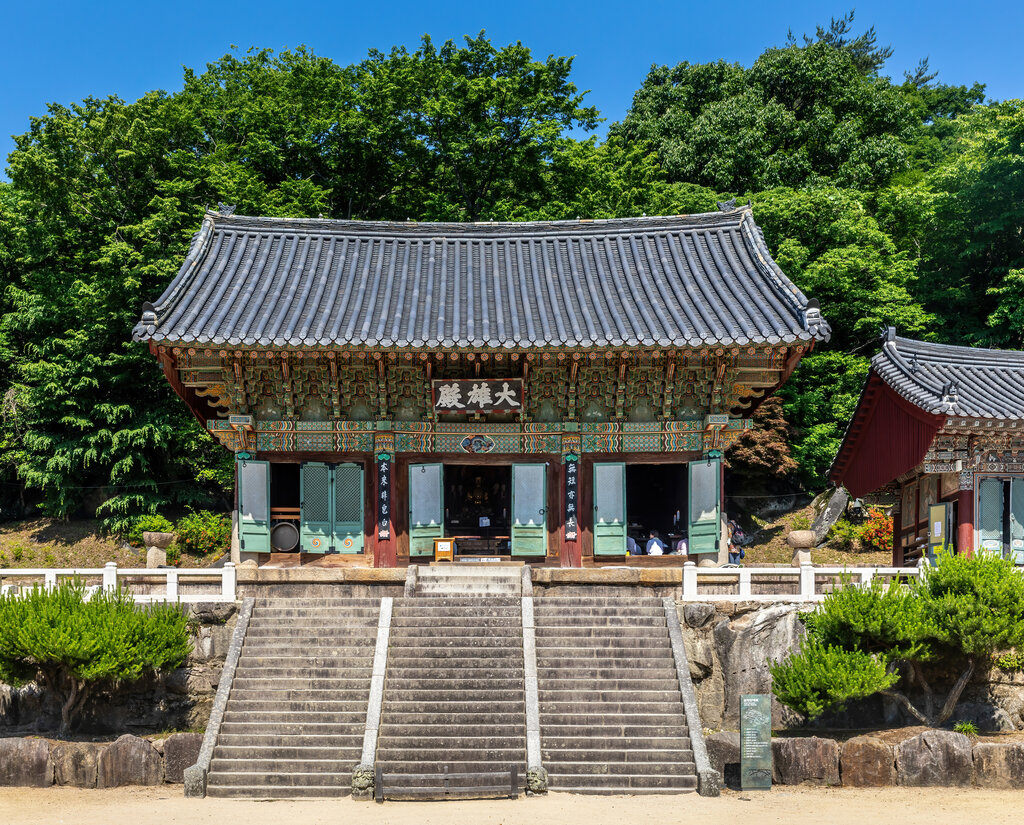
Living with mountains has led to unique urban solutions. Instead of leveling the terrain, Busan has adapted to it. Many residential areas are built directly onto the hillsides. To connect these communities, the city developed a network of 'sanbok' roads, a term that literally means 'mountain-belly' road.
These winding roads traverse the middle sections of the mountains, offering stunning views and serving as essential arteries for the hillside villages. This vertical development is a defining feature of Busan's urban fabric.
Temperate Seaside Climate
Thanks to its coastal location, Busan enjoys a humid subtropical climate. The surrounding water acts as a natural temperature regulator, shielding the city from the extreme cold that affects inland areas of Korea. Winters are generally mild and cool, while summers are hot and humid, often with significant rainfall.
The city's average annual temperature is around 15°C (59°F). This moderate climate allows for a long growing season and makes the city's many beaches popular destinations during the warmer months.
A key feature of Busan's weather is its susceptibility to typhoons. These powerful storms typically occur in late summer and early autumn, bringing strong winds and heavy rain from the Pacific Ocean.
What major river forms a natural western boundary for Busan as it flows into the Korea Strait?
The term 'sanbok' roads refers to what feature of Busan's urban landscape?
Busan's geography is a story of interaction between land and sea, mountain and city. Its unique location and terrain have created a distinct environment that continues to shape life in South Korea's second-largest city.