Digital Security Essentials
Understanding Digital Security
Your Digital Front Door
Think of every online account you have—email, social media, banking—as a door into your personal life. Each door has a lock, and that lock is your password. Just as you wouldn't use a flimsy lock on your front door, you shouldn't rely on a weak password to protect your digital world. Understanding the risks is the first step to securing your information.
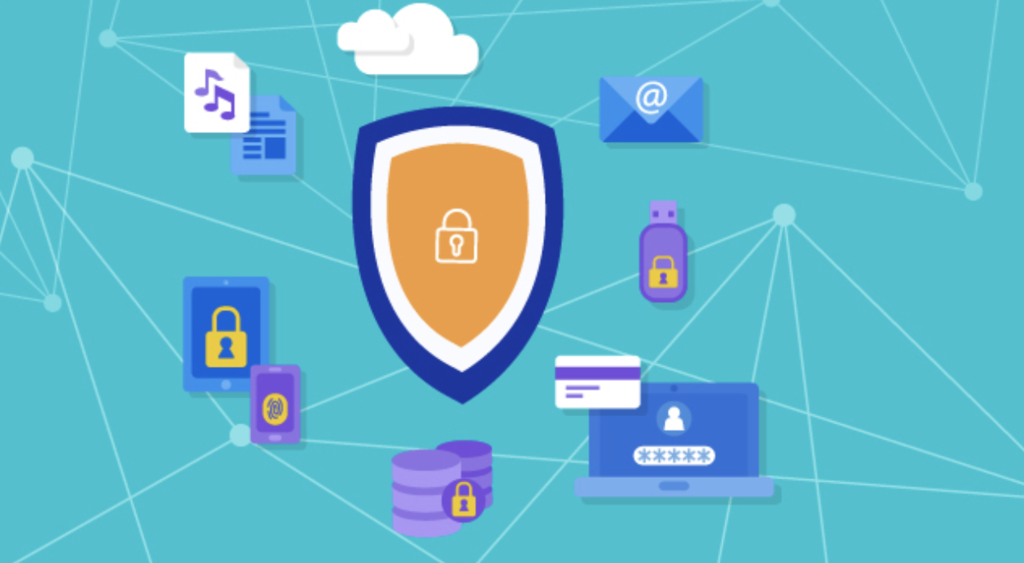
The internet is full of opportunities, but it also has its share of dangers. Malicious actors are constantly looking for ways to bypass digital locks to steal information, money, or your identity. Let's look at some of the most common threats you'll encounter.
Common Threats Lurking Online
Three of the most common threats are phishing, malware, and data breaches. While they work differently, they all aim to compromise your personal information.
Phishing
noun
A fraudulent attempt to obtain sensitive information such as usernames, passwords, and credit card details by disguising as a trustworthy entity in an electronic communication.
Phishing is a form of digital trickery. Imagine receiving an urgent email that appears to be from your bank, claiming your account has been compromised. The email instructs you to click a link and log in immediately to fix the problem. However, the link leads to a fake website designed to steal your credentials. Once you enter your username and password, the attacker has them.
These attacks often create a sense of panic to rush you into making a mistake. They might threaten to close your account or claim you've won a prize. The key is to be skeptical of unsolicited messages that ask for personal information.
Malware
noun
Software specifically designed to disrupt, damage, or gain unauthorized access to a computer system.
Malware is short for "malicious software." It's an umbrella term for viruses, spyware, ransomware, and other programs designed to cause harm. You might get malware by clicking a suspicious link, downloading an infected file, or even visiting a compromised website.
Once on your device, malware can do many things. It might record your keystrokes to steal passwords, encrypt your files and demand a ransom, or use your computer to attack others. Good antivirus software is essential, but cautious online behavior is your best defense.
Finally, there are data breaches. This happens when a company you have an account with gets hacked, and its user data is stolen. Attackers then often sell this information, which can include names, email addresses, and passwords.

Even if you have perfect security habits, a data breach at a company you use can expose your information. This is a major reason why password security is so critical. If your password for a breached website is the same as your email password, attackers can suddenly access your entire digital life.
Your First Line of Defense
Faced with these threats, your first and most important line of defense is a strong password. But what exactly makes a password strong? It comes down to a few simple principles: length, complexity, and uniqueness.
A strong password is long (at least 12 characters), uses a mix of uppercase letters, lowercase letters, numbers, and symbols, and is unique to each account.
Hackers use powerful computers to guess passwords at incredible speeds. A short, simple password like password123 can be cracked almost instantly. A long, complex one like R#6*bZ!p8@Lq would take centuries.
Uniqueness is just as important. Imagine you use the same key for your house, car, and office. If a thief steals that one key, they have access to everything. The same is true for passwords. If a data breach exposes the password you use for a minor social media account, attackers will try that same password on your email, banking, and other high-value accounts.
| Weak Password | Strong Password |
|---|---|
Fluffy1 | FluffyIsInTheGarden!7 |
qwert12345 | qW$z8!p@kL#c |
johndoe1990 | Jd_19!Nov_90?bDay |
Even with these best practices, passwords have their limits. A very convincing phishing attack can trick you into revealing even the strongest password. And no matter how secure your password is, it offers no protection if the service you're using suffers a data breach.
That's why a strong password is just the starting point. It's the essential first layer of your digital security, but more layers are needed for true protection.
What is the primary goal of a phishing attack?
Why is using the same password for multiple accounts a significant security risk?