Digital Marketing Strategy Mastery
Integrated Funnel Strategy
Beyond the Linear Funnel
The traditional marketing funnel is a neat, orderly slide. A customer hears about you, gets interested, considers a purchase, and then buys. It's a simple, linear path from top to bottom. But real customer journeys are rarely this straightforward.
People don't move in a straight line. They might see an ad (top of funnel), visit your website (middle of funnel), leave for a week, come back after reading a review, and then get distracted again. They bounce between stages, skip steps, and circle back. A modern 'full-funnel' strategy accepts this messy reality. It treats the funnel not as a slide, but as an interconnected ecosystem where every stage can influence another.
This approach allows us to model a user's shopping funnel, where mid-journey transitions reflect exploratory behavior and intent refinement.
Instead of treating awareness, consideration, and conversion as separate silos with their own goals, an integrated strategy unifies them. The message a user sees in an awareness ad should feel connected to the landing page they visit, the email they receive, and the final checkout offer. This creates a cohesive experience, no matter how a customer navigates through their journey. The goal is to build a system that guides them, rather than a path that forces them.
From Shotgun to Sniper
A generic approach targets broad personas—like 'Millennial Mark in the City'. This is the marketing equivalent of a shotgun blast. You might hit your target, but you'll waste a lot of effort on people who were never going to buy.
A full-funnel strategy requires more precision. It starts by defining an (ICP). This isn't just a loose demographic sketch. An ICP is a highly specific description of the exact company or individual who gets the most value from your product and provides the most value to you. It considers factors like industry, company size, technical infrastructure, budget, and long-term goals. It's the difference between targeting 'small businesses' and targeting 'SaaS companies with 20-50 employees using Hubspot who have recently hired a marketing manager'.
With a clear ICP, you can design a journey that speaks directly to their needs. You stop shouting at everyone and start having a focused conversation with the people who are most likely to listen.
This targeted approach extends to mapping the customer's path. Instead of assuming a single route, traces all the potential interactions a customer might have with your brand. This includes social media ads, blog posts, webinars, email newsletters, review sites, and direct sales calls. By understanding all these touchpoints, you can ensure your message is consistent and that you're delivering value at every step.
Finding and Fixing Leaks
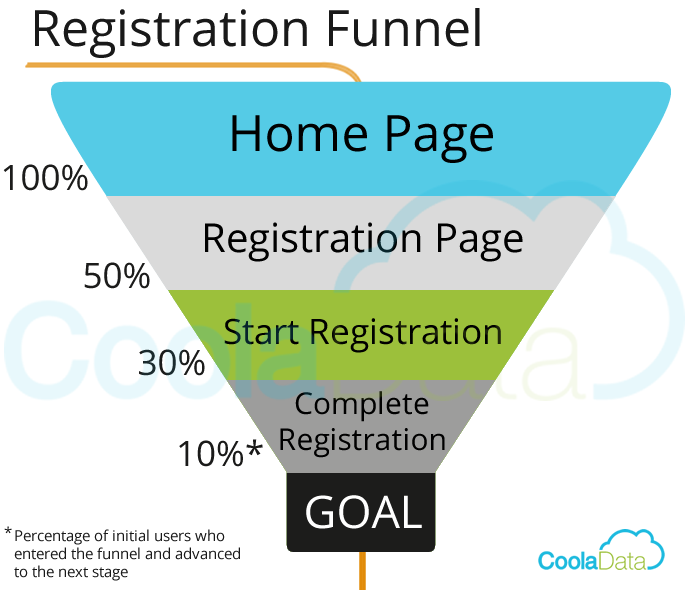
A funnel, no matter how well-designed, will have leaks. These are friction points where potential customers get stuck or drop out. Identifying these leaks is critical. Is your website's pricing page confusing? Is the sign-up form too long? Does the value proposition on your landing page not match the promise of your ad?
Data is your tool for finding these leaks. Analytics can show you which pages have high exit rates. Heatmaps can reveal where users are getting confused. User feedback can tell you in plain language what's not working. Once a leak is identified, you can turn friction into momentum. For example, if users are dropping off at the payment screen, maybe you can offer a new payment option or add trust badges to reduce anxiety.
To truly fix these issues, you must align your Unique Value Proposition (UVP) with the customer's intent at each stage. Early on, your UVP should focus on the problem you solve. Later, it should highlight specific features and benefits that set you apart from competitors. At the decision stage, it might emphasize trust, support, or a money-back guarantee.
This is where the framework becomes incredibly useful. It shifts the focus from 'who the customer is' to 'what job they are trying to accomplish'. A person doesn't buy a drill because they want a drill; they buy it because they want a hole in the wall. By understanding the customer's underlying 'job', you can ensure your messaging and product deliver the outcome they truly want, sealing the leaks in your funnel for good.
How does the modern 'full-funnel' strategy view the customer journey differently from the traditional marketing funnel?
Instead of targeting broad personas, a full-funnel strategy focuses on a highly specific description of the perfect customer. What is this called?