Digital Marketing Strategy and Integration
Recap of Digital Marketing Fundamentals
Core Language of Digital Marketing
To build a cohesive strategy, everyone needs to speak the same language. Let's refresh some key terms that form the foundation of any digital marketing effort. These aren't just buzzwords; they are the metrics that measure success and guide decisions.
Conversion Rate
noun
The percentage of users or visitors who complete a desired action, such as making a purchase, filling out a form, or subscribing to a newsletter.
While attracting traffic is important, the conversion rate tells you how effective that traffic is. A high volume of visitors means little if none of them convert. Optimizing for conversions, often called Conversion Rate Optimization (CRO), is about making it easier for users to take that final, valuable step.
Customer Lifetime Value (CLV)
noun
A prediction of the net profit attributed to the entire future relationship with a customer. It helps determine how much you can afford to spend to acquire a new customer.
CLV shifts the focus from a single transaction to the long-term health of your customer relationships. A high CLV justifies spending more on acquisition and retention efforts, as you know the payoff will be greater over time. It answers the question: what is a customer really worth to us?
The Guiding Principles
Tactics and platforms change, but the core principles of effective digital marketing remain constant. These ideas are the strategic bedrock upon which successful campaigns are built.
First, be customer-centric. Every decision, from the content you create to the channels you use, should start with a deep understanding of your audience's needs, pain points, and behaviors.
Second, be data-driven. Digital marketing provides a wealth of data. Instead of relying on guesswork, use analytics to understand what’s working and what isn’t. This allows for continuous, iterative improvement. Test hypotheses, measure the results, and refine your approach. The goal isn't to be perfect from the start, but to get progressively better.
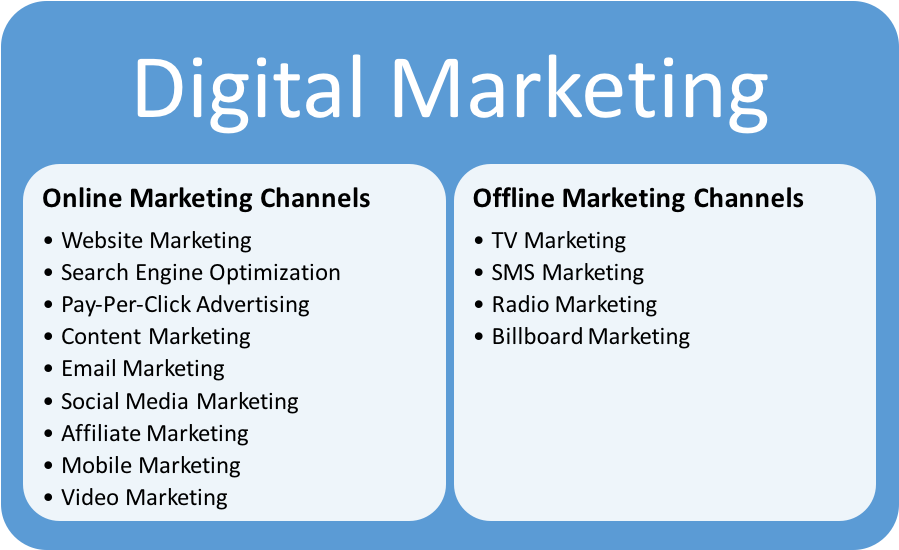
Finally, think integratively. Your marketing channels shouldn't exist in silos. A customer might discover your brand on social media, search for it on Google, and make a purchase after receiving an email. A successful strategy ensures a seamless and consistent experience across all these touchpoints.
Strategy Before Tactics
The most common mistake in digital marketing is jumping straight to tactics without a clear strategy. Posting on social media or running ads is easy, but without a connection to larger business goals, it's just noise. True effectiveness comes from aligning every marketing activity with a specific business objective.
This alignment process works backward from the top. Start with a high-level business objective, translate it into a measurable marketing goal, and then select Key Performance Indicators (KPIs) to track your progress. Only then should you choose the channels and tactics that will help you hit those numbers.
This framework ensures that your marketing efforts are purposeful. Instead of asking, "Should we be on TikTok?" you start by asking, "What is our business trying to achieve, and how can marketing help us get there?" The answer to the second question will always guide you to the right tactics.
Ready to check your understanding? This quiz covers the core principles of digital marketing and the importance of strategic alignment.
A marketing team decides to launch a campaign on a new social media platform simply because it's popular. This action primarily demonstrates which common digital marketing mistake?
What is the primary benefit of focusing on Customer Lifetime Value (CLV)?
With these fundamentals in place, you have a solid framework for making strategic decisions and integrating different marketing channels effectively.