Digital Marketing Specialist vs Manager
Digital Marketing Fundamentals
What Is Digital Marketing?
At its core, digital marketing is simply marketing that uses electronic devices and the internet. It's how businesses use digital channels—like search engines, social media, and email—to connect with current and potential customers.
Think of it this way: any marketing that happens online is digital marketing.
This isn't just about banner ads on websites. It’s a broad field that covers everything from a company's Instagram posts to the design of its website. The goal is the same as traditional marketing: to find people who might be interested in a product or service and guide them toward a purchase. The difference is the set of tools and the environment.
Why It Matters
Imagine opening a new bookstore. In the past, you might have put an ad in the local newspaper or handed out flyers. That’s traditional marketing. You’re broadcasting a message and hoping the right people see it.
Digital marketing flips this around. Instead of hoping people find you, you go where they already are: online. People spend hours every day searching for information, connecting with friends, and watching videos. Digital marketing allows businesses to meet them in those moments.
This approach is powerful because it's targeted and measurable. You can show ads specifically to people who love science fiction novels, for instance. And unlike a newspaper ad, you can track exactly how many people clicked your link and visited your online store. This direct connection and feedback loop is what makes digital marketing essential for modern businesses.
The Digital Marketing Toolbox
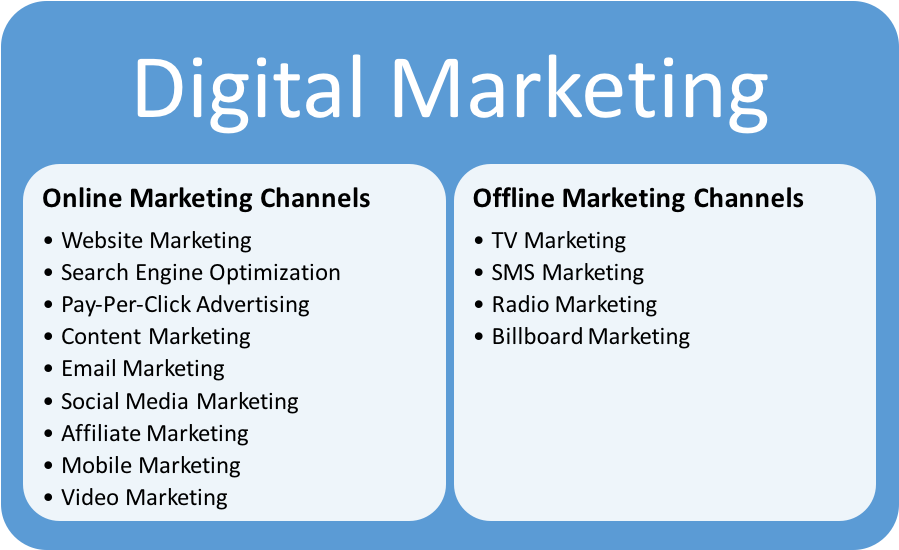
Digital marketing isn't a single activity but a collection of different strategies, often called channels. Each channel has its own strengths, and they often work together. Let's look at the most common ones.
Let's break down what each of these channels does.
SEO
noun
Search Engine Optimization is the practice of improving your website to increase its visibility when people search for products or services related to your business in search engines like Google.
The better your SEO, the more likely someone searching for a specific topic will find your site without you having to pay for an ad. It’s about earning traffic organically.
SEM
noun
Search Engine Marketing refers to paid advertising that appears on search engine results pages. Businesses bid on keywords that users might enter when looking for certain products or services.
Unlike SEO, SEM involves paying for placement. These are the ads you typically see at the very top of a Google search. It’s a way to get traffic quickly while you work on your long-term SEO strategy.
Social Media Marketing involves creating and sharing content on social media networks like Facebook, X (formerly Twitter), Instagram, and LinkedIn. The goal is to build a community, engage with an audience, and drive traffic to your website. It’s about being part of the conversation, not just advertising.
Email Marketing is one of the most direct channels. It involves sending messages to a list of people who have given you permission to contact them. It’s used to build relationships, promote content, and share news about products or sales. A well-crafted email can feel personal and is a great way to keep customers engaged.
Content Marketing is a foundational piece of the puzzle. This strategy focuses on creating and distributing valuable, relevant, and consistent content—like blog posts, videos, or guides—to attract and retain a clearly defined audience. Instead of pitching your products, you're providing useful information that builds trust. Good content is what you share on social media, what helps your SEO, and what you promote through email.
What is a primary advantage of digital marketing over traditional marketing?
Which digital marketing channel focuses on improving a website's visibility in unpaid search engine results?
These five channels form the core of most digital marketing strategies. While each can be used on its own, they are most powerful when they work together to create a seamless experience for the customer.