Digital Marketing Fundamentals
Digital Marketing Fundamentals
What is Digital Marketing?
At its core, digital marketing is any marketing effort that uses an electronic device or the internet. Businesses use digital channels like search engines, social media, email, and their websites to connect with current and prospective customers.
Think of it this way: traditional marketing aimed to reach people through billboards, print ads, and TV commercials. Digital marketing meets people where they spend a huge amount of their time today—online.
The goal is simple: connect with your audience in the right place, at the right time, and with the right message.
Unlike most traditional marketing, digital marketing allows you to see data on what's working and what isn't. You can track how many people see your ad, click on it, and then take an action, like buying a product. This makes it a powerful and efficient way to grow a business.
Your Digital Marketing Toolkit
Digital marketing isn't just one thing. It’s a collection of different tools and strategies you can use. Some of the most common channels include:
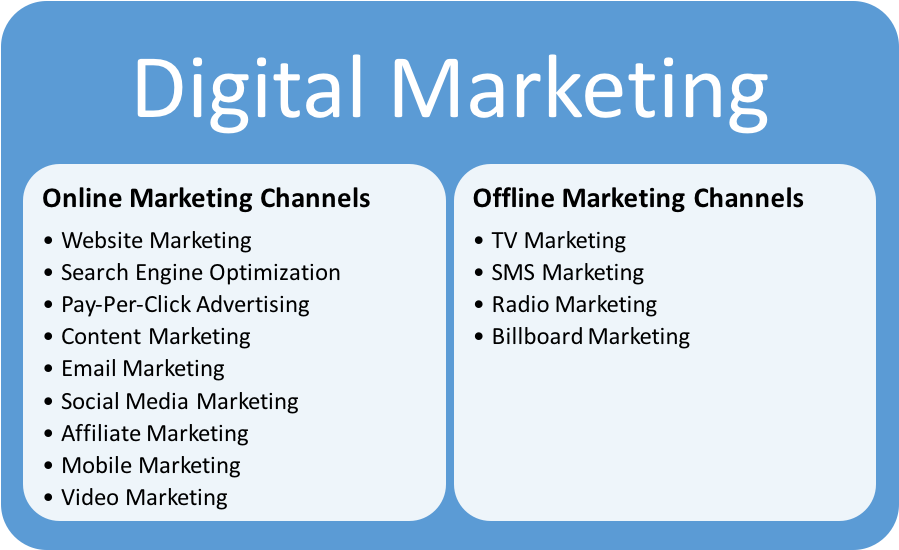
The key to success isn't using every channel available, but choosing the right ones for your specific audience and goals. To help make sense of all these options, marketers often use a simple framework to organize their efforts.
The PESO Model
The PESO model is a great way to think about how different marketing channels work together. It breaks down your options into four distinct categories: Paid, Earned, Shared, and Owned media.
Let's break down each part:
-
Paid Media: This is any channel where you pay for visibility. Think of it as advertising. You pay to place your message in front of a specific audience. Examples include Google Ads, sponsored posts on social media, and banner ads on websites.
-
Earned Media: This is the publicity you don't pay for but have to earn. It’s essentially online word-of-mouth, often seen as the most credible form of marketing. Examples include news articles written about your company, positive customer reviews, and being mentioned by influencers.
-
Shared Media: This refers to the content shared across social media platforms. While you own your social media accounts, the engagement—likes, shares, comments—is driven by your community. It’s a conversation between you and your audience.
-
Owned Media: These are the digital assets your company completely controls. This includes your website, blog, email newsletters, and any content you create and host yourself. Owned media is the foundation of your digital presence.
A strong digital marketing strategy doesn't rely on just one of these categories. Instead, it blends them together to create a unified and effective plan.
Understanding these fundamental concepts is the first step. By knowing what digital marketing is and how its different channels can be categorized, you're ready to explore how to use them to achieve your goals.