Digital Marketing Fundamentals Mastery
Introduction to Digital Marketing
What Is Digital Marketing?
At its core, digital marketing is any marketing effort that uses an electronic device or the internet. Businesses leverage digital channels like search engines, social media, email, and their websites to connect with current and prospective customers.
Think of it this way: if a marketing campaign involves a screen, it's likely digital marketing.
This isn't just about placing ads online. It’s a broad field that covers everything from the video you watched on your phone this morning to the newsletter in your inbox. It’s about meeting people where they are, and increasingly, they are online.
From Bullhorns to Conversations
For decades, marketing was a one-way street. Companies used television, radio, and print ads to broadcast messages to a wide audience. This is known as traditional marketing. It was like shouting with a bullhorn, hoping the right people would hear.
The internet changed the game. Digital marketing turned that one-way broadcast into a two-way conversation. Now, brands can interact with their audience, get instant feedback, and build real relationships. More importantly, they can measure what works and what doesn't with incredible accuracy.
| Feature | Traditional Marketing | Digital Marketing |
|---|---|---|
| Communication | One-way broadcast | Two-way conversation |
| Audience | Broad, general | Specific, targeted |
| Measurement | Difficult, often estimated | Precise, real-time data |
| Pacing | Long lead times | Fast, immediate adjustments |
The Digital Marketing Toolkit
Digital marketing isn't a single strategy but a collection of different tactics and channels. Understanding the main components is the first step to seeing the bigger picture. Each piece plays a unique role in reaching and engaging customers.
Here's a brief look at each one:
-
Search Engine Optimization (SEO): This is the process of optimizing your website to rank higher in search engine results, like on Google. When people search for terms related to your business, you want to be one of the first names they see.
-
Content Marketing: This focuses on creating and distributing valuable, relevant content—like blog posts, videos, or infographics—to attract and retain a clearly defined audience. It's about providing value, not just pitching a product.
-
Social Media Marketing: This involves promoting your brand and content on social media channels to increase brand awareness, drive traffic, and generate leads.
-
Email Marketing: This is a way to communicate with your audience directly. Companies use email to promote content, discounts, and events, and to direct people toward their website.
-
Paid Advertising: This tactic involves paying to drive traffic to your website. The most common types are pay-per-click (PPC), where you pay for every click on your ad, and paid social media ads.
Why It Matters Today
The importance of digital marketing in today's business world can't be overstated. The internet is integrated into our daily lives, and the way people shop and make decisions has changed forever.
Digital marketing allows businesses of all sizes to compete on a more level playing field. A small startup can reach a global audience with a smart social media strategy. A local shop can use targeted ads to find new customers in their neighborhood. It provides the tools to find the right audience, measure what resonates, and ultimately, grow a business more efficiently than ever before.
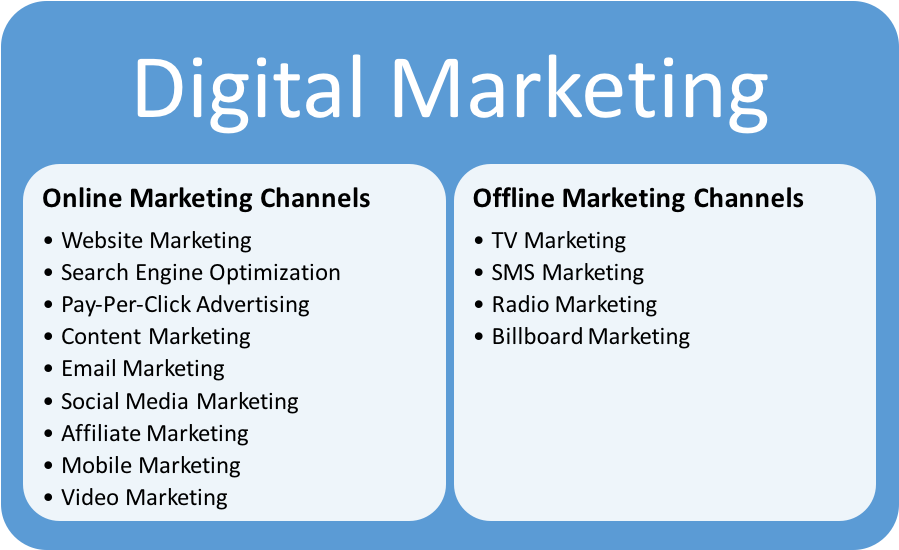
Each of these tools and channels offers a different way to connect with the people who matter most to your business. In the articles that follow, we'll dive deeper into each of these components.
What is the primary characteristic that defines digital marketing?
A key shift from traditional to digital marketing is the change from a one-way broadcast to a two-way conversation.