Digital Marketing Fundamentals
Introduction to Digital Marketing
What Is Digital Marketing?
Digital marketing is any marketing that uses electronic devices and the internet. It's how businesses connect with potential customers on platforms like Google, social media, and email. Think of it as the modern way to get the word out, meeting people where they already spend their time: online.
Unlike traditional marketing, like a billboard or a magazine ad, digital marketing allows for a two-way conversation. Businesses can interact with their audience, get feedback, and build relationships. More importantly, they can see exactly what's working and what isn't by looking at data. This makes it incredibly powerful for businesses of all sizes to reach their goals, whether that's making sales, building awareness, or finding new customers.
Digital marketing is a process of planning, launching, and managing online campaigns to increase sales and awareness for a company.
The Digital Marketing Toolbox
A good digital marketing strategy doesn't rely on just one thing. Instead, it uses a variety of channels that work together. Think of these channels as different tools in a toolbox, each with a specific job.
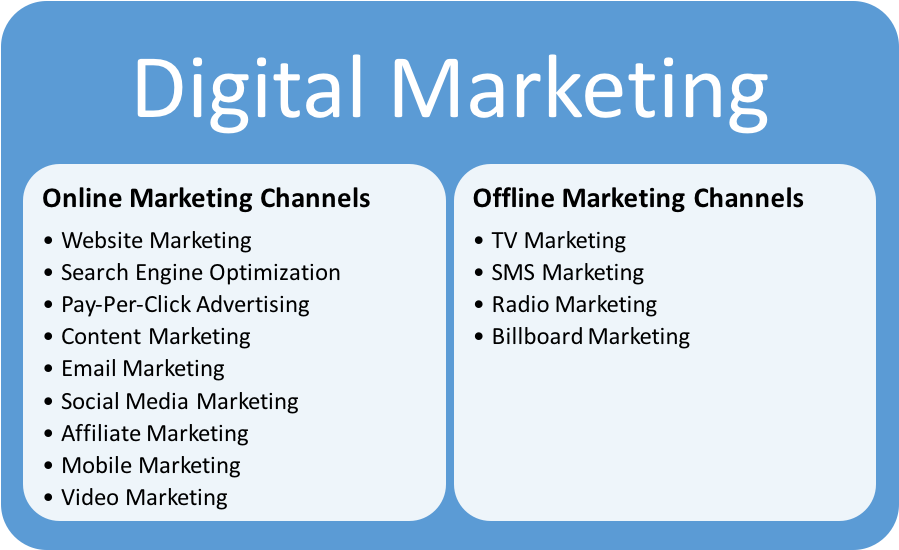
Here are some of the most common tools you'll find:
-
Search Engine Optimization (SEO): This is the process of helping your website show up higher in search engine results, like on Google. The goal is to attract more organic (unpaid) traffic from people searching for what you offer.
-
Content Marketing: This involves creating and sharing valuable online material like blog posts, videos, or infographics. It isn't about directly selling; it's about building trust and authority by providing useful information.
-
Social Media Marketing: This is using platforms like Instagram, Facebook, and LinkedIn to connect with your audience, build your brand, and drive website traffic. Each platform has its own strengths and audience.
-
Email Marketing: This channel lets you communicate directly with people who have given you permission to contact them. It's great for nurturing relationships, sharing updates, and promoting special offers.
-
Paid Advertising (PPC): PPC stands for pay-per-click. It's a way of buying visits to your site, rather than earning them organically. Search engine ads are a common example; you pay a fee each time someone clicks your ad.
Putting It All Together
These channels are most powerful when they work as a team. A standalone social media post is good, but a coordinated effort is much better. An integrated strategy ensures a smooth and consistent experience for the customer.
Imagine a new bakery. They write a blog post about making the perfect sourdough bread (Content Marketing). People find it on Google (SEO) and sign up for their newsletter for more recipes (Email Marketing). The bakery then runs a targeted ad on social media for a sourdough workshop (Paid Advertising), which their email subscribers and social media followers see.
In that example, every channel supported the others, guiding the customer from simply being interested in a recipe to potentially buying a class. This seamless connection is the goal of a great digital marketing strategy.
The Buyer's Journey
To integrate your marketing channels effectively, you need to understand the buyer's journey. This is the path a potential customer takes from first learning about a product to making a purchase. It's typically broken into three stages:
-
Awareness Stage: The person has a problem but doesn't have a name for it yet. They're doing research to understand their issue. Here, content marketing and SEO are key to help them find you.
-
Consideration Stage: The person has now defined their problem and is researching different solutions. They might compare products or services. Email marketing with helpful case studies or detailed guides can be very effective here.
-
Decision Stage: The person is ready to buy and is choosing a specific product or provider. At this point, a targeted ad, a special offer via email, or a free trial can help them make the final choice.
By aligning your marketing activities with these stages, you can deliver the right message at the right time. This makes your marketing more helpful to the customer and more effective for your business.
Ready to test your knowledge? Let's see what you've learned.
What is a primary advantage of digital marketing over traditional marketing?
Which digital marketing channel focuses on earning unpaid traffic from search engines like Google?
Understanding these core concepts is the first step. As you continue, you'll dive deeper into how each of these channels works and how to build strategies that get results.