Digital Marketing Fundamentals
Introduction to Digital Marketing
What Is Digital Marketing?
At its core, digital marketing is simply marketing that uses electronic devices and the internet. Think of it as the modern way to have a conversation with potential customers. Instead of shouting from a billboard on the highway, you're meeting people where they already are: browsing social media, searching on Google, or checking their email.
The goal is to connect with your audience in the right place, at the right time, with the right message.
Businesses of all sizes use digital channels to promote their products, services, and brand. It’s a broad field that covers all of a company's online marketing efforts, from its website to its social media presence.
Digital Marketing
noun
The practice of promoting products, services, or brands using digital channels such as search engines, websites, social media, email, and mobile apps to reach consumers.
From Billboards to Clicks
Marketing has always been about connecting with an audience. For decades, that meant using traditional methods like print ads in newspapers, commercials on TV and radio, and direct mail. While these methods still exist, their dominance faded with the rise of the internet.
The shift to digital wasn't just about changing the channel; it changed the entire game. Traditional marketing is often a one-way street. A company sends a message out and hopes it reaches the right people. Digital marketing, on the other hand, is a two-way conversation. It allows for interaction, feedback, and precise targeting in ways that were previously impossible.
| Feature | Traditional Marketing | Digital Marketing |
|---|---|---|
| Reach | Often limited to a specific geographic area (e.g., local newspaper). | Can be global, reaching anyone with an internet connection. |
| Targeting | Broad and less precise (e.g., all viewers of a TV show). | Highly specific, based on demographics, interests, and online behavior. |
| Cost | Typically high, with large upfront investments (e.g., a TV ad). | More cost-effective, with options for any budget (e.g., a social media ad). |
| Measurement | Difficult to measure direct results. | Highly measurable, with detailed data on clicks, views, and conversions. |
Why It Matters Today
In today's world, a digital presence isn't just an advantage; it's a necessity. The internet has become the primary marketplace for goods, services, and ideas. Digital marketing levels the playing field, allowing a small local shop to compete with a large corporation for customers' attention.
The biggest advantage is data. Every click, share, and purchase can be tracked. This gives businesses incredible insight into what's working and what isn't, allowing them to adjust their strategies in real-time for better results. This data-driven approach means less guesswork and more effective use of marketing budgets.
The landscape is made up of various channels, each with its own purpose and strengths. Understanding these channels is the first step toward building a cohesive strategy.
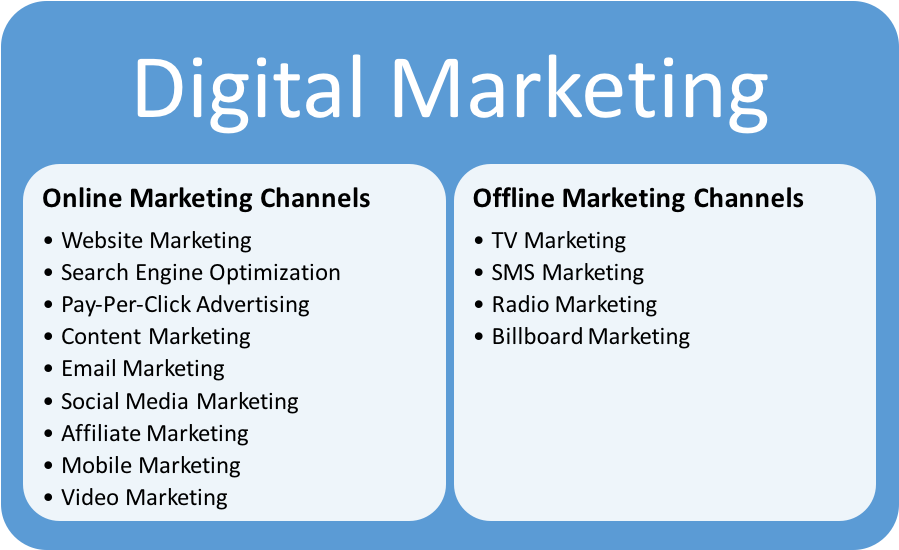
The Digital Marketing Toolkit
Digital marketing isn't just one thing. It's a collection of different strategies and channels that work together. While we'll explore these in more depth later, here's a quick overview of the most common ones:
-
Search Engine Optimization (SEO): The process of optimizing your website to rank higher in search engine results pages (like Google), thereby increasing the amount of organic (free) traffic your website receives.
-
Content Marketing: Creating and sharing valuable, relevant, and consistent content (like blog posts, videos, or infographics) to attract and retain a clearly defined audience.
-
Social Media Marketing (SMM): Promoting your brand and content on social media channels to increase brand awareness, drive traffic, and generate leads.
-
Pay-Per-Click (PPC) Advertising: A model of internet marketing in which advertisers pay a fee each time one of their ads is clicked. The most common type is search engine advertising.
-
Email Marketing: A way to communicate with your leads, prospects, and customers directly in their inbox to promote content, discounts, and events.
Each of these channels offers a unique way to connect with your audience. A strong digital marketing strategy often uses a mix of them to achieve its goals.
What is the fundamental difference between digital marketing and traditional marketing?
A business pays Google a fee every time someone clicks on their ad in the search results. Which digital marketing channel is being used?
Understanding these fundamentals is the key to unlocking the power of marketing in the digital age. It’s a dynamic and constantly evolving field, but its core principles of connecting with people remain the same.