Digital Marketing Fundamentals
Introduction to Digital Marketing
What Is Digital Marketing?
Digital marketing is any marketing effort that uses an electronic device or the internet. Businesses leverage digital channels such as search engines, social media, email, and their websites to connect with current and prospective customers.
Think about the last time you bought something. Did you see an ad on Instagram? Did you search Google for reviews? Maybe you got a promotional email. If so, you've experienced digital marketing firsthand. It's how modern businesses talk to you.
If marketing exists online, it's digital marketing. It's about meeting your audience where they already spend their time.
Old School vs. New School
Before the internet, marketing was a one-way street. Companies pushed messages out through TV ads, radio spots, and newspaper print. This is known as traditional marketing. It was expensive and hard to know if anyone was really listening.
Digital marketing changed the game. It’s a two-way conversation. Businesses can interact with their audience, get instant feedback, and see exactly what's working and what isn't. This direct line of communication builds relationships and trust.
| Feature | Traditional Marketing | Digital Marketing |
|---|---|---|
| Reach | Limited to a specific location or demographic | Potentially global reach, highly targeted |
| Cost | Often very expensive (e.g., TV commercials) | More cost-effective, with options for any budget |
| Engagement | One-way communication, passive audience | Two-way interaction, active engagement |
| Measurement | Difficult to track results accurately | Highly measurable with analytics tools |
The key difference is data. With digital marketing, you can track every click, share, and purchase. This allows businesses to understand customer behavior deeply and make smarter decisions, saving time and money.
A savvy digital marketing strategy can drive website traffic, increase brand visibility, and generate leads - all critical components of business success.
The Digital Marketing Toolkit
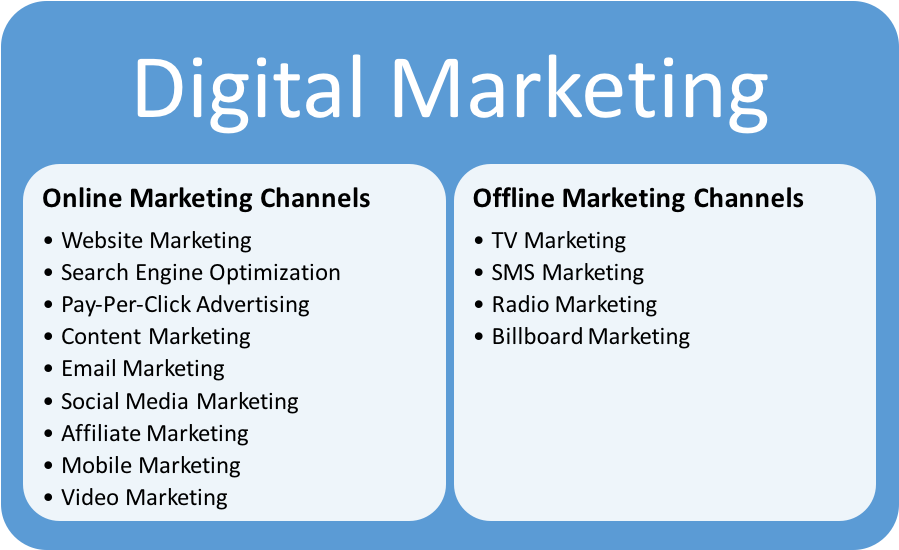
Digital marketing isn't just one thing; it's a collection of tools and strategies. While we'll dive deeper into each one later, here are the main players you should know.
SEO
noun
Search Engine Optimization is the practice of increasing the quantity and quality of traffic to your website through organic search engine results.
Social Media Marketing involves creating content to share on social networks like Facebook, Instagram, or TikTok. The goal is to build a community, drive engagement, and direct traffic to your website.
Content Marketing is all about creating and distributing valuable, relevant content—like blog posts, videos, or podcasts—to attract and retain a clearly defined audience. It's less about selling and more about building trust and authority.
Email Marketing is one of the oldest and still most effective digital channels. It involves sending targeted messages directly to a list of subscribers to nurture leads, share updates, or promote offers.
Now that you have a basic understanding of what digital marketing is and its key components, let's test your knowledge.
What is the primary advantage of digital marketing when compared to traditional marketing?
A business that creates and shares blog posts and videos to attract an audience by providing valuable information is primarily using which strategy?