Digital Marketing Fundamentals
Introduction to Digital Marketing
Marketing in a Digital World
Digital marketing is any marketing that uses electronic devices and the internet. It's how businesses leverage channels like search engines, social media, and email to connect with current and potential customers. Think of it as the difference between shouting from a billboard and having a conversation. Traditional marketing broadcasts a single message to a wide audience, hoping some of it sticks. Digital marketing allows for a two-way dialogue, tailored to individual interests and behaviors.
Digital marketing refers to the promotion of products or services using digital channels, such as search engines, websites, social media, email, and mobile apps.
The key advantage of digital marketing is its measurability. Unlike a magazine ad, you can track exactly how many people saw your online ad, clicked on it, and made a purchase. This data-driven approach allows for constant refinement and a much clearer understanding of your return on investment.
The Digital Marketing Ecosystem
The digital landscape has evolved rapidly. In the early days of the internet, a simple website and some banner ads were enough. Today, the ecosystem is a complex web of interconnected platforms and strategies. Customers might discover a brand through a Google search, follow it on Instagram, read its blog, and then make a purchase after receiving a promotional email. All these touchpoints work together.
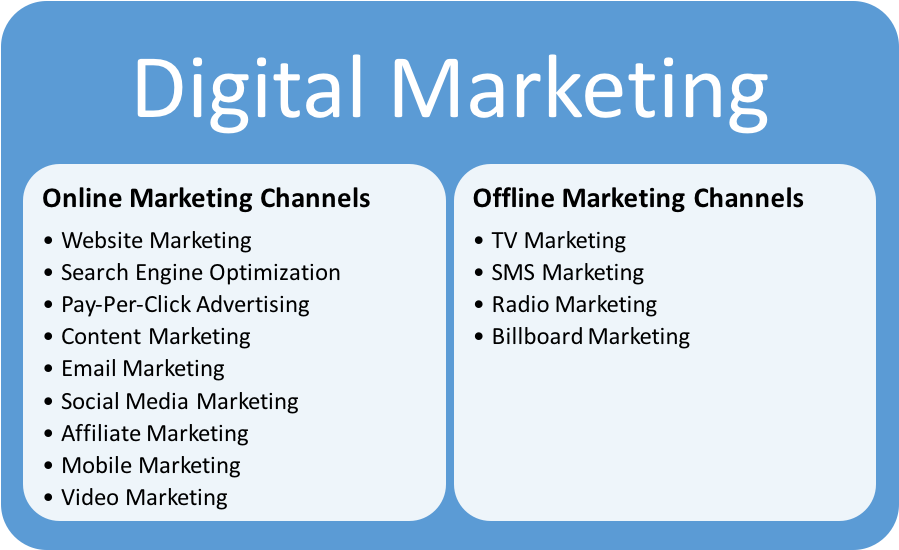
Understanding this ecosystem means recognizing how different channels serve different purposes. Each plays a unique role in guiding a customer from awareness to loyalty.
Key Channels
While there are many facets to digital marketing, most strategies are built around a few core channels. Mastering these is fundamental to success.
| Channel | Description | Goal |
|---|---|---|
| Search Engine Optimization (SEO) | Improving your website to rank higher in search engine results. | Increase organic (non-paid) traffic. |
| Content Marketing | Creating and sharing valuable free content like blog posts, videos, and ebooks. | Attract an audience and build trust. |
| Social Media Marketing (SMM) | Using platforms like Facebook, Instagram, and LinkedIn to build a brand and drive sales. | Build a community and engage with customers. |
| Pay-Per-Click (PPC) Advertising | Paying for ad placements on search engines or social media to drive traffic. | Generate immediate, targeted traffic. |
| Email Marketing | Communicating with an audience through email to promote content, discounts, and events. | Nurture leads and retain customers. |
Effective digital marketing isn't about using every channel; it's about choosing the right channels to reach your specific audience and achieve your business goals.
These channels rarely work in isolation. A strong content marketing piece can be promoted on social media, discovered through SEO, and shared via an email newsletter. This integration is what creates a powerful and cohesive digital marketing strategy.
What is a primary advantage of digital marketing when compared to traditional marketing methods like magazine ads?
A business creates a helpful blog post, shares it on social media, and uses search engine optimization (SEO) to help it rank on Google. This is an example of what?
By understanding these fundamentals, you have a solid base for exploring the more advanced aspects of digital marketing.