Digital Marketing Fundamentals
Introduction to Digital Marketing
What Is Digital Marketing?
Digital marketing is any marketing effort that uses an electronic device or the internet. Businesses leverage digital channels such as search engines, social media, email, and their websites to connect with current and prospective customers.
Think about the last time you bought something. Did you see an ad for it on Instagram? Did you search for reviews on Google? Maybe you got an email with a discount code. All of those touchpoints are part of digital marketing. It's about meeting people where they are, and increasingly, they're online.
At its core, digital marketing is simply the process of promoting products, services, or brands using online channels.
Digital vs. Traditional
Before the internet, marketing was a different game. Traditional marketing relied on things like billboards, magazine ads, TV commercials, and direct mail. These methods are still around, but they cast a very wide net, hoping to catch the right people.
Digital marketing is different. It’s more direct, personal, and measurable. Instead of putting a billboard on a highway and hoping a potential customer drives by, you can place a digital ad directly in front of someone who has shown interest in your product. This direct line to the consumer changes everything.
| Feature | Traditional Marketing | Digital Marketing |
|---|---|---|
| Audience | Broad, general | Targeted, specific |
| Interaction | One-way communication | Two-way conversation |
| Cost | Often expensive | More cost-effective |
| Measurement | Difficult to track ROI | Highly measurable |
| Speed | Slow to launch and change | Fast to implement and adapt |
The ability to track results is a huge advantage. With a magazine ad, it's hard to know exactly how many people saw it and then made a purchase. With a digital ad, you can track clicks, views, and sales with precision. This data allows you to see what's working, what isn't, and adjust your strategy on the fly.
Key Channels
Digital marketing isn't a single strategy but a collection of different channels and tactics. Each one serves a different purpose, but they often work together to create a cohesive marketing plan. Understanding these channels is the first step toward building a successful online presence.
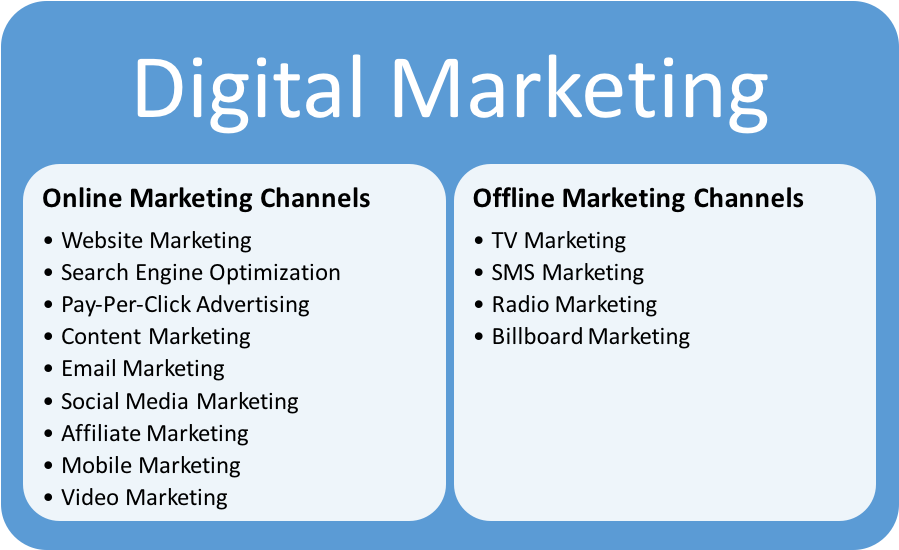
Here's a quick look at some of the most common online marketing channels:
-
Search Engine Optimization (SEO): This is the practice of optimizing your website to rank higher in search engine results, like on Google. The higher you rank, the more organic (non-paid) traffic you get.
-
Pay-Per-Click (PPC) Advertising: This involves paying for ad placements. For example, the sponsored results you see at the top of a Google search page are PPC ads. You pay a fee each time someone clicks your ad.
-
Social Media Marketing: This involves promoting your brand on social media platforms like Facebook, Instagram, LinkedIn, and TikTok. It's great for building a community and engaging directly with your audience.
-
Content Marketing: This focuses on creating and distributing valuable, relevant content—like blog posts, videos, or infographics—to attract and retain a clearly defined audience.
-
Email Marketing: This is one of the oldest and still most effective digital channels. It involves sending targeted messages directly to a list of subscribers to nurture leads and drive sales.
These are just a few of the tools in a digital marketer's toolkit. The specific mix of channels a business uses will depend on its goals, audience, and budget.
Which of the following best describes the primary advantage of digital marketing over traditional marketing?
A startup wants to appear at the very top of Google's search results immediately and is willing to pay a fee for each person who clicks on their link. Which digital marketing channel should they use?
Understanding these fundamentals is the first step. By grasping what digital marketing is and how it differs from traditional methods, you're ready to explore the specific strategies that can help a business grow.