Digital Marketing Fundamentals
Introduction to Digital Marketing
What Is Digital Marketing?
Digital marketing is any marketing effort that uses an electronic device or the internet. It's how businesses use digital channels like search engines, social media, email, and their websites to connect with current and prospective customers.
Marketing has always been about connecting with your audience in the right place and at the right time. In the past, that meant ads in newspapers, on billboards, or on the radio. While those methods still exist, today it means meeting people where they spend a huge amount of their time: online.
Think of it this way: traditional marketing casts a wide net, while digital marketing uses a fishing rod to catch specific types of fish.
Traditional vs. Digital
The shift from traditional to digital marketing represents a fundamental change in how businesses communicate with their customers. Digital methods offer a level of precision and interactivity that traditional channels can't match. Let's break down the key differences.
| Feature | Traditional Marketing | Digital Marketing |
|---|---|---|
| Audience | Broad, general audience | Specific, targeted segments |
| Interaction | One-way communication | Two-way, interactive dialogue |
| Cost | Often high with uncertain ROI | More cost-effective with clear ROI |
| Measurement | Difficult to track results accurately | Highly measurable with real-time data |
| Pacing | Long lead times, static campaigns | Fast, flexible, and adaptable campaigns |
The biggest advantage of digital marketing is its trackability. Unlike a billboard, where you can only guess how many people saw it, a digital ad can tell you exactly how many people viewed it, clicked on it, and made a purchase. This data allows for constant refinement and improvement.
The Digital Marketing Toolkit
Digital marketing isn't just one thing; it's a collection of different channels and strategies, each with its own strengths. A good digital marketing plan often uses several of these channels in combination to reach the widest possible audience.
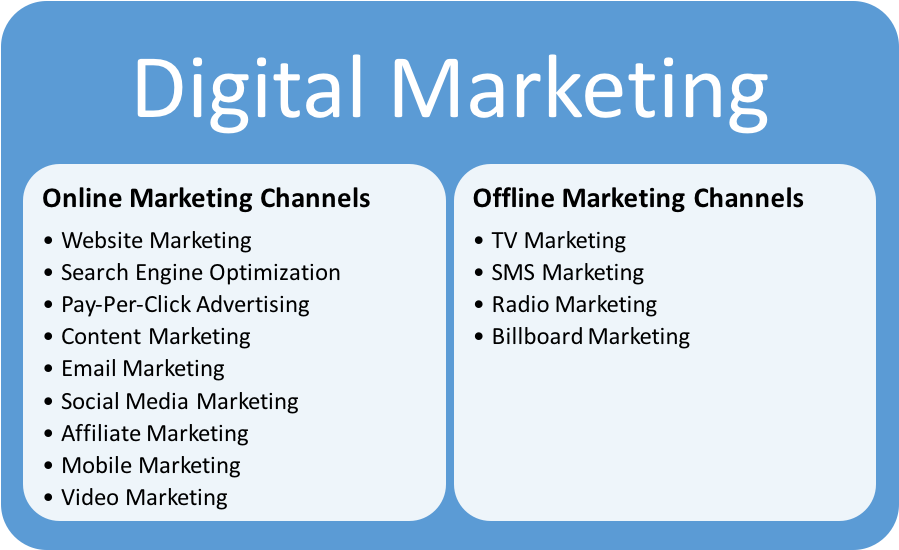
Here are some of the most common channels:
- Search Engine Optimization (SEO): The process of optimizing your website to rank higher in search engine results pages, thereby increasing the amount of organic (free) traffic your website receives.
- Pay-Per-Click (PPC) Advertising: A model where marketers pay a fee each time one of their ads is clicked. The most popular type of PPC is search engine advertising.
- Social Media Marketing: Promoting your brand and content on social media channels to increase brand awareness, drive traffic, and generate leads.
- Content Marketing: Creating and sharing valuable free content—like blog posts, videos, and ebooks—to attract and convert prospects into customers.
- Email Marketing: A way to communicate with your audience directly. It's often used to promote content, discounts, and events, as well as to direct people toward the business's website.
Benefits and Challenges
The benefits of digital marketing are clear. It allows even small businesses to compete with large corporations by reaching a global audience. The ability to target specific demographics and interests makes campaigns more efficient, and real-time analytics help marketers understand what's working and what isn't.
However, it's not without its challenges. The digital landscape is constantly changing, with new platforms and algorithms emerging all the time. This means marketers must continuously learn and adapt their strategies. The low barrier to entry also means there's a lot of online noise, making it harder to capture your audience's attention.
Now that you understand the basics, let's test your knowledge.
What is the primary advantage of digital marketing over traditional marketing methods like billboards?
A new online bookstore wants to increase its website traffic from Google searches without paying for ads. Which digital marketing channel should be their primary focus?
Understanding these foundational concepts is the first step. By knowing the difference between channels and weighing the pros and cons, you can start to think about how to build a strategy that works for your specific goals.