Digital Marketing Foundations
Defining Digital Marketing
The New Town Square
Businesses have always gone where the people are. A few centuries ago, that was the physical town square. It was the heart of the community, where everyone gathered to shop, socialise, and catch up on news. If you wanted to sell something, you set up a stall right there in the middle of the action.
Today, the town square is digital. People gather on search engines like Google, on social media platforms like Instagram and TikTok, and in their email inboxes. This vast online world is the new 'digital landscape'. Digital marketing is simply the act of setting up your stall in this new, bustling square. It’s how businesses attract, engage, and connect with people using the internet and electronic devices.
Instead of shouting to a passing crowd, you're having a direct conversation with people who are already interested in what you have to offer.
From Broadcasting to Engaging
Traditional marketing, the kind you see on billboards or in magazines, is like using a megaphone. It broadcasts a single message to a wide, general audience, hoping some of the right people will hear it. It’s a one-way street.
Digital marketing is different. It’s a two-way conversation. It allows businesses to interact with customers, answer their questions, and build relationships. This shift from broadcasting to engaging is fundamental. You're not just talking at people; you're talking with them.
| Feature | Traditional Marketing | Digital Marketing |
|---|---|---|
| Interaction | One-way (Broadcasting) | Two-way (Engaging) |
| Audience | Broad, general | Specific, targeted |
| Measurement | Difficult, often an estimate | Precise, real-time data |
| Pace | Slow, long lead times | Fast, immediate adjustments |
This interactivity is possible because consumer behaviour has changed. We no longer passively consume information. We actively search for it, compare options, and read reviews before making a decision. Businesses must be present and helpful during that entire process.
The Core Advantages
Why has nearly every business embraced digital marketing? It comes down to three powerful benefits: reach, targeting, and measurement.
Reach
noun
The total number of different people or households exposed to a particular medium or message at least once over a period of time.
With traditional marketing, your reach is limited by geography. A newspaper ad only reaches the people who read that paper. The internet, however, has no borders. A small business in Manchester can sell its products to customers in Manila as easily as to someone down the street.
Targeting is perhaps the biggest game-changer. A TV advert for a steakhouse is shown to everyone watching that channel, including vegetarians. With digital marketing, you can choose exactly who sees your message. You can target people based on their age, location, interests, and even their past online behaviour. This precision makes marketing far more efficient and cost-effective.
Finally, everything is measurable. You know exactly how many people saw your post, clicked your link, or bought your product. This data is invaluable. It tells you what’s working and what isn’t, allowing you to refine your strategy in real-time instead of waiting weeks or months to see results.
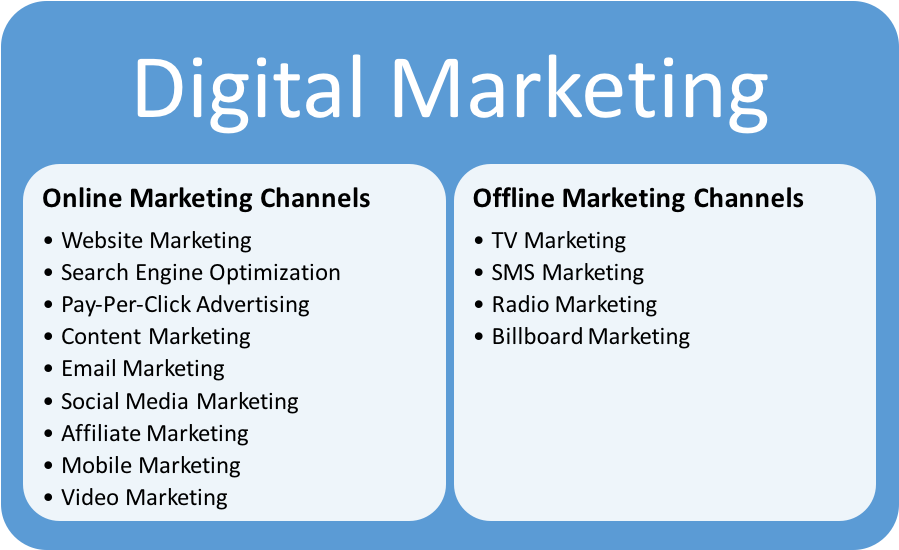
These advantages work together, allowing businesses to connect with the right people, with the right message, at the right time. That's the core of modern marketing.
What is the fundamental difference between the approach of traditional marketing and digital marketing, as described in the text?
A steakhouse places an advert on a popular television channel. Why is this an example of inefficient 'targeting' compared to a digital marketing campaign?