Digital Marketing for Beginners
Defining Digital Marketing
What Is Digital Marketing?
Think of a local bakery on a high street. To get customers, it needs a physical shop where people can see the cakes in the window and smell the fresh bread. Digital marketing is about creating a similar presence, but online. It's the process of using the internet to connect with customers and promote a business.
Digital marketing is any marketing effort that uses an electronic device or the internet. Businesses leverage digital channels to connect with current and prospective customers.
Instead of a physical storefront, you have a 'digital storefront'. This isn't just one thing. It's a combination of different online places where people can find you, learn about what you do, and decide to buy from you.
Traditional vs. Digital
Let's go back to our bakery. The owner might pay for an advert on a local radio station or put up a billboard on a busy road. This is traditional marketing. It can reach a lot of people, but there's a big problem: the owner has no idea exactly who saw the billboard or heard the ad. Did it lead to more sales? It's hard to say.
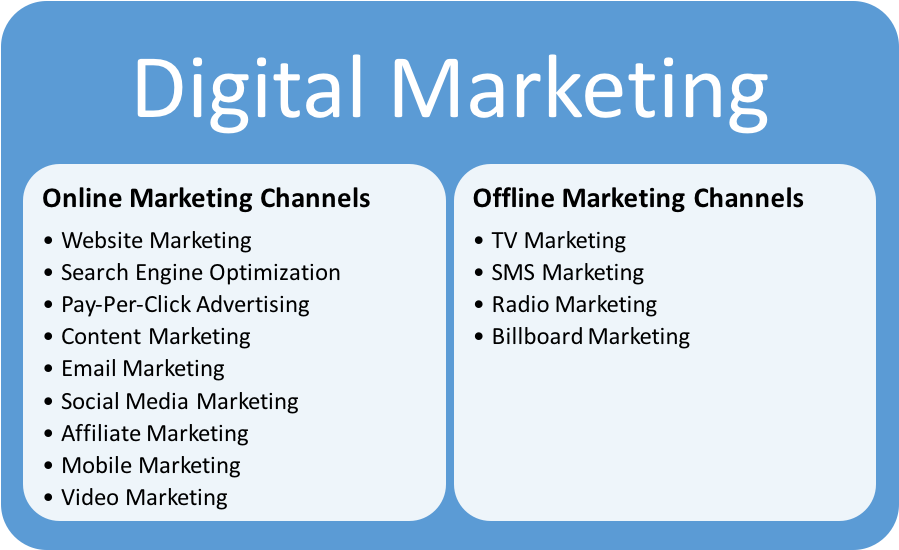
Now, imagine the bakery posts a picture of a new chocolate cake on social media. They can see exactly how many people 'liked' the photo, how many shared it with friends, and how many clicked a link to the bakery's website. If they run an ad, they can target it to people in their town who have a birthday coming up.
The key difference is measurability. With digital marketing, you can track the results of your efforts in real-time. You know what works and what doesn't, which means you can make smarter decisions about how you spend your time and money.
| Feature | Traditional Marketing (Billboard) | Digital Marketing (Social Media Ad) |
|---|---|---|
| Audience | General public, anyone driving by | Specific groups (e.g., by age, location, interests) |
| Tracking | Difficult to measure direct impact on sales | Clicks, views, shares, and sales are trackable |
| Interaction | One-way communication | Two-way; customers can comment and share |
| Cost | Often high initial cost | Can start with a small budget and adjust based on results |
Your Digital Storefront
Your online presence is made up of several key parts, each with a different job. Think of them as different parts of your business operation.
-
Website: This is your main shop. It's the central place where customers can find everything they need to know about you, from your products and prices to your opening hours.
-
Social Media: This is like your stall in the town market. It's where you have conversations, share daily specials, and build a community around your brand. Platforms like Facebook, Instagram, or TikTok let you show off the personality behind your business.
-
Search Engines: Think of Google or Bing as the map that helps people find you. When someone searches for 'best bakery near me', a search engine's job is to point them in your direction. Being easy to find here is crucial.
By using these channels together, you create a strong online presence. A customer might discover your bakery through a search, follow you on social media to see your daily creations, and then visit your website to place an order. It's not just about 'posting on the internet'; it's a connected strategy for growing a business.
What is the key advantage of digital marketing compared to traditional marketing, such as a radio advert?
According to the analogy in the text, which part of a digital presence acts as the business's 'main shop'?
Digital marketing gives businesses powerful tools to reach the right people and see exactly what's working, something that was much harder with traditional methods.