Digital Marketing Essentials
Digital Marketing Basics
What is Digital Marketing?
At its core, digital marketing is any marketing effort that uses an electronic device or the internet. Businesses leverage digital channels such as search engines, social media, email, and their websites to connect with current and prospective customers.
Digital Marketing is the process of promoting products, services, and personal brands using the internet and digital technologies.
Think of it this way: if a marketing campaign involves digital communication, it's digital marketing. This goes far beyond just placing an ad on a social media feed. It’s a broad field that includes everything from your website's design to the emails you send to your customers.
From Billboards to Clicks
Not long ago, marketing was dominated by print ads in magazines, commercials on television, and giant billboards along the highway. This is what we now call traditional marketing. It was about broadcasting a message to a wide audience and hoping it reached the right people.
Then the internet changed everything. Instead of waiting for customers to find them in a newspaper, businesses could now reach them directly in their homes, on their computers, and eventually, in their pockets. This shift from traditional to digital wasn't just about changing the channel; it changed the entire approach.
| Feature | Traditional Marketing | Digital Marketing |
|---|---|---|
| Audience | Broad, general audience | Targeted, specific demographics |
| Interaction | One-way communication | Two-way, interactive conversation |
| Measurement | Difficult to measure ROI | Highly measurable with analytics |
| Cost | Often high-cost | More cost-effective options available |
Digital marketing allows for a conversation. A brand can interact with its audience, get feedback in real-time, and build a community. More importantly, every click, view, and purchase can be tracked, giving marketers clear insight into what works and what doesn't.
The Core Components
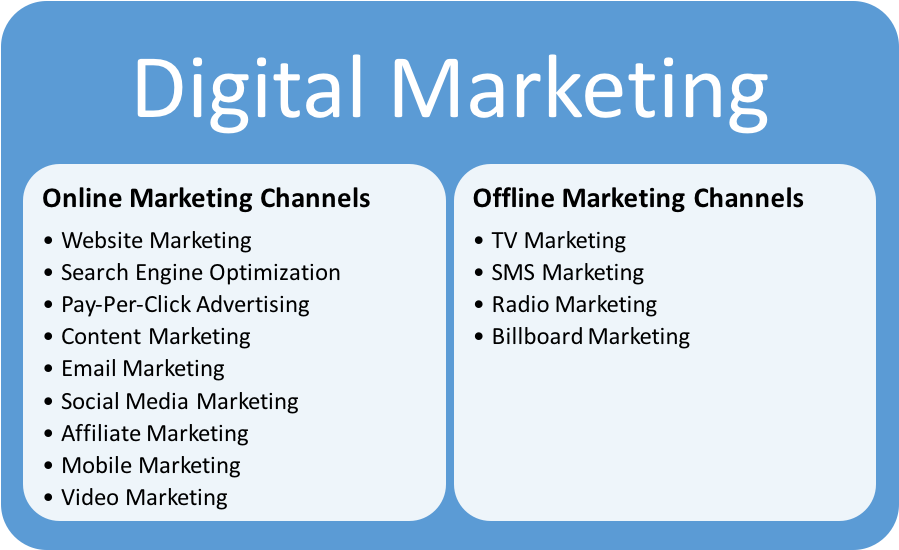
Digital marketing isn't a single strategy but a collection of different channels and tactics working together. While there are many specializations, most fall under a few key categories. Understanding these components is the first step to building a cohesive plan.
Each of these components plays a unique role. SEO helps you get seen on Google, content marketing builds trust with your audience, and social media allows you to engage with a community. A strong strategy uses a mix of these channels to reach people at different stages of their journey.
Benefits and Challenges
The primary benefit of digital marketing is the ability to reach a massive audience in a way that is both cost-effective and measurable. You can target specific demographics with incredible precision, ensuring your message is seen by the people most likely to be interested. You can start a campaign with a small budget, test what works, and scale up from there.
Unlike a billboard, where you can only guess how many people saw it, a digital ad can tell you exactly how many people clicked, how long they stayed on your site, and whether they made a purchase.
However, the digital world comes with its own challenges. The space is incredibly crowded, making it hard to stand out. The technology and platforms are constantly changing, so marketers must always be learning. There are also growing concerns about data privacy and how customer information is used.
Despite these hurdles, the advantages are clear. By leveraging the right digital channels, businesses can connect with customers in more meaningful and effective ways than ever before.
Now that you have a foundational understanding of what digital marketing is and its key components, let's test your knowledge.
What is the core characteristic of any digital marketing effort?
What is a primary advantage digital marketing has over traditional marketing?
Understanding these fundamentals is the first step toward building and executing a successful marketing plan in the digital age.