Digital Marketing Essentials
Introduction to Digital Marketing
What Is Digital Marketing?
At its core, digital marketing is about connecting with people where they spend a lot of their time: online. It's the practice of promoting products, services, or brands using digital channels like search engines, social media, email, and websites.
Think of it as building relationships and starting conversations, but on a much larger scale, with the help of technology.
This goes beyond just running ads. It includes everything from the video you watch on your phone, to the newsletter in your inbox, to the search results you see on Google. The goal is to reach potential customers with messages that are relevant and helpful to them, right when they're looking for answers or entertainment.
From Print to Pixels
Marketing has been around for centuries, but it used to be a one-way street. Companies would broadcast messages through TV commercials, radio spots, and newspaper ads, hoping someone would pay attention. There was no easy way to get feedback or measure exactly how many people saw an ad and then bought a product.
The internet changed everything. Suddenly, companies could interact with customers directly. This shift from traditional to digital marketing wasn't just about new tools; it was a completely new way of thinking.
| Feature | Traditional Marketing | Digital Marketing |
|---|---|---|
| Communication | One-way broadcast | Two-way conversation |
| Audience | Broad, general public | Specific, targeted groups |
| Measurement | Difficult, often estimated | Precise, real-time data |
| Cost | Often high | More cost-effective options |
| Pacing | Slow, long campaigns | Fast, easy to adjust |
Digital marketing allows for a level of precision that was once impossible. A small business can now reach a specific audience across the globe with a modest budget.
The Digital Marketing Playground
Digital marketing isn't a single thing; it's a collection of different channels and strategies working together. While there are many specialized areas, most fall into a few key categories.
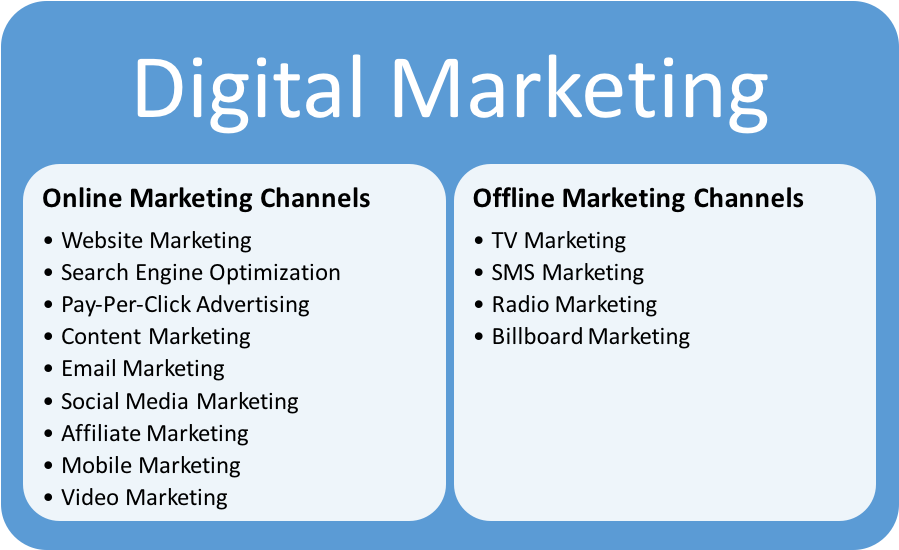
Here are some of the most common channels:
-
Search Engine Optimization (SEO): This is the process of making a website more visible in search engine results. When you search for something on Google, the websites at the top didn't get there by accident.
-
Social Media Marketing: This involves using platforms like Instagram, Facebook, and LinkedIn to build a community, share content, and engage with customers.
-
Content Marketing: The idea here is to create and share valuable free content—like blog posts, videos, and podcasts—to attract and retain an audience. It's about teaching, not just selling.
-
Email Marketing: A direct line to your audience's inbox. This channel is used to nurture relationships, share news, and promote offers.
-
Pay-Per-Click (PPC) Advertising: These are the paid ads you see at the top of search results or in your social media feeds. Advertisers pay a fee each time someone clicks on their ad.
Benefits and Hurdles
The biggest advantage of digital marketing is the ability to track everything. Marketers can see exactly how many people opened an email, clicked on a link, or bought a product from an ad. This data allows them to understand what's working and what's not, and to make quick adjustments. This is a huge leap from traditional methods, where results were often a guessing game.
Personalization is another key benefit. Digital tools can tailor messages to specific individuals based on their past behavior or interests, making marketing feel less like an interruption and more like a helpful suggestion.
Data-driven decision-making is crucial in digital marketing as it enables businesses to track performance, understand customer behavior, and refine strategies based on real-time insights.
However, the digital world also presents challenges. It's crowded and competitive, making it harder to stand out. Things change quickly, so what works today might be outdated tomorrow. Staying current requires constant learning and adaptation. Finally, with so much data comes the responsibility to protect user privacy, a growing concern for both consumers and marketers.
Time to review what we've covered.
Ready to test your knowledge?
What is the core purpose of digital marketing?
Which digital marketing channel focuses on improving a website's visibility in unpaid search engine results?
Digital marketing provides a powerful set of tools to connect with audiences in meaningful ways. By understanding the core channels and principles, you can start to see the strategies at work all around you online.