Digital Marketing Essentials
Introduction to Digital Marketing
What Is Digital Marketing?
At its core, digital marketing is simply marketing that uses electronic devices or the internet. It's the art of connecting with customers where they spend their time: online.
If your marketing efforts are discoverable on the Internet or accessible on digital devices, they’re considered digital marketing.
Think about the last time you bought something. Did you see an ad for it on social media? Did you search for reviews online? Maybe you got an email with a discount code. All of these are examples of digital marketing in action. It's a broad field that covers everything from your website to your online branding and digital advertising.
A Brief History
Marketing has always been about connecting with your audience in the right place at the right time. In the past, that meant print ads, billboards, and television commercials. But when the internet became widely accessible in the 1990s, the game changed.
The first clickable web ad went live in 1994. Soon after, search engines like Yahoo and Google emerged, creating a new way for businesses to be found. The rise of social media in the mid-2000s and the explosion of smartphones a few years later cemented digital marketing as a critical part of any business strategy. The focus shifted from pushing messages at people to pulling them in with useful and engaging content.
The Main Channels
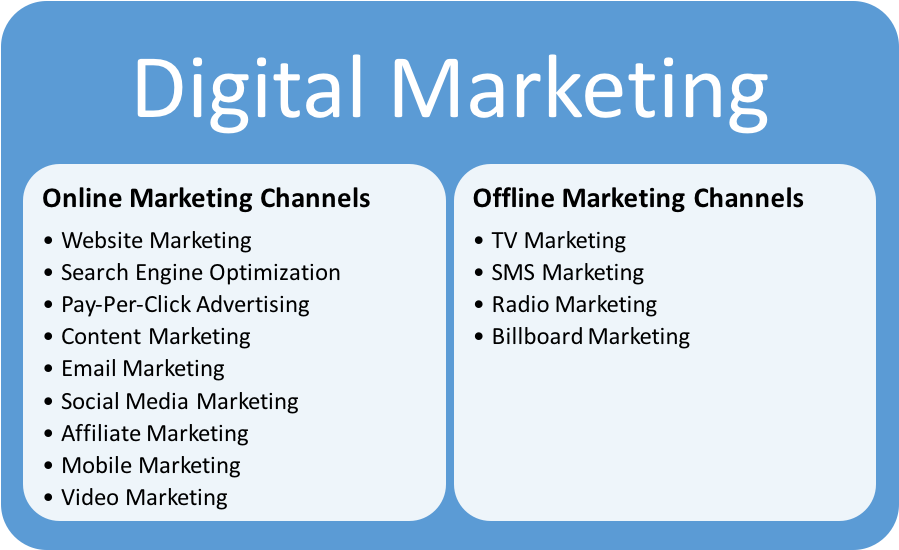
Digital marketing isn't just one thing; it's a collection of different channels, each with its own strengths. A good strategy uses a mix of these to create a unified presence.
Let's break down these key channels.
SEO
noun
Search Engine Optimization is the practice of increasing the quantity and quality of traffic to your website through organic search engine results.
Content marketing is all about creating and sharing valuable free content—like blog posts, videos, and podcasts—to attract and convert prospects into customers. This builds trust and positions your brand as an authority.
Content is vital to digital marketing because of the strong bonds it creates between customer and organization.
Social Media Marketing involves promoting your brand on platforms like Instagram, Facebook, and LinkedIn. It's a great way to build a community, engage with your audience, and drive traffic.
Email Marketing is one of the oldest and most effective channels. It involves sending targeted messages directly to a list of subscribers to nurture leads and encourage repeat business.
Finally, Paid Advertising, also known as Pay-Per-Click (PPC), is when you pay for your ads to be placed on search engines or social media platforms. You pay a fee each time someone clicks your ad.
Why It Matters
In today's world, a strong digital presence is no longer optional; it's essential. Digital marketing levels the playing field, allowing small businesses to compete with large corporations. It provides measurable results, so you know exactly what's working and what's not. You can track everything from the number of people who see your ad to how many make a purchase.
Most importantly, digital marketing allows you to target specific audiences with personalized messages. Instead of broadcasting a single message to a massive, undefined group, you can reach the right people at the right moment, making your marketing more efficient and effective.
| Benefit | Description |
|---|---|
| Global Reach | A website allows you to find new markets and trade globally for only a small investment. |
| Lower Cost | A properly planned and well-targeted digital marketing campaign can reach the right customers at a much lower cost than traditional marketing methods. |
| Measurable Results | Web analytics and other online metric tools make it easier to establish how effective your campaign has been. |
| Personalization | If your customer database is linked to your website, you can greet them with targeted offers the moment they land on your site. |
Ready to test your understanding of these core concepts?
What is the fundamental goal of digital marketing?
What major shift in marketing strategy occurred with the rise of the internet?
Understanding these foundations is the first step. By combining different channels and focusing on the customer, businesses can build a powerful strategy for growth.