Digital Marketing Essentials
Introduction to Digital Marketing
What is Digital Marketing?
At its core, digital marketing is simply marketing that uses electronic devices and the internet. It's how businesses leverage digital channels to connect with current and prospective customers. This includes everything from search engines and social media to email and websites.
Digital marketing refers to the promotion of products or services using digital channels, such as search engines, websites, social media, email, and mobile apps.
Think about your own day. You probably checked social media, used a search engine, and opened a few emails. These are the modern-day marketplaces where brands and customers meet. The main goal of digital marketing is to be present in these spaces, offering value and building relationships with people where they spend their time.
Digital vs. Traditional Marketing
For a long time, marketing was dominated by traditional methods like television commercials, radio ads, and print media. While these still have their place, digital marketing offers several key advantages that have made it essential for modern businesses.
The biggest difference is the ability to interact with your audience in real-time and measure the results of your efforts with incredible accuracy.
| Feature | Traditional Marketing | Digital Marketing |
|---|---|---|
| Reach | Broad, often untargeted (e.g., a national TV ad) | Highly specific, targeted to demographics and interests |
| Cost | Often very expensive with a high barrier to entry | Scalable, can be cost-effective even with a small budget |
| Interaction | One-way communication (company to consumer) | Two-way conversation (dialogue with customers) |
| Measurement | Difficult to measure direct impact on sales | Highly measurable with detailed analytics (clicks, views, conversions) |
With digital marketing, a small business can compete with a large corporation by targeting a niche audience very effectively. You can track exactly how many people saw your ad, clicked on it, and made a purchase. This data allows you to refine your strategy and spend your budget more wisely, which is a major shift from the guesswork often involved in traditional marketing.
Common Digital Marketing Channels
Digital marketing isn't just one thing; it's a collection of different strategies and channels. Each channel has its own strengths and is suited for different goals. Think of them as different tools in a toolbox.
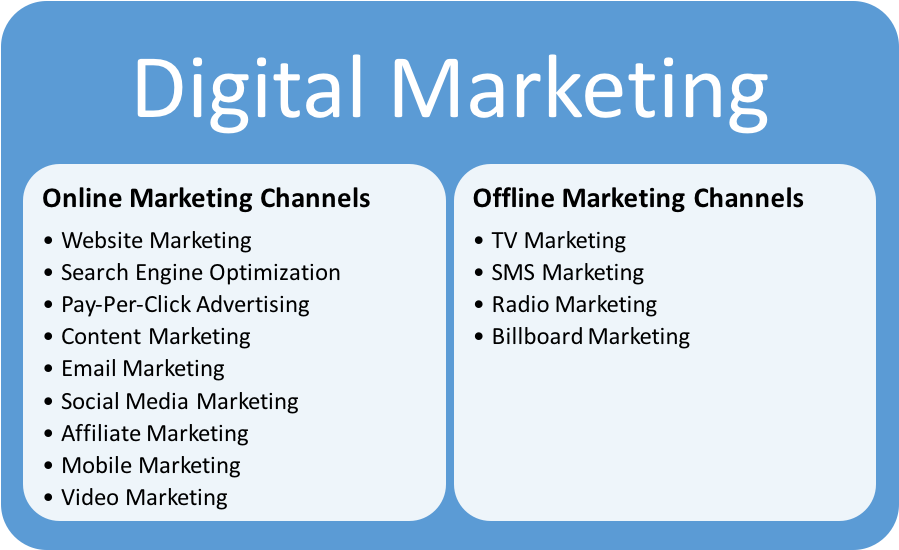
Some of the most common channels include:
- Search Engine Optimization (SEO): The process of optimizing your website to rank higher in search engine results, increasing organic (free) traffic.
- Content Marketing: Creating and sharing valuable free content—like blog posts, videos, and ebooks—to attract and retain a clearly defined audience.
- Social Media Marketing: Using platforms like Facebook, Instagram, and LinkedIn to build brand awareness, drive traffic, and generate sales.
- Pay-Per-Click (PPC) Advertising: Paying a fee each time one of your ads is clicked. Google Ads is the most popular form of PPC.
- Email Marketing: Communicating with your audience directly through email to promote content, discounts, and events.
Organizing Your Efforts: The PESO Model
With so many channels available, it helps to have a framework for thinking about how they work together. The PESO model is a great way to categorize your marketing efforts. PESO stands for Paid, Earned, Shared, and Owned media.
- Paid Media: This is marketing you pay for. Think of Google Ads, social media ads, or sponsored posts. You pay to get your message in front of a specific audience.
- Earned Media: This is when others talk about you. It's the digital version of word-of-mouth and includes press mentions, customer reviews, and influencer shoutouts. You don't pay for it directly, but you "earn" it through your actions and reputation.
- Shared Media: This refers to the content shared across social networks. It involves listening to your audience, participating in conversations, and sharing content that resonates with your community.
- Owned Media: These are the digital channels you control completely, like your website, blog, and email list. You're not renting space; you own the platform.
A strong digital marketing strategy typically uses a mix of all four to build a comprehensive online presence.
Ready to check your understanding of these core concepts?
What is a key advantage of digital marketing over traditional marketing methods like television or print ads?
A fashion blogger writes an unsolicited, positive review of your new clothing line. According to the PESO model, this is an example of what type of media?
Understanding these fundamentals is the first step toward building an effective digital strategy. Now you have a map of the digital landscape and the tools you can use to navigate it.