Digital Marketing Essentials
Introduction to Digital Marketing
What Is Digital Marketing?
Digital marketing is any marketing that uses electronic devices and the internet. Businesses leverage digital channels such as search engines, social media, email, and their websites to connect with current and prospective customers.
Think about the last time you bought something. Did you see an ad on Instagram? Search for reviews on Google? Get a promotional email? All of those touchpoints are part of digital marketing. Unlike traditional marketing (like print ads or billboards), digital marketing allows for real-time feedback and precise targeting. It's a two-way conversation, not a one-way broadcast.
The goal is to meet people where they spend their time: online.
This isn't just about selling things. It's about building a brand, creating a community, and providing value to your audience. When done right, digital marketing makes people feel connected to a business, turning them from one-time buyers into loyal fans.
The Main Channels
Digital marketing isn't a single thing. It's a collection of different tools and strategies that work together. While there are many specialized channels, most fall into a few key categories.
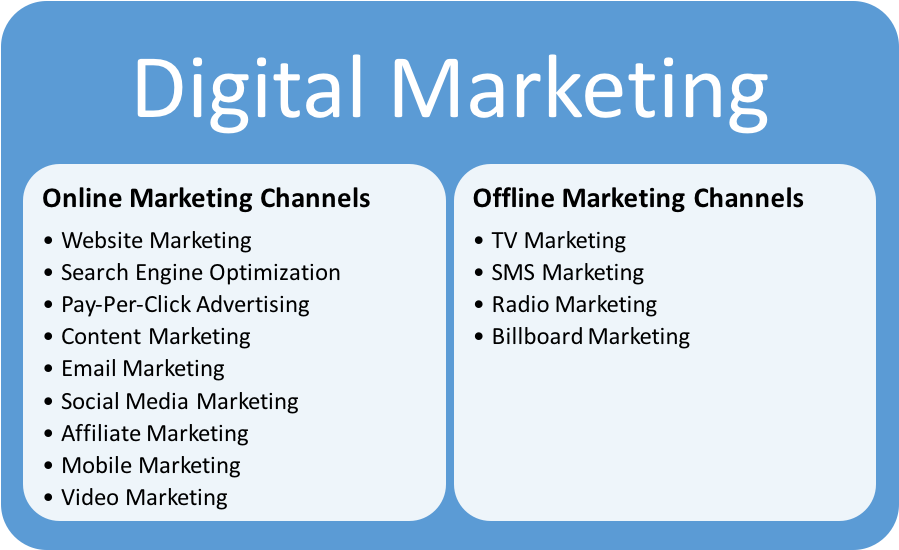
Here are the heavy hitters:
-
Search Engine Optimization (SEO): This is the process of optimizing your website to rank higher in search engine results, like on Google. The higher you rank, the more likely people are to find you when they're searching for something you offer.
-
Content Marketing: This involves creating and sharing valuable free content—like blog posts, videos, or podcasts—to attract and retain a clearly defined audience. It's about showing your expertise and building trust, not just pitching your product.
-
Social Media Marketing: This is the use of social media platforms like Facebook, Instagram, and LinkedIn to promote a product or service. It's great for building a community, engaging with customers directly, and running targeted ads.
-
Email Marketing: One of the oldest but still most effective channels. Email marketing allows you to communicate directly with people who have opted in to hear from you. It's perfect for nurturing leads, sharing news, and promoting special offers.
-
Paid Advertising: This is also known as pay-per-click (PPC) advertising. You pay a fee each time someone clicks on your ad. Google Ads and Facebook Ads are the most common platforms. It's a fast way to get traffic and test what messages resonate with your audience.
Digital marketing is a process of planning, launching, and managing online campaigns to increase sales and awareness for a company.
These channels rarely work in isolation. A great piece of content can be promoted on social media, discovered through SEO, and shared via an email newsletter. A strong digital strategy weaves them together seamlessly.
Following the Buyer's Journey
A great marketing strategy meets customers where they are. The "buyer's journey" is a framework that maps out the active research process someone goes through before making a purchase. It typically has three stages:
- Awareness: The person has a problem or a need but hasn't defined it yet. They're just starting their research.
- Consideration: They've clearly defined their problem and are now researching all the available options to solve it.
- Decision: They've narrowed down their options and are ready to choose one and make a purchase.
Different digital marketing channels are more effective at different stages of this journey. You wouldn't propose on the first date, and you wouldn't ask for a sale the first time someone hears about your brand. Your strategy should guide them from one stage to the next.
| Buyer's Journey Stage | Goal | Key Channels |
|---|---|---|
| Awareness | Attract strangers & introduce your brand | Content Marketing, SEO, Social Media |
| Consideration | Engage prospects & show why you're a good fit | Email Marketing, In-depth Content (e.g., ebooks) |
| Decision | Convert leads into customers | Paid Ads, Email Offers, Case Studies |
By aligning your marketing efforts with the buyer's journey, you provide the right information at the right time. This builds trust and makes the sales process feel natural and helpful rather than pushy.
Ready to check your understanding? Let's see what you've learned.
What is a key advantage of digital marketing compared to traditional marketing like print ads?
A potential customer realizes they have a problem but hasn't defined it or started looking for solutions yet. Which stage of the buyer's journey are they in?
Understanding these core concepts is the first step. You now have a map of the digital marketing landscape, from the channels you can use to the customer journey you need to follow.