Digital Marketing Essentials
Digital Marketing Basics
What Is Digital Marketing?
At its core, digital marketing is any marketing effort that uses an electronic device or the internet. It's how businesses leverage digital channels like search engines, social media, email, and websites to connect with current and prospective customers.
Think of it like this: if traditional marketing is a megaphone shouting a single message to a crowd, digital marketing is a series of one-on-one conversations happening at the same time. It allows you to reach a massive audience, but also to tailor your message to individuals based on their interests and behaviors.
The goal is simple: meet people where they spend their time and attention—which, today, is overwhelmingly online.
From Print to Pixels
Marketing has always been about connecting with your audience in the right place at the right time. In the past, that meant billboards, magazine ads, and TV commercials. While those methods still exist, the rise of the internet has shifted the balance of power dramatically.
Digital marketing offers several key advantages over traditional methods. It’s often more cost-effective, its results are much easier to measure, and it allows for a level of targeting that was previously impossible. You can show an ad specifically to 30-year-old dog owners in Denver who love hiking, something a newspaper ad could never do.
| Feature | Traditional Marketing | Digital Marketing |
|---|---|---|
| Reach | Broad, often untargeted | Niche, highly targeted |
| Interaction | One-way communication | Two-way conversation |
| Measurement | Difficult, often estimated | Precise, real-time data |
| Cost | Often high with uncertain ROI | Scalable with measurable ROI |
The biggest difference is feedback. With a magazine ad, you might never know how many people saw it or took action. With a digital ad, you know exactly how many people clicked, how long they stayed on your site, and whether they made a purchase. This data is gold for making smarter business decisions.
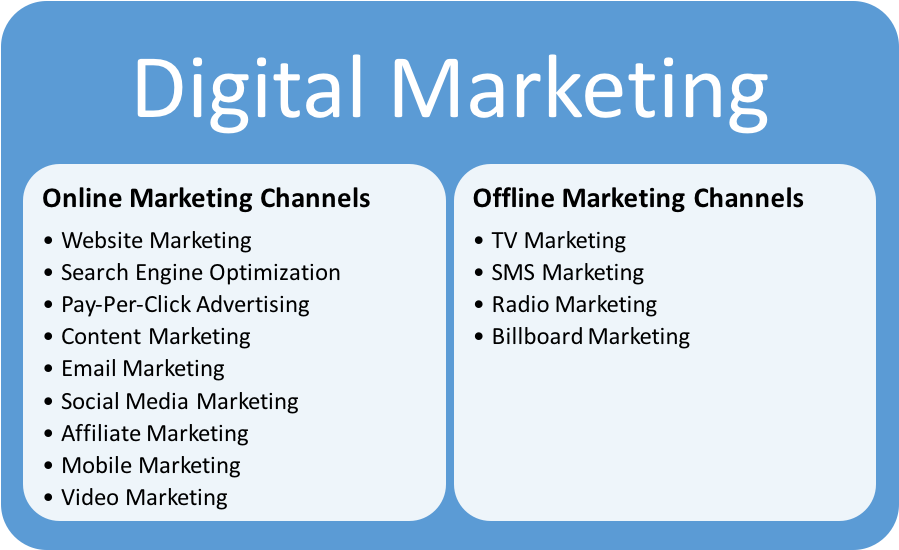
An Overview of the Channels
Digital marketing isn't just one thing; it's a collection of different strategies and channels. While we'll explore these in more depth later, it's important to know the main players. These components often work together to create a cohesive marketing strategy.
-
Search Engine Optimization (SEO): This is the practice of optimizing your website to rank higher in search engine results, like on Google. The higher you rank, the more organic (non-paid) traffic you'll get.
-
Content Marketing: This involves creating and sharing valuable free content—like blog posts, videos, and ebooks—to attract and retain a clearly defined audience. Instead of pitching your products, you're providing value that builds trust.
-
Social Media Marketing: This strategy is all about promoting your brand and content on social media channels like Facebook, Instagram, and LinkedIn to increase brand awareness, drive traffic, and generate leads.
-
Pay-Per-Click (PPC) Advertising: This is a method of driving traffic to your website by paying a publisher (like Google or Facebook) every time your ad is clicked. It's a way to buy visits to your site, rather than attempting to "earn" those visits organically.
-
Email Marketing: This is a direct line to your audience's inbox. Businesses use email to communicate with their audience, promote content, announce discounts, and drive people toward their website.
A strong digital strategy often weaves these channels together. For example, you might use SEO to bring people to a blog post (content marketing), then use a social media ad (PPC) to promote that post to a wider audience.
Let's test your understanding of these core concepts.
What is the primary characteristic that defines digital marketing?
Which digital marketing strategy focuses on creating and distributing valuable content like blog posts and videos to attract a specific audience?
Understanding these fundamentals is the first step. Next, we'll dive deeper into each of these channels to see how they work in practice.