Digital Marketing and UGC Synergy
Introduction to Digital Marketing
What Is Digital Marketing?
At its core, digital marketing is simply marketing that uses electronic devices and the internet. Businesses leverage digital channels such as search engines, social media, email, and their websites to connect with current and prospective customers.
Digital Marketing is the process of promoting products, services, and personal brands using the internet and digital technologies.
Think of it like this: traditional marketing is like shouting with a megaphone in a crowded square. You might reach a lot of people, but you don't know who is listening or if they're even interested. Digital marketing is more like having a one-on-one conversation. You can find the right people, talk about things they care about, and see how they react. This makes it incredibly powerful for businesses of all sizes.
Digital vs. Traditional Marketing
The key difference between digital and traditional marketing is the medium through which an audience encounters a marketing message. While traditional marketing uses channels like print, broadcast, and direct mail, digital marketing uses digital channels to reach and engage customers.
This difference leads to several major advantages for digital marketing, especially in how precisely you can target and measure your efforts.
| Feature | Traditional Marketing | Digital Marketing |
|---|---|---|
| Communication | One-way (e.g., TV ad) | Two-way (e.g., social media comments) |
| Targeting | Broad (e.g., billboard) | Highly specific (e.g., ads by interest) |
| Measurement | Difficult and often indirect | Precise and in real-time |
| Cost | Can be very expensive | More cost-effective and scalable |
With a newspaper ad, it's hard to know exactly how many people saw it or took action because of it. With a digital ad, you can track views, clicks, and sales with incredible accuracy. This data allows marketers to understand what's working and what isn't, and to improve their campaigns over time.
The Main Channels
Digital marketing isn't just one thing. It's a collection of different channels and tactics, each with its own strengths. A good strategy often uses a mix of these to reach people at different stages of their journey.
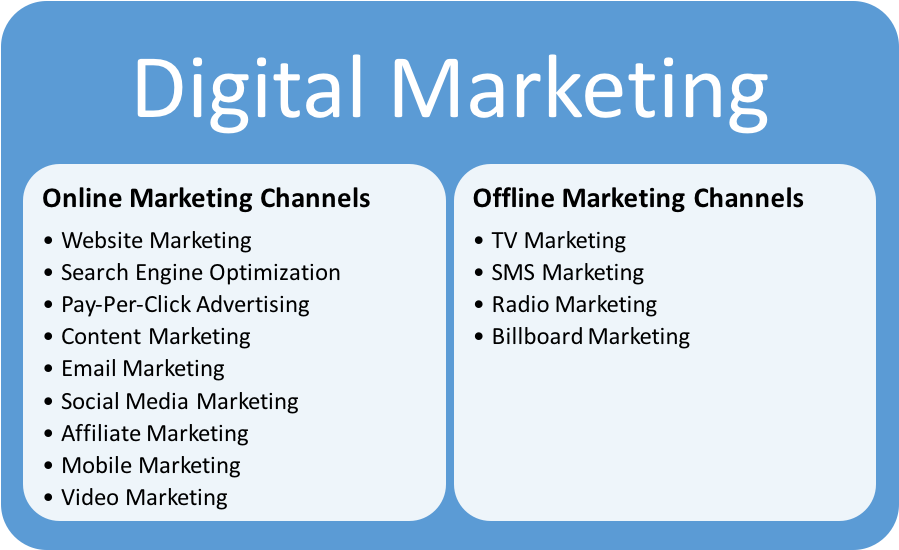
Here are some of the most important channels:
- Search Engine Optimization (SEO): This is the process of optimizing your website to rank higher in search engine results pages, thereby increasing the amount of organic (or free) traffic your website receives.
- Search Engine Marketing (SEM): This involves paying for ads to appear on search engines like Google. It's a way to get your website in front of potential customers who are actively searching for your products or services.
- Social Media Marketing: This practice uses social media platforms like Facebook, Instagram, and LinkedIn to build a brand, drive website traffic, and generate sales.
- Email Marketing: This is a way of communicating with your audience directly through email. It's great for building relationships, promoting content, and announcing sales.
- Content Marketing: This involves creating and sharing valuable free content—like blog posts, videos, and ebooks—to attract and convert prospects into customers.
Building a Strategy
Simply being active on these channels isn't enough. To be effective, you need a strategy. A digital marketing strategy is a plan of action that helps you achieve your business goals through carefully selected online marketing channels.
Defining your target audience is the first step to an effective digital marketing strategy.
A solid strategy starts with understanding who you're trying to reach. Once you know your audience, you can set clear goals (like increasing sales by 10% or getting 500 new email subscribers). Then, you choose the right channels and tactics to reach those goals and, crucially, you measure your results to see what works.
Frameworks like the Digital Marketing Canvas can help organize all these moving parts into a coherent plan.
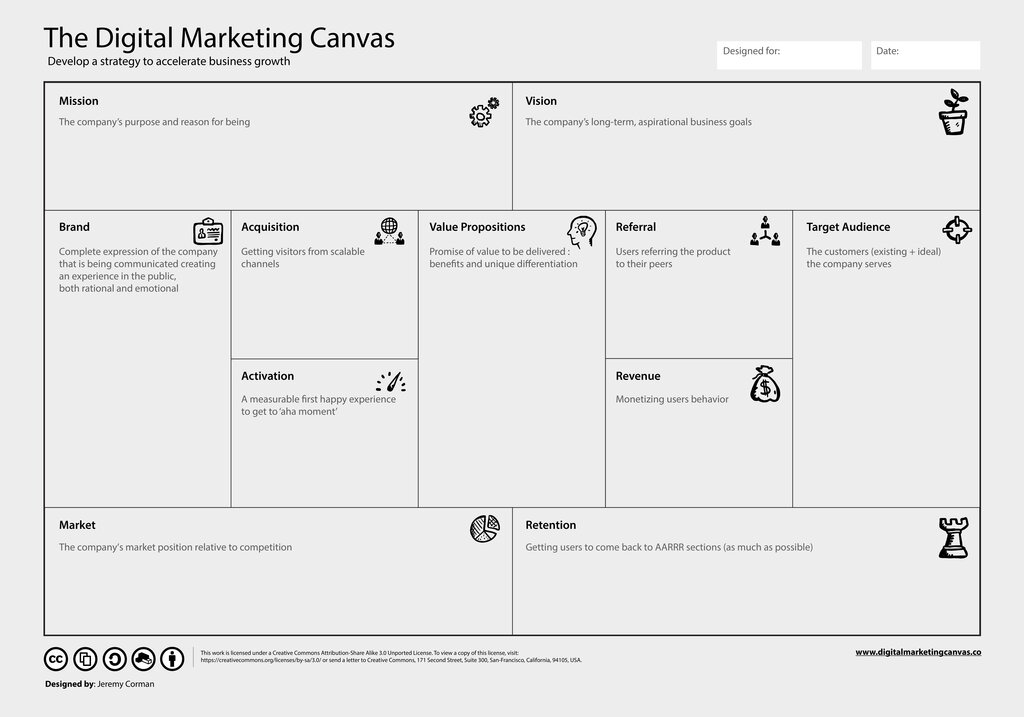
Now that you have a foundational understanding of digital marketing, let's test your knowledge.
What is the defining characteristic of digital marketing?
A key advantage of digital marketing over traditional marketing, like a newspaper ad, is the ability to precisely track views, clicks, and sales.
Understanding these core concepts is the first step. By combining the right strategy with the right channels, businesses can connect with their audience in meaningful and profitable ways.