Digital Marketing A to Z
Digital Marketing Fundamentals
What Is Digital Marketing?
At its core, digital marketing is simply marketing that uses electronic devices and the internet. Businesses leverage digital channels such as search engines, social media, email, and their websites to connect with current and prospective customers.
Think of it as any marketing effort that happens online. Instead of a billboard on the highway, you have a banner ad on a website. Instead of a newspaper ad, you have a sponsored post on social media.
This isn't just about selling products. It’s about building a brand, providing value to an audience, and communicating with customers where they spend a significant amount of their time: online.
Digital vs. Traditional Marketing
Traditional marketing involves channels like print ads, television commercials, and direct mail. It's often a one-way street—a company broadcasts a message to a wide audience, hoping to catch the attention of potential customers.
Digital marketing is different. It’s a two-way conversation. It allows for immediate interaction and feedback. More importantly, it provides a wealth of data that helps you understand what's working and what isn't.
| Feature | Traditional Marketing | Digital Marketing |
|---|---|---|
| Reach | Broad, often untargeted | Highly specific and targeted |
| Interaction | One-way communication | Two-way, interactive |
| Cost | Often high with uncertain ROI | More cost-effective, scalable |
| Measurement | Difficult to track results | Highly measurable with analytics |
The biggest advantage of digital marketing is its precision. You can target specific demographics, interests, and behaviors, ensuring your message reaches the people most likely to be interested in your product. This ability to measure results in real-time allows you to adjust your strategy on the fly, making your marketing budget work much harder.
Key Digital Marketing Channels
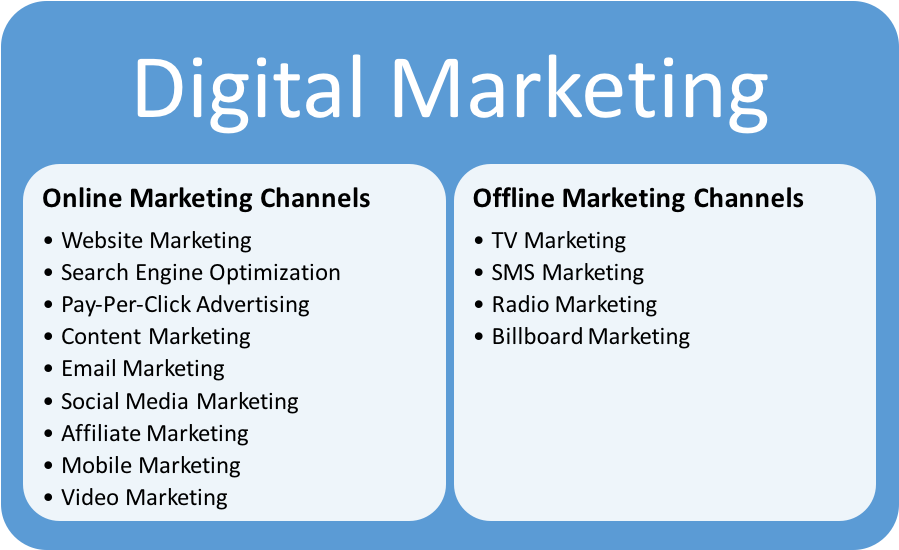
Digital marketing isn't a single thing; it's a collection of different strategies and channels. Here are some of the most important ones:
-
Search Engine Optimization (SEO): This is the process of optimizing your website to rank higher in search engine results pages (like Google). The goal is to increase organic, or non-paid, traffic to your site.
-
Search Engine Marketing (SEM): This includes SEO but also involves paid advertising on search engines. You've probably seen these ads at the top of Google results. They're a way to pay for visibility.
-
Social Media Marketing: This involves using platforms like Facebook, Instagram, LinkedIn, and TikTok to build your brand, engage with your audience, and drive traffic to your website.
-
Content Marketing: This strategy focuses on creating and distributing valuable, relevant, and consistent content to attract and retain a clearly defined audience. Think blog posts, videos, and ebooks.
-
Email Marketing: One of the oldest but still most effective channels. It involves sending targeted messages directly to a list of subscribers to nurture leads and drive sales.
A good digital strategy doesn't rely on just one channel. It combines several to create a cohesive plan that reaches customers at different stages of their journey.
Current Trends
The digital world changes fast. Staying on top of trends is crucial for success. Right now, a few key developments are shaping the landscape:
-
Artificial Intelligence (AI): AI is being used to personalize customer experiences, automate tasks, and analyze vast amounts of data to make better marketing decisions.
-
Video Content: Short-form video on platforms like TikTok and Instagram Reels is booming. It's an engaging way to tell stories and connect with audiences quickly.
-
Personalization: Customers now expect content and offers tailored to their specific interests and past behaviors. Generic, one-size-fits-all messages are becoming less effective.
Personalization and knowledge are both key elements of digital marketing.
Now that you have a grasp of the fundamentals, let's test your knowledge.
What is the primary difference between digital marketing and traditional marketing?
The process of optimizing a website to rank higher in search engine results to increase non-paid traffic is known as ______.
Understanding these core concepts is the first step. Next, we'll dive deeper into how to build a strategy that works for you.