Digital Illustration Mastery
Gesture Drawing
The Soul of the Pose
Before you draw a person, you need to understand their pose. Not the details of their clothes or the strands of their hair, but the energy of their stance. This is the core of gesture drawing. It’s about capturing the feeling of a subject in just a few quick, fluid lines.
Gesture drawing is about capturing the movement and flow of the subject rather than getting bogged down in details.
Think of it as the skeleton of your drawing. Not the anatomical skeleton, but the skeleton of the action. If someone is throwing a ball, a gesture drawing captures the arc of their arm and the twist of their body. If someone is lounging on a couch, it captures the relaxed curves and the weight of their body. The goal is speed and instinct, not precision.
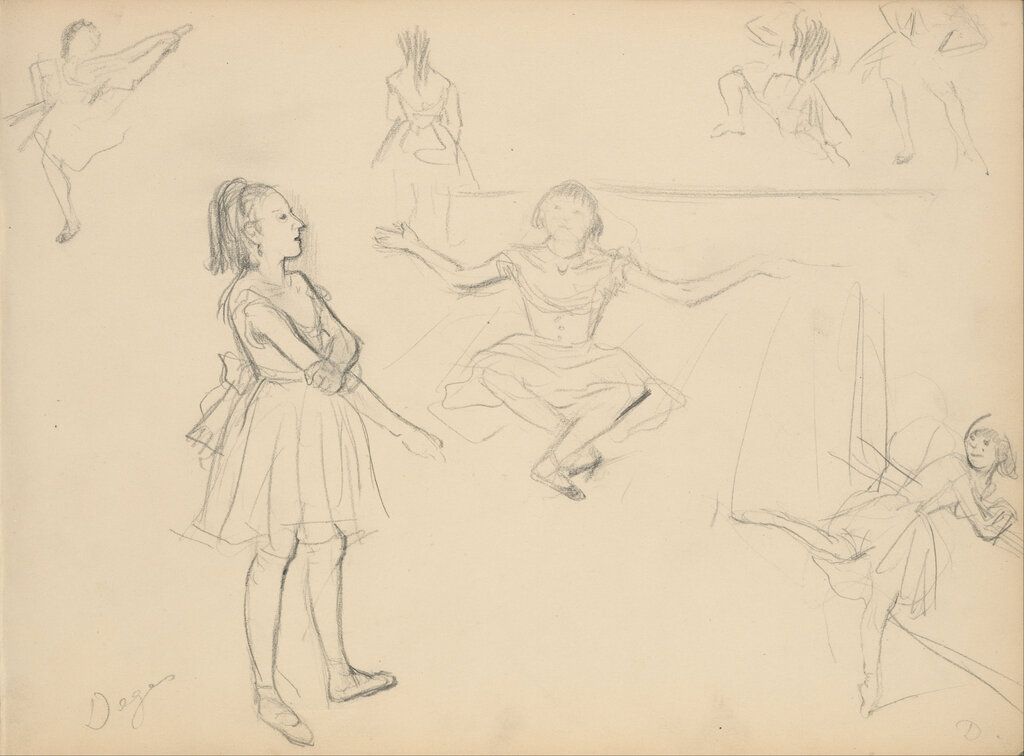
These are not meant to be finished works of art. A gesture drawing might only take 30 seconds to a minute to complete. It's a warm-up, a way to train your hand and eye to see the bigger picture of movement and form.
Finding the Flow
Every pose has a rhythm, a line of action that guides the entire form. This is the first thing you should look for. The line of action is an imaginary line that runs through the main direction of the pose. It's often a C-curve or an S-curve, representing the spine's movement and the overall thrust of the figure.
Once you've identified the line of action, quickly sketch it on your page. This line is your guide. From there, build out the basic forms of the body using simple shapes. Think of the head as an oval, the torso as a block or a bean shape, and the limbs as simple cylinders or lines. Don't worry about perfect anatomy. Focus on how these shapes connect and flow along that primary line of action.
A good technique is to use your whole arm to draw, not just your wrist. This encourages longer, more confident, and fluid strokes.
Breaking Free from Stiffness
One of the biggest challenges for new artists is drawing figures that look stiff and unnatural, like wooden mannequins. Gesture drawing is the perfect antidote. The main cause of stiffness is focusing on individual body parts instead of the whole figure.
To avoid this, try these techniques:
- Exaggerate the Pose: Push the curve of the spine or the angle of the hips a little further than you see. This often makes the drawing feel more dynamic and alive than a perfectly accurate copy.
- Use Continuous Lines: Try to draw the figure with as few lines as possible. Let your pen flow from the shoulder down to the arm and hand in one continuous motion. This connects the parts of the body and reinforces the sense of movement.
- Embrace the Scribble: Don't be afraid of messy lines. A loose, sketchy quality is part of the style. Sometimes a few overlapping lines can suggest movement better than a single, perfect one.
- Focus on Weight: Think about where the figure's weight is. Which leg is supporting them? Is their weight shifted forward or back? Simple lines indicating the angle of the shoulders and hips can effectively show this distribution of weight and make a pose feel grounded.
By concentrating on flow, energy, and the overall shape, your drawings will start to breathe with life. This isn't just a step to get through; it's the foundation for every expressive character you'll ever design.
What is the primary goal of gesture drawing?
When beginning a gesture drawing, what is the first and most important line an artist should look for?
Practicing gesture drawing regularly will fundamentally change how you see and interpret the human form.