Digital Forensics Practical Investigations
Evidence Handling
Preserving Digital Integrity
Digital evidence is fragile. Unlike a physical object that can be bagged and tagged, digital data can be altered, damaged, or erased with a single click. The primary principle of handling digital evidence is to preserve it in its original, unaltered state. Any action taken should not change the data on the source device.
Your goal is to create a perfect, verifiable copy, or 'forensic image,' of the original data for analysis. The original evidence should be secured and touched as little as possible.
This leads to the 'Order of Volatility.' When collecting data, you must prioritise the most transient information first. Data in RAM disappears when a computer is turned off, while data on a hard drive persists. Securing volatile data before it's lost is a critical first step.
| Data Source | Volatility | Example |
|---|---|---|
| CPU Registers, Cache | Extremely High | Current computational data |
| Routing Tables, RAM | High | Open files, running processes |
| Temporary System Files | Medium | Swap files, temp directories |
| Hard Drive Data | Low | Stored files and documents |
| Archival Media | Very Low | Backups, tapes |
The Unbroken Chain
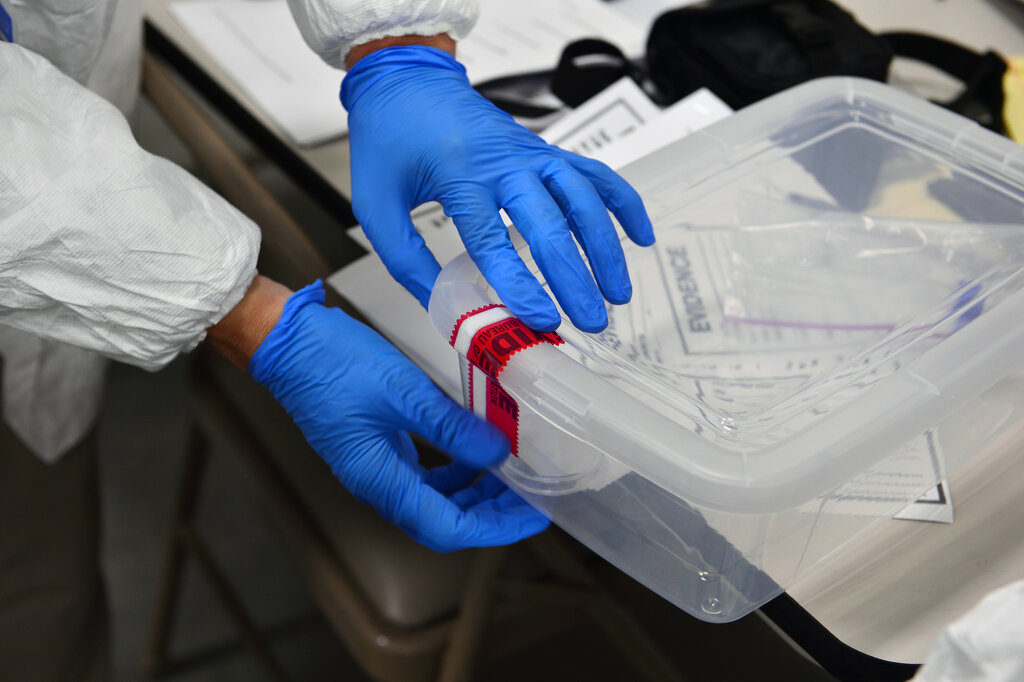
For digital evidence to be accepted in court, you must be able to prove its integrity. This is achieved through the chain of custody, a meticulous log that documents the entire lifecycle of a piece of evidence.
Think of it as the evidence's biography. It records every person who handled the evidence, the date and time of contact, the reason for handling, and where it was stored. An incomplete or broken chain of custody can render even the most compelling evidence inadmissible.
Chain of custody must be maintained from scene to courtroom—any gap can result in evidence being ruled inadmissible
Each transfer of evidence must be documented. This includes logging it in and out of a secure storage facility, handing it off to another examiner, or transporting it to a different location. Every step is signed off, creating an unbroken, auditable trail.
Preventing Accidental Changes
How do you access data without changing it? Even booting a computer can alter hundreds of files. The solution is a write-blocker. A write-blocker is a device or piece of software that allows read-only access to a storage device, preventing any modifications.
Hardware write-blockers are physical devices that sit between the forensic workstation and the evidence drive. Software write-blockers are programs that control the computer's ports to prevent writing. Both serve the same critical function: protecting the original evidence from contamination.
Once a write-blocked connection is established, an examiner creates a bit-for-bit copy, or forensic image, of the drive. To verify the copy is exact, a cryptographic hash (such as SHA-256) is generated from both the original drive and the image. If the hashes match, the copy is a perfect duplicate.
Documentation is Everything
Proper documentation is the backbone of defensible forensic work. Every action performed during the evidence handling process must be recorded in detail. This documentation should be so thorough that another examiner could reproduce your steps and arrive at the same conclusions.
A standard evidence log form includes key information about the item.
| Field | Description | Example |
|---|---|---|
| Case Number | Unique identifier for the investigation | 2024-0318A |
| Item Number | Unique identifier for the piece of evidence | 001 |
| Description | A brief description of the item | 1TB Seagate external hard drive, black |
| Acquired From | Where and from whom the evidence was collected | John Smith, at 123 Baker Street |
| Date/Time | When the evidence was collected | 18/03/2024, 14:30 GMT |
| Collector | The name of the person who collected it | Jane Doe, Badge #456 |
| Hash Value | The SHA-256 hash of the original media | 5d8f...a3b2 |
This log is just the beginning. The chain of custody form tracks the evidence's movement and handling over time. Together, these documents provide a complete history that proves the evidence presented in court is the same evidence that was collected at the scene, and that it has not been tampered with.
Now, let's test your understanding of these critical procedures.
What is the primary principle that must be followed when handling digital evidence?
An investigator arrives at a scene with a computer that is still running. According to the 'Order of Volatility', which of the following data sources should they prioritise for collection?
By following these principles of preservation, chain of custody, and documentation, you ensure that digital evidence remains a powerful and reliable tool for any investigation.