Digital Education for Teens
Introduction to Digital Education
Learning in a Digital World
Think about how you learn new things. Maybe you watch a video to understand a tricky math problem, use an app to learn a new language, or research a topic online for a history project. If you've done any of these, you've experienced digital education. It’s not just about swapping textbooks for tablets; it’s about using technology to make learning more interactive, accessible, and tailored to you.
Digital education is the use of digital tools and technologies to support and enhance the learning process.
This isn't a brand-new idea, but it has changed dramatically over time. Decades ago, "technology in the classroom" might have meant a single computer in the corner of the library. Later, it was dedicated computer lab time once a week. Now, technology is woven into the fabric of everyday learning, from interactive whiteboards at the front of the class to the device you might be using to read this right now.
Why This Matters for You
As a teenager, you are growing up in a world where digital skills are not just helpful—they're essential. Digital education helps prepare you for the jobs of the future, many of which will require you to be comfortable and creative with technology. It also allows you to learn in ways that best suit your style. If you're a visual learner, you can watch animations that explain cellular biology. If you learn by doing, you can use simulations to see physics principles in action.
This approach breaks down the walls of the traditional classroom. You can connect with information and even experts from around the globe, expanding your perspective and knowledge far beyond what's available in a single textbook or library.
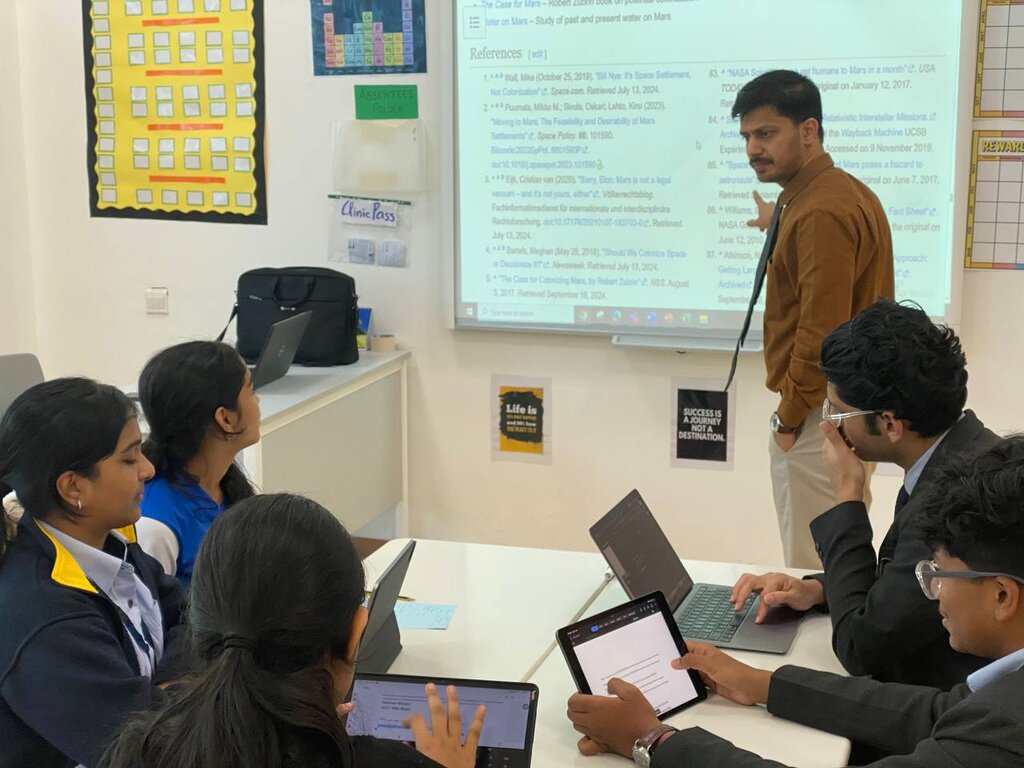
Technology's Role in Learning
It’s important to see technology as more than just a fancy delivery system for information. Its real power is in how it can change the learning experience itself. Technology can adapt to your pace, giving you extra practice on topics you find tough and letting you move ahead on concepts you've mastered. It provides instant feedback, so you know right away if you're on the right track.
Think of it this way: technology gives you a front-row seat to your own education. It transforms learning from a passive activity, like listening to a lecture, into an active, engaging process where you are in control.
It emphasizes the evolving role of teachers as facilitators and the importance of fostering student initiative in AI-rich environments.
Now, let's test your understanding of these core concepts.
What is the primary goal of digital education, according to the provided text?
How does digital education help prepare you for the future?