Digital Currency Fundamentals
Introduction to Digital Currency
What Is Digital Currency?
Digital currency is any form of money that exists only in electronic form. Unlike the paper bills and metal coins in your wallet, you can't physically touch it. Instead, it's created, stored, and exchanged entirely on digital computer systems, usually over the internet.
In a way, you already use digital currency every day. When you check your bank balance online, pay with a credit card, or send money through an app, you're interacting with a digital representation of your country's official currency. Most of the world's money is already just data in a bank's computer system.

However, the term "digital currency" has grown to mean more than just your online bank balance. It's now an umbrella term for a new wave of currencies designed to be native to the internet, falling into a few distinct categories.
The Main Types of Digital Currency
Digital currencies are not all the same. They differ based on who issues them, what technology they use, and how they are controlled. Understanding the three main types is key to grasping their role in the economy.
Virtual Currency
noun
A type of unregulated digital money that is controlled by its developers or a founding organization.
Think of virtual currencies as a kind of private money for a specific digital environment. They often exist within online games (like World of Warcraft gold) or on social media platforms (like Reddit Gold). They have value, but only within that closed system. You typically can't use them to buy groceries at your local store. Their supply and rules are set by the company that created them.
Cryptocurrency
noun
A digital currency in which transactions are verified and records maintained by a decentralized system using cryptography, rather than by a centralized authority.
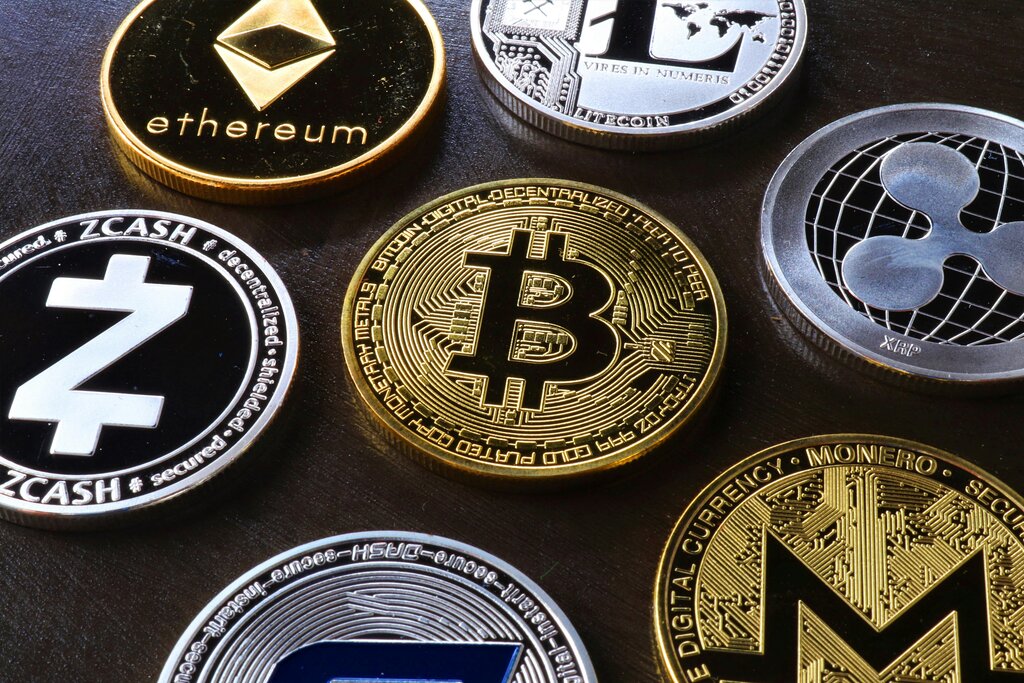
This is the type that usually makes headlines. Cryptocurrencies like Bitcoin and Ethereum are decentralized, meaning no single company, bank, or government controls them. Instead, they run on a distributed network of computers around the world.
Their main innovation is the use of cryptography to secure transactions on a public ledger, often called a blockchain. This prevents people from spending the same money twice and allows for peer-to-peer transfers without needing a traditional bank to act as an intermediary.
While virtual currencies are centralized and cryptocurrencies are decentralized, the third type blends central control with digital technology.
Central Bank Digital Currencies (CBDCs) are the digital version of a country's official fiat money. A CBDC would be issued and backed by a central bank, just like physical cash. If the United States were to issue a CBDC, it would essentially be a "digital dollar," carrying the full faith and credit of the U.S. government.
In contrast, CBDCs are issued directly by a country’s central bank, making them official legal tender.
Unlike your current bank account balance, which is a liability of a commercial bank, a CBDC would be a direct liability of the central bank. Governments are exploring CBDCs as a way to modernize payment systems, increase financial inclusion, and make monetary policy more effective. They combine the trust of traditional money with the technological benefits of a digital format.
Their Role in the Financial System
Digital currencies are changing how we think about money and value. Cryptocurrencies offer a way to send payments across borders quickly and with potentially lower fees than traditional banking systems. They also represent a new asset class for investors.
Virtual currencies have created entire economies within online worlds, showing how digital value can be created and exchanged in specific communities. Meanwhile, CBDCs could revolutionize how governments distribute funds and how citizens interact with the financial system, potentially making payments faster, cheaper, and more secure for everyone.
Together, these different forms of digital currency are pushing the boundaries of finance. They challenge the roles of traditional banks, offer new possibilities for commerce, and force us to reconsider what gives money its value. As technology continues to evolve, their influence on the global economy is only likely to grow.
Ready to check your understanding?
Which of the following best defines a digital currency?
A currency created for use within an online game like World of Warcraft is best classified as which type of digital currency?
That's the big picture of digital currencies. From closed-off gaming economies to decentralized global networks and government-backed digital cash, they represent a fundamental evolution in how we store and exchange value.