Digital Addiction Neurobiology
Variable Reward Schedules
The Power of Maybe
Imagine two scenarios. In the first, you get a small piece of chocolate every time you press a button. Predictable. In the second, pressing the button only sometimes gives you chocolate. You don't know when it's coming. Which button would you press more obsessively?
This isn't just a thought experiment. It's the core of a powerful psychological principle uncovered by B.F. Skinner in the mid-20th century. He famously used an operant conditioning chamber, or a "Skinner box," to study animal behavior. He found that pigeons who were rewarded with food on a predictable schedule (e.g., every fifth peck) would peck steadily. But when the reward was unpredictable, their behavior changed dramatically.
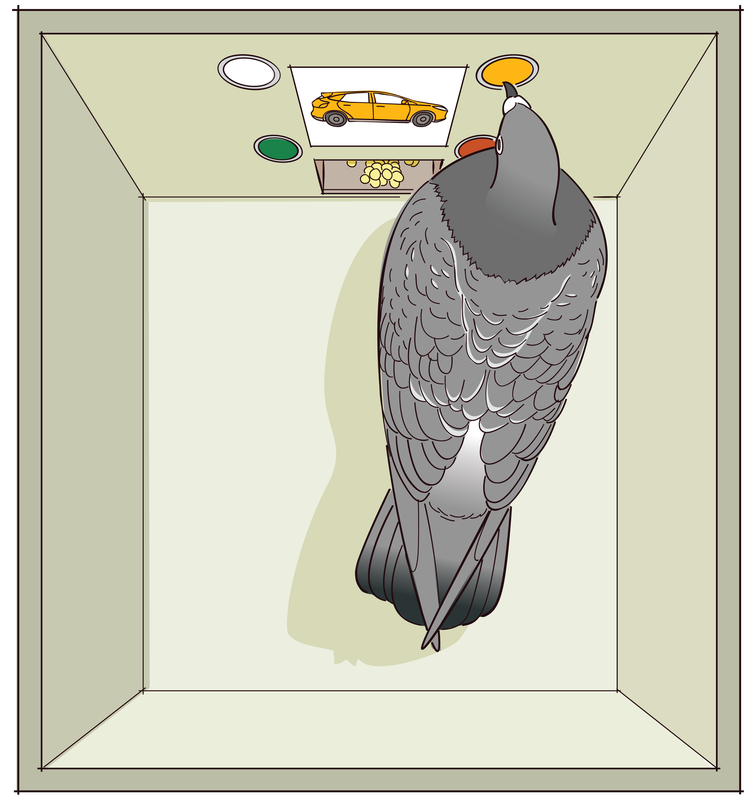
This is the difference between a fixed-ratio and a variable-ratio reinforcement schedule. A fixed schedule provides a reward after a set number of responses. A variable schedule provides a reward after an unpredictable number of responses. Skinner discovered that the variable schedule created the most persistent, compulsive behavior. The pigeons would peck at the button relentlessly, driven by the possibility of a reward. The behavior was also the most resistant to extinction—meaning, it continued long after the rewards stopped entirely. The 'maybe' was more powerful than the 'yes'.
Your Brain on Uncertainty
Skinner's pigeons weren't just being stubborn; their brains were hijacked by dopamine. We now know that the brain's reward system releases more dopamine in anticipation of a reward than in response to the reward itself. The uncertainty is what makes it so compelling.
This phenomenon is described by the concept of Reward Prediction Error (RPE). When an outcome is better than expected, your brain gets a positive RPE signal, a little burst of dopamine that says, "Pay attention! This was good!" When a reward is perfectly predictable, there's no error to predict. It's expected, so the dopamine response is muted. But when the reward is a surprise, the RPE is high, and the dopamine flows freely.
If you add uncertainty to receiving the reward, in other words, if regardless of performing the task the monkey only receives the food as a reward in 50% of the times he performs the task, the amount of dopamine produced in his brain skyrockets!
This leads to a crucial distinction between "wanting" and "liking." The dopamine system is primarily in charge of 'wanting,' or what neuroscientists call —the motivational pull that makes a potential reward seem attractive and worth pursuing. 'Liking' is the actual pleasure you get from the reward. With variable rewards, the 'wanting' system can go into overdrive, keeping you hooked even if the 'liking' experience is just mediocre. You're chasing the anticipation, not the outcome.
The Digital Slot Machine
Modern app designers are masters of this principle. They've engineered our digital environments to function like a city full of slot machines, all leveraging the power of variable rewards. This is sometimes called the 'Vegas Effect' in UI/UX design.
The 'pull-to-refresh' gesture on your social media feed is a perfect example. You pull down the screen, wait a moment, and... what will you get? A viral video? A message from a friend? Or just the same old posts from yesterday? You don't know, and that uncertainty makes you pull again and again. Each refresh is a spin of the digital slot machine.
Dating and social apps like Grindr use the same mechanic. The notification of a new 'match' or message doesn't arrive on a predictable schedule. It could happen at any moment, creating a state of constant anticipation. Every time you open the app, you're essentially pulling the lever on the slot machine, hoping for the social reward of a new connection. This keeps users in a state of 'seeking' rather than feeling satisfied, ensuring they return to the app frequently.
Understanding this mechanism doesn't make you immune to it, but it does give you a new lens through which to see your own digital habits. The next time you find yourself mindlessly refreshing a feed, you'll know exactly which part of your brain is pulling the strings.