Digestive System Explained
Introduction to Digestion
The Journey of Food
Everything you eat goes on a long journey inside your body. Think about your last meal. Whether it was a sandwich, a salad, or a bowl of soup, your body can't use it as is. The food needs to be broken down into much smaller pieces that your cells can absorb and use for energy, growth, and repair. This process is called digestion.
Digestion is simply the process of breaking down large food into tiny molecules the body can use.
Without digestion, the nutrients in your food would be useless. The carbohydrates, proteins, and fats are locked away in complex forms. Digestion unlocks them, turning carbs into simple sugars, proteins into amino acids, and fats into fatty acids. These are the fuel and building blocks your body runs on.
The Digestive Pathway
The digestive system is essentially a long, twisting tube that runs from your mouth to the other end, called the gastrointestinal (GI) tract. Along this path, several organs work together to dismantle your food.
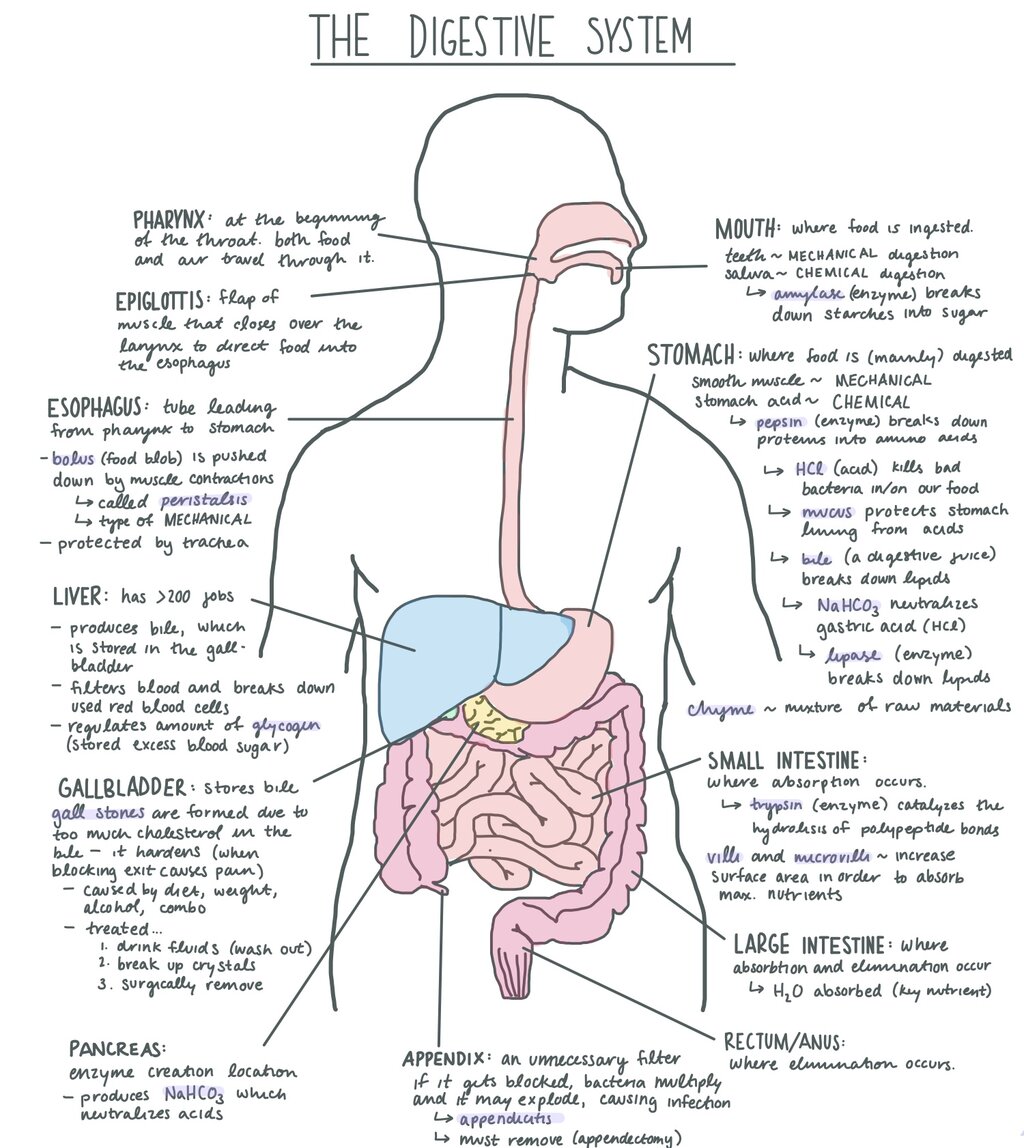
The main pathway for food looks like this:
- Mouth: This is where it all begins. Chewing starts the mechanical breakdown, and saliva begins the chemical breakdown.
- Esophagus: A muscular tube that connects your throat to your stomach, pushing food along.
- Stomach: A muscular bag that churns food with strong acids.
- Small Intestine: A long, coiled tube where most of the nutrient absorption happens.
- Large Intestine: The final section, where water is absorbed and waste is prepared for removal.
There are also a few helper organs that food doesn't pass through directly but are crucial for digestion. These include the liver, gallbladder, and pancreas. They produce and store special juices that help break down food in the small intestine.
Now that we've covered the basics of what digestion is and the main players involved, let's check your understanding.
What is the primary purpose of the digestive system?
Which of the following correctly lists the path food takes through the main organs of the gastrointestinal (GI) tract?
This overview is just the beginning. Each organ in the digestive system has a specific and fascinating job to do.