Diffusion Transformers for Image Generation
Introduction to Diffusion Models
Sculpting from Noise
Imagine a sculptor who starts not with a block of marble, but with a cloud of dust. By carefully guiding each particle, they slowly form a detailed statue. This is the core idea behind diffusion models. They are a type of generative AI that creates new data, like images or audio, by reversing a process of destruction.
Think of diffusion models like a sculptor working in reverse.
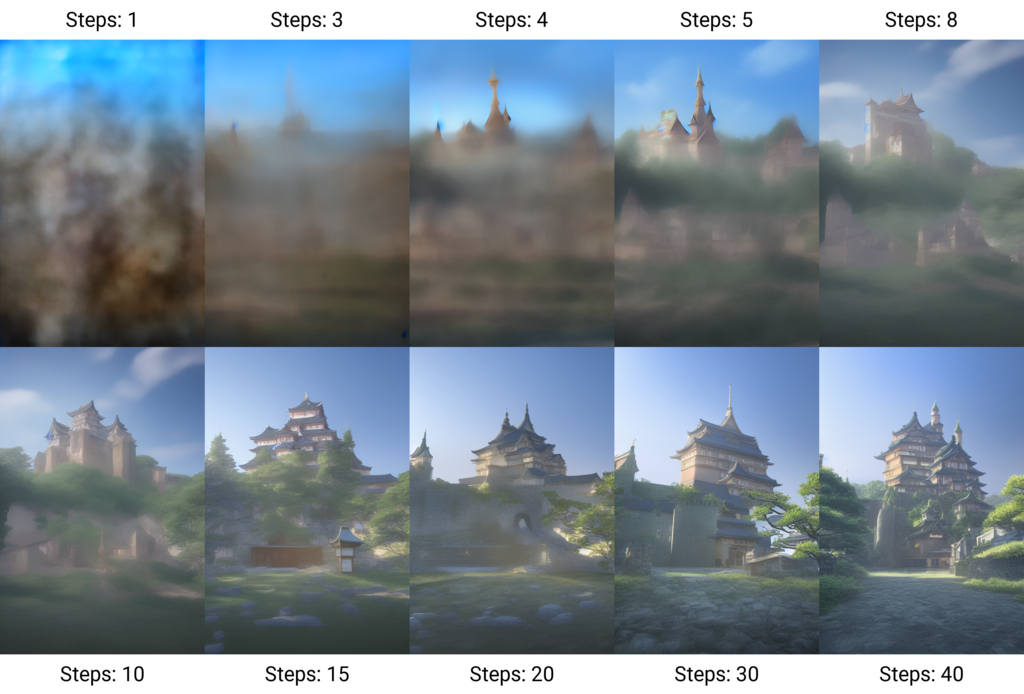
Instead of building something from scratch, a diffusion model starts with pure random noise—like a TV screen showing static—and gradually refines it step-by-step into a coherent and complex image. This process allows them to generate incredibly realistic and diverse outputs, making them a cornerstone of modern generative AI.
A Two-Way Street
The magic of diffusion models lies in two opposing processes: the forward process and the reverse process. One systematically destroys data, and the other learns to rebuild it.
The forward process intentionally adds noise to a clean image over many small steps, until the original image is completely lost in static. This is a fixed, predictable procedure. We know exactly how much noise is being added at every stage.
Think of it like adding drops of black ink to a glass of clear water. With each drop, the water gets a little darker, until it's completely opaque. The forward process is simple because its only job is to corrupt the data in a controlled way.
The reverse process is where the learning happens. The AI model is trained to undo the damage, one step at a time. It's given a noisy image and asked to predict the noise that was added to create it. By subtracting that predicted noise, it makes the image slightly cleaner.
Data generation is achieved using a learnt, parametrized reverse process that performs iterative denoising, starting from pure random noise (see figure above).
If you repeat this denoising step hundreds of times, starting from pure static, you can generate a completely new image. The model isn't just memorizing images; it's learning the underlying patterns and characteristics of the data it was trained on.
How a Diffusion Model Learns
Training a diffusion model involves teaching it to become an expert denoiser. The process is straightforward but computationally intensive.
- Start with a clean image from the training dataset.
- Randomly pick a step in the forward process, say step , and add the corresponding amount of noise to the image.
- Feed this noisy image, , into the model.
- The model's job is to predict the noise, , that was added between step and step .
The model's prediction is then compared to the actual noise that was added. The difference between them is the error, or loss. The goal is to minimize this error across millions of training examples.
The training objective is simple: get better at predicting the noise in a noisy image.
The most common loss function for this task is the Mean Squared Error (MSE). It measures the average squared difference between the noise the model predicted and the noise that was actually added. In mathematical terms, the objective is to minimize the difference between the true noise and the predicted noise , where represents the model's parameters.
By minimizing this loss, the model learns a general process for removing noise, which it can then apply iteratively to generate new images from scratch.
From Denoising to Creating
Once trained, the diffusion model can be used for a wide range of generative tasks. While they are famously used for text-to-image generation (like in Stable Diffusion or Midjourney), their applications are much broader.
They can be used for:
- Image Inpainting: Filling in missing parts of an image.
- Image-to-Image Translation: Changing the style of an image, like turning a photo into a painting.
- Audio Synthesis: Generating realistic speech or music.
- 3D Shape Generation: Creating 3D models from text descriptions.
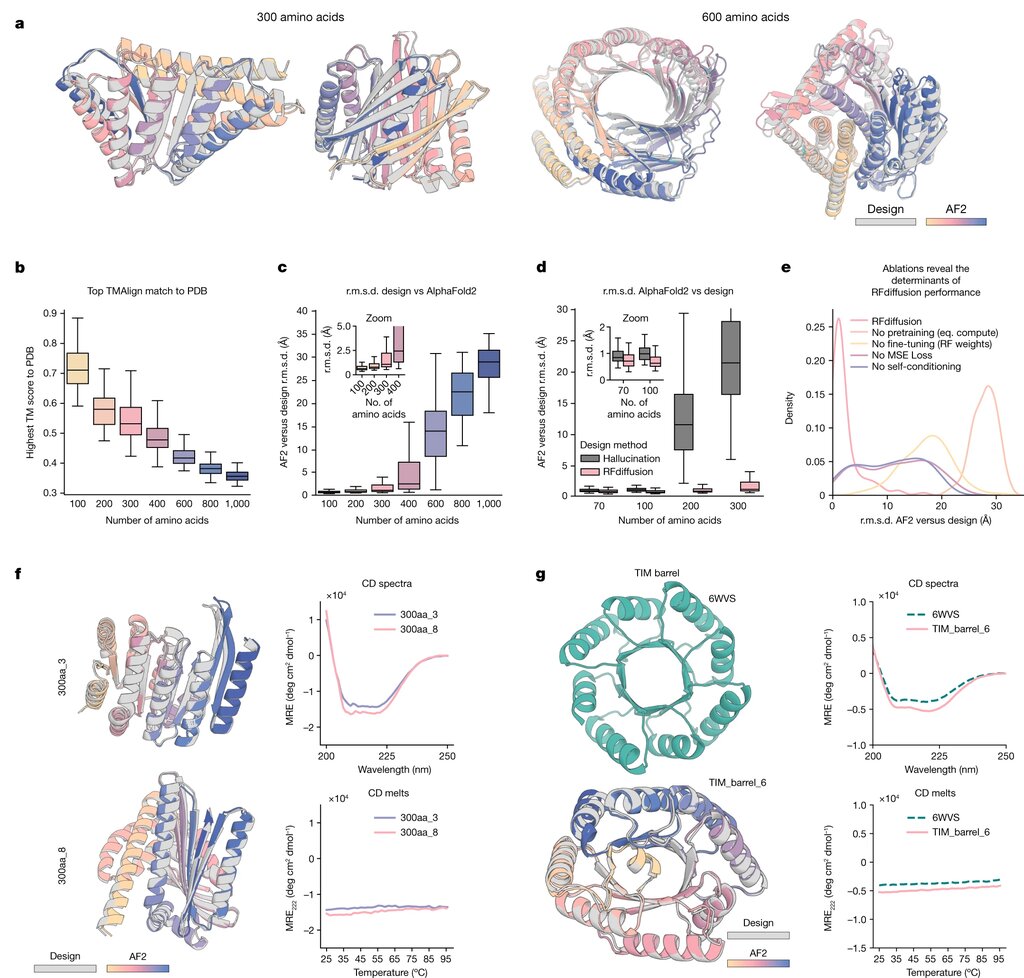
- Drug Discovery: Designing new protein structures.
In each case, the core principle is the same: start with noise and carefully denoise it towards a desired output, often guided by additional information like a text prompt.
Let's review the main concepts before moving on.
Now, let's test your understanding with a few questions.
What is the core idea behind how diffusion models generate new data?
In the context of diffusion models, the 'forward process' is where the model learns to create a new image, while the 'reverse process' systematically destroys an image by adding noise.
The power of diffusion models comes from this simple yet effective process of learning to reverse noise. By mastering this skill, they unlock the ability to generate a seemingly endless variety of new, high-quality data.