Diffusion Models vs Flow Matching
Introduction to Generative Modeling
Creating Something from Nothing
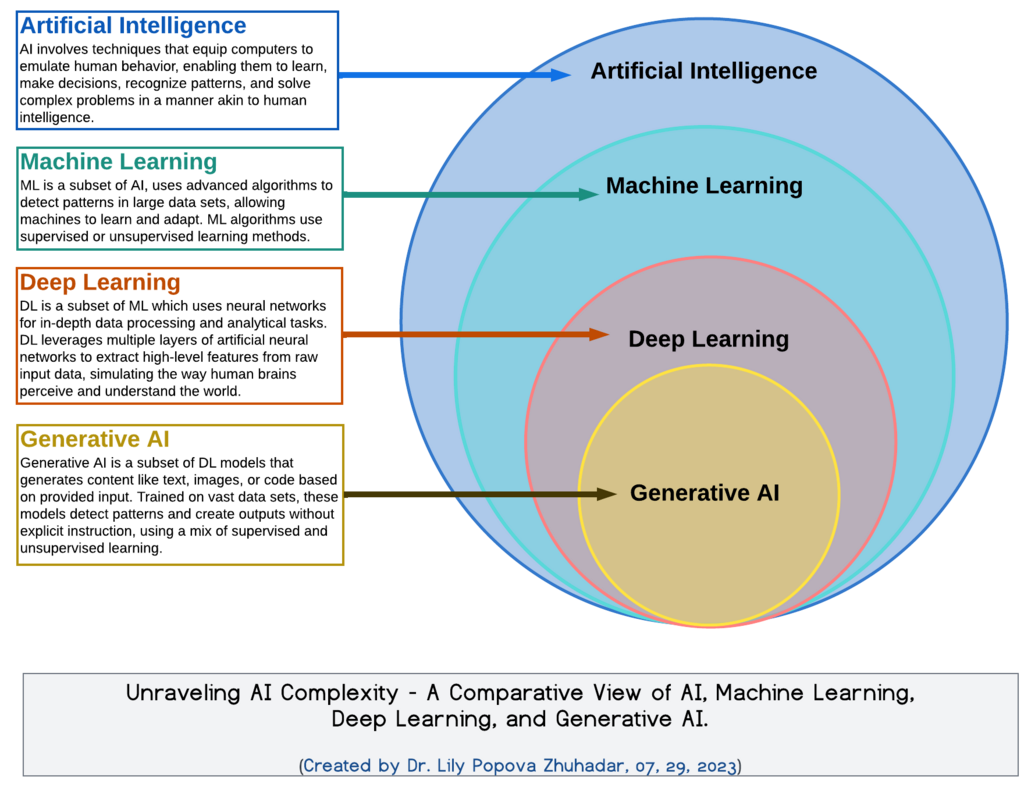
Most machine learning models you might have heard of are good at making predictions or classifying things. Is this email spam? Is this a picture of a cat? These are called discriminative models. They learn the boundary between different categories of data.
Generative models do something different. They don't just recognize patterns; they learn the underlying structure of the data so they can create entirely new examples. Think of it like an apprentice painter studying a master's works. The apprentice doesn't just learn to tell a Monet from a Manet. They learn the brushstrokes, the use of color, and the composition so deeply that they can create a new painting in the master's style.
Generative models learn the 'recipe' for creating data, not just how to label it.
This ability to generate new, synthetic data that's statistically similar to the original data is a powerful tool. It's the core idea behind tools that can write poems, compose music, or design new molecules.
A Family of Creators
There isn't just one way to generate data. Different types of models have been developed, each with its own approach to learning and creating. Let's look at a few of the most important families.
Generative Adversarial Networks (GANs)
noun
A pair of neural networks, a generator and a discriminator, that compete against each other to produce realistic data.
GANs work through a clever cat-and-mouse game. The generator tries to create fake data (like an image of a face), while the discriminator tries to tell the fake data apart from real data. As they train together, the generator gets better at making convincing fakes, and the discriminator gets better at spotting them. The end result is a generator that can produce highly realistic outputs.
Variational Autoencoders (VAEs)
noun
A model that learns to compress data into a simplified representation and then reconstruct it, enabling generation of new data.
VAEs are like expert summarizers. They take a piece of data, like an image, and learn to encode it into a much smaller, compressed representation that captures its essential features. This compressed version is called the latent space. Then, a decoder uses this compressed code to reconstruct the original image. By learning to compress and decompress effectively, the VAE understands the key attributes of the data and can generate new variations by creating new codes in the latent space.
Newer Approaches
More recent developments have introduced new types of models that are incredibly powerful, especially for creating high-quality images and other complex data. Two of the most prominent are diffusion models and flow-based models.
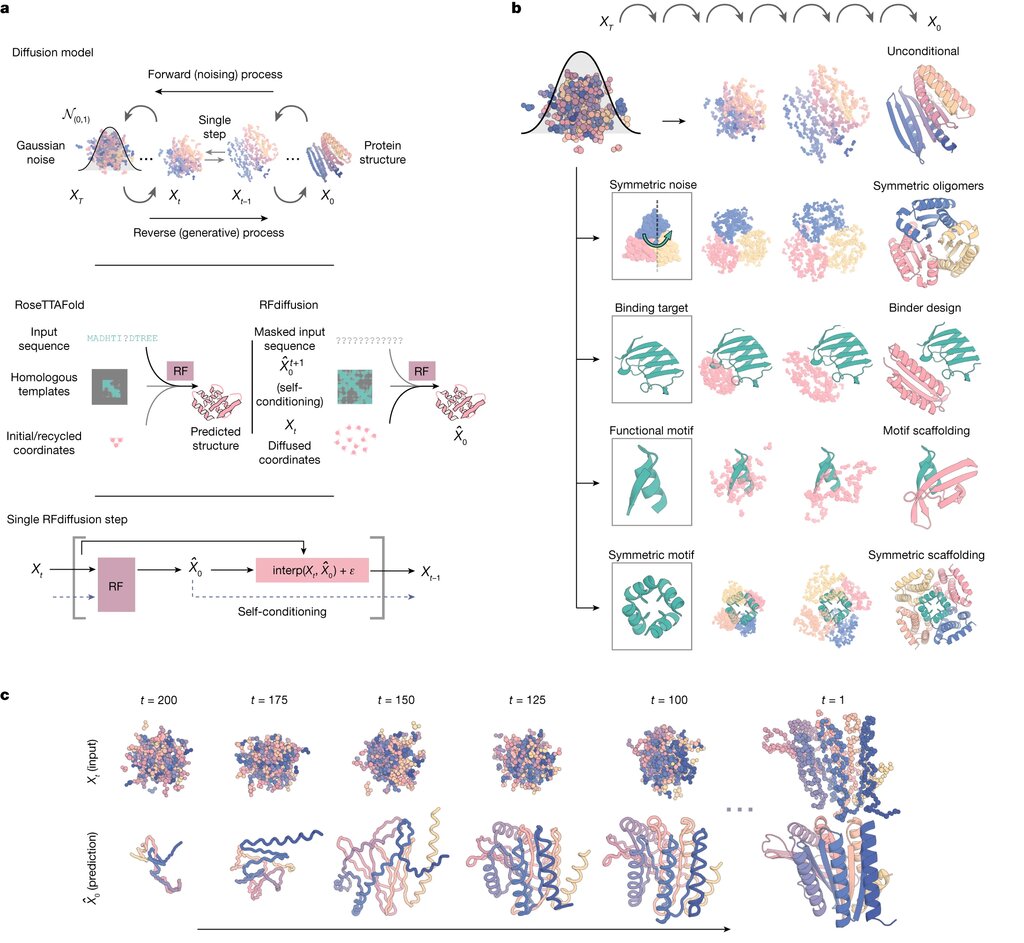
The underlying principle behind these generative tools is the concept of diffusion, a particular sampling mechanism that has overcome some shortcomings that were deemed difficult in the previous approaches.
Diffusion Models: Imagine taking a clear photograph and slowly adding random noise, step by step, until it's completely unrecognizable. A diffusion model is trained to reverse this process. It learns how to take a screen full of pure static and carefully remove the noise in stages, eventually revealing a clear, coherent image. This step-by-step refinement process allows for incredible detail and quality in the final output.
Flow-based Models: These models work by learning a precise, step-by-step transformation. Think of it like a series of lenses that can take a simple, predictable pattern of dots and warp it until it forms a complex image, like the Mona Lisa. Because each step of the transformation is reversible, the model can not only generate complex data from a simple source but also calculate the exact probability of any given data point. This makes them useful for tasks where you need to know not just what to generate, but how likely it is.
Understanding these different approaches is the first step toward exploring the cutting edge of generative AI. Each type of model offers a unique way of learning from data to create something entirely new.