Diffusion Language Models Explained
Introduction to Diffusion Models
From Noise to Masterpiece
Diffusion models are a powerful type of generative AI. Their main job is to create new data—like images, text, or sounds—that looks just like the data they were trained on. Think of it like a sculptor who starts with a rough block of marble and slowly chips away until a statue emerges. Diffusion models do something similar, but their block of marble is pure, random noise.
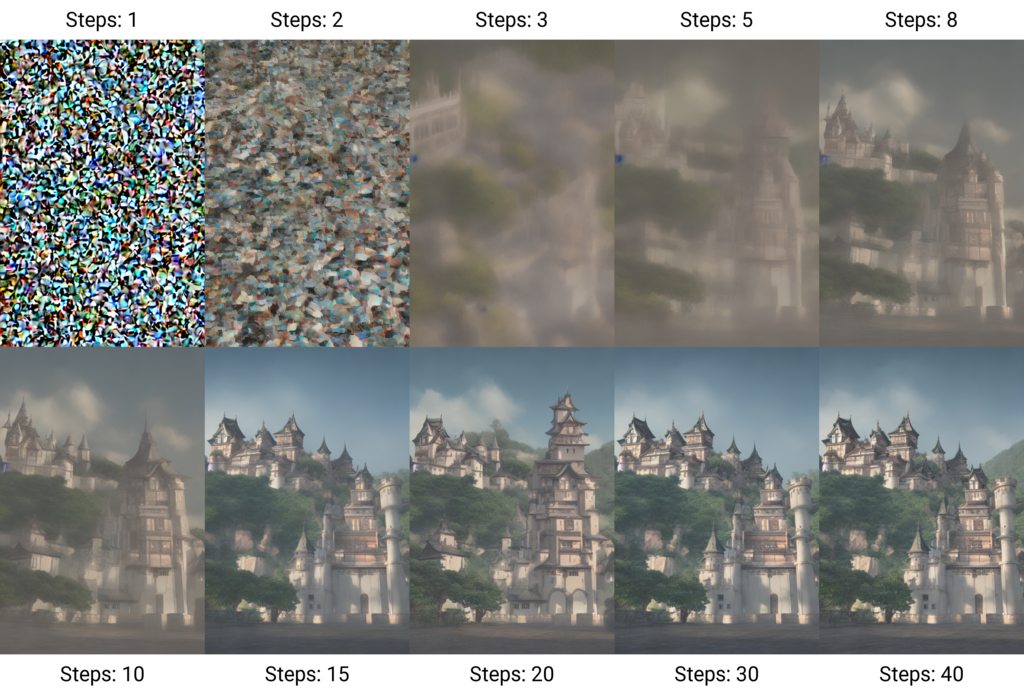
The process starts with a simple idea. First, you take a clear piece of data, like a photograph. Then, you add a little bit of random noise to it. You repeat this process over and over, adding more noise each time, until the original photograph is completely unrecognizable—just a field of static. This is called the forward process.
Then comes the clever part. The model is trained to reverse this process. It learns how to take a noisy image and make it slightly less noisy. By repeating this step-by-step denoising, it can start with pure static and gradually form a clear, coherent image. This is the reverse process.
The Forward and Reverse Dance
Let's break down the two key stages. The forward and reverse processes are the foundation of how these models work.
Forward Process: The Controlled Destruction
This is a fixed, straightforward procedure. We define a schedule for adding noise. At each step, we mix in a little more randomness, slowly corrupting the data. We can represent a piece of data at time step as . The process starts with our original, clean data, . We get by adding a small amount of noise to . We get by adding noise to , and so on, until we reach a final state which is pure noise.
Reverse Process: The Creative Reconstruction
This is where the magic happens and what the AI model actually learns. The goal is to go backward in time, from the pure noise all the way back to the clean data . To do this, the model must learn to predict the noise that was added at each step and subtract it. It's not a simple reversal; the model has to make intelligent guesses about what the less noisy version of the data should look like. This learned denoising process allows it to generate entirely new data from a random starting point.
More Than Just Pictures
While image generation is the most well-known application of diffusion models, the same core principles can be applied to other kinds of data. For text generation, instead of adding pixel noise, the model might randomly replace or mask words in a sentence during the forward process. The reverse process then learns to predict the original words, effectively generating coherent text from a corrupted sequence.
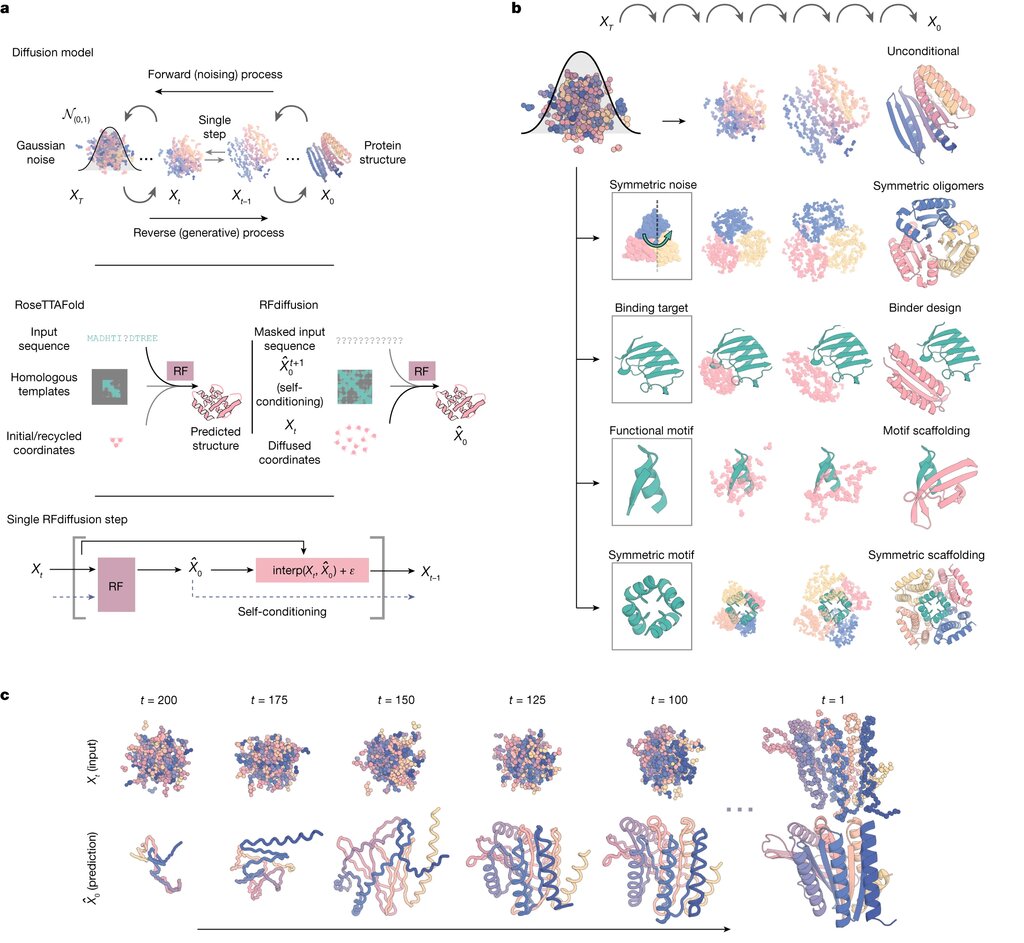
This flexibility has opened doors to applications in audio synthesis, where models generate music or speech, and even in scientific fields like drug discovery and materials science, where they can design new molecular structures. The fundamental concept of iterative refinement—of creating order out of chaos—is a powerful tool for all sorts of creative and scientific tasks.
What is the primary goal of the "forward process" in a diffusion model?
A diffusion model's ability to generate data is based on its training to perform which key task?