DICOM in Radiology Systems
Introduction to DICOM
The Universal Language of Medical Images
Imagine a hospital in the early 1980s. A patient gets a CT scan on a machine from one company. The doctor wants to view that scan on a workstation made by a different company. It was often impossible. Each manufacturer had its own way of formatting and storing images. It was like trying to play a Blu-ray disc in a VCR. This created isolated islands of technology within the same hospital, making it difficult to share vital patient information.
To solve this problem, a universal standard was created. It's called DICOM, which stands for Digital Imaging and Communications in Medicine. DICOM is a set of rules that allows medical imaging equipment to communicate with each other. It ensures that an MRI scan, an ultrasound, or an X-ray can be stored, viewed, and shared on any device that supports the standard, regardless of the manufacturer. It's the common language that lets all this different hardware talk.
A Quick History
The need for a standard was clear. In 1983, the American College of Radiology (ACR) and the National Electrical Manufacturers Association (NEMA) joined forces to tackle the problem. Their collaboration led to the first version of the standard in 1985, called ACR-NEMA 300.
This first version was a good start, but it had limitations. After a few revisions, a major leap forward came in 1993 with the release of DICOM 3.0. This is the version that forms the basis of the standard still used today. It added detailed specifications for network communication, which was crucial for sending images between scanners, archives, and workstations over a network.
DICOM transformed medical imaging from a collection of proprietary systems into a connected, interoperable ecosystem.
Anatomy of a DICOM File
A DICOM file isn't just a picture file like a JPEG or PNG. It's a comprehensive package of information containing two main parts: the image itself and a header full of metadata.
Think of it like a photo from your smartphone, but on steroids. Your phone's photo file includes the image pixels, plus some basic data like the date, time, and maybe GPS coordinates. A DICOM file's header contains a much richer set of information, all standardized so any DICOM-compliant system can understand it.
| Information Category | Examples of Metadata |
|---|---|
| Patient Data | Name, Patient ID, Date of Birth, Sex |
| Study Information | Referring Physician, Study Date, Study Description |
| Equipment Details | Manufacturer, Machine Model, Modality (e.g., CT, MRI) |
| Image Parameters | Pixel Spacing, Slice Thickness, Radiation Dose |
| Series Information | Series Number, Image Position, Image Orientation |
This metadata is just as important as the image itself. It ensures the image is always linked to the correct patient and contains all the technical details needed for an accurate diagnosis.
Who Uses DICOM?
DICOM is the backbone of modern radiology and is used across many areas of medicine. Any department that generates or uses medical images relies on this standard. This includes a wide range of imaging techniques, known as modalities.
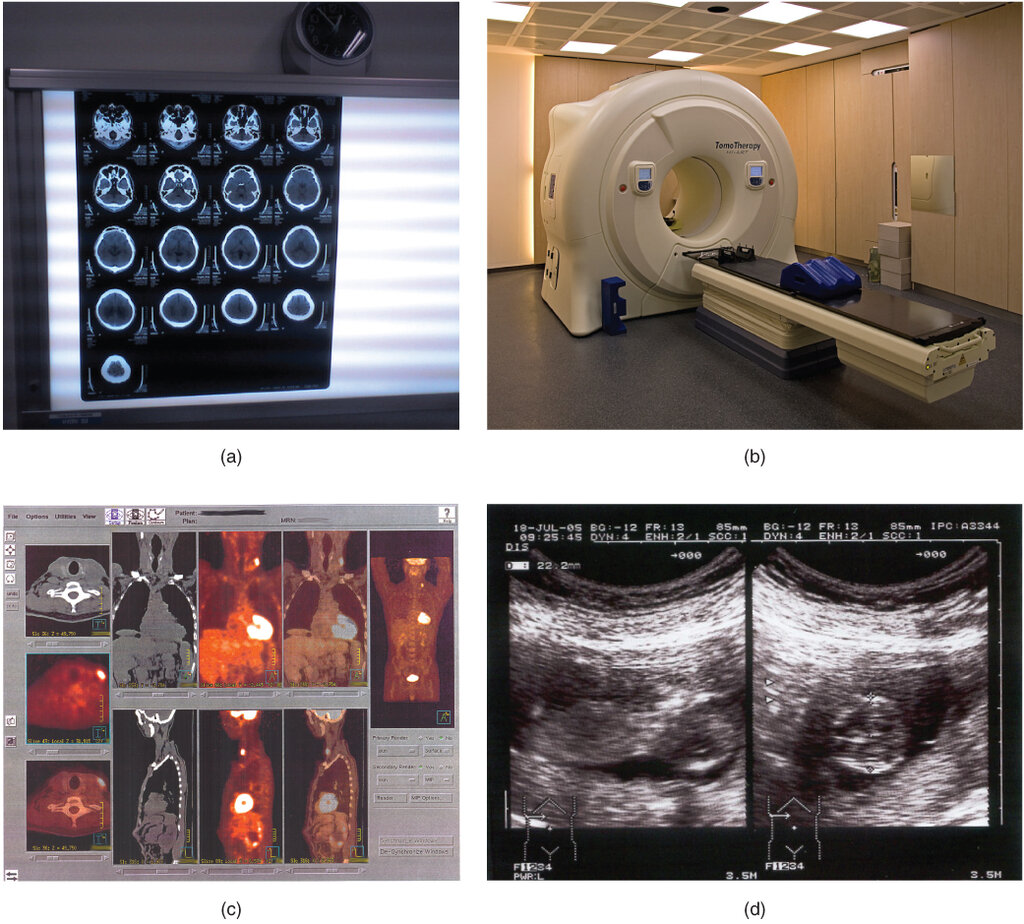
The major modalities that generate DICOM images include:
- Computed Tomography (CT): Creates cross-sectional images using X-rays.
- Magnetic Resonance Imaging (MRI): Uses magnetic fields and radio waves to see inside the body.
- Ultrasound: Uses sound waves to create images of organs and structures.
- X-ray Angiography: Images blood vessels.
- Positron Emission Tomography (PET): Shows metabolic processes in the body.
- Mammography: X-ray imaging of the breast.
Beyond the scanners themselves, DICOM is essential for the systems that store and manage these images. A Picture Archiving and Communication System (PACS) is a medical imaging technology that provides economical storage and convenient access to images from multiple modalities. The entire PACS ecosystem is built on the DICOM standard.
This standardization is what allows a radiologist to pull up a patient's CT scan from last year alongside an MRI from yesterday on their workstation, even if the scans were done on machines from different vendors in different locations.
What was the primary problem that the DICOM standard was created to solve?
A DICOM file is composed of two main parts. What are they?