Diagramming Fundamentals
Diagram Fundamentals
What is a Diagram?
A diagram is a visual explanation. It's a simplified drawing that shows the structure of something or how it works. Think of it as a map for an idea. A city map doesn't show every single tree or mailbox, but it gives you a clear path from one point to another. Diagrams do the same for information.
The main purpose of a diagram is to make complex information simple and easy to grasp at a glance.
Instead of describing a process with a wall of text, you can use a flowchart with boxes and arrows. Instead of listing all the parts of a bicycle in a dense paragraph, you can show a picture with labels. This approach strips away the non-essential details, focusing the viewer's attention on what truly matters: the relationships, the sequence, or the core components.
A Universal Language
Our brains are wired to process images. We can decode visual information much faster than text. This makes diagrams a powerful tool for communication. They can convey a message almost instantly, in a way that words alone often can't.
Diagrams are used everywhere because they work. A biologist uses a diagram to show the parts of a cell. An engineer sketches a circuit to plan a new device. A project manager maps out a team's workflow to keep everyone on track. The visual clarity helps teams collaborate and ensures everyone shares the same understanding.
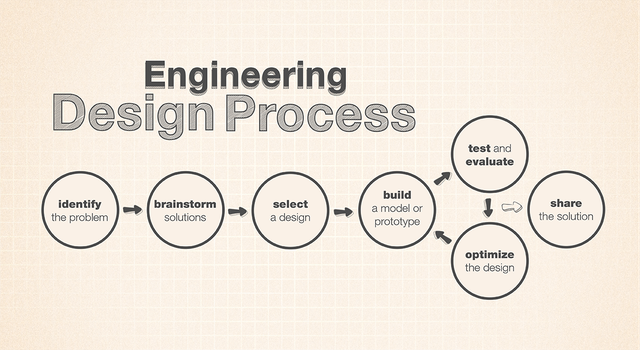
Because they rely on simple shapes and symbols, diagrams can also transcend language barriers. An arrow means "goes to" or "leads to" in any culture. This universality makes them invaluable for sharing knowledge in a globalized world.
Making an Effective Diagram
A good diagram is clear and serves a purpose. A confusing diagram is worse than no diagram at all. Here are three basic principles to keep in mind when you're creating one.
1. Keep it Simple. Don't try to show everything at once. Use basic shapes like circles, rectangles, and arrows. Every line and label should have a reason for being there. If it doesn't add to the understanding, remove it. The goal is clarity, not artistic complexity.
2. Be Consistent. Use a consistent visual language. If you use a rectangle for a step in a process, use rectangles for all steps. If an arrow indicates flow, it should always indicate flow. This consistency helps the viewer understand the rules of your diagram quickly, without having to guess what each symbol means.
3. Label Everything Clearly. Unlabeled shapes are just decoration. Every important part of your diagram should have a concise, easy-to-read label. Place labels close to the elements they describe so the connection is obvious. Avoid jargon and use plain language.
Here is a simple example of a diagram that follows these principles. It shows a basic feedback loop.
Notice how it uses simple shapes, consistent arrows, and clear labels. You can understand the process in seconds.
Time to check your understanding.
What is the primary purpose of a diagram?
According to the text, why are diagrams such a powerful tool for communication?
By mastering these fundamentals, you can create diagrams that clarify complex topics, guide decisions, and communicate your ideas with impact.