Diagrammatic Communication
Introduction to Diagrams
What Is a Diagram?
At its core, a diagram is a simplified drawing that shows the structure or workings of something. Think of it as a visual explanation. Instead of using dense paragraphs to describe an idea, a diagram uses lines, shapes, and symbols to present information clearly and quickly.
Their main job is to make complex topics easier to understand. Whether it’s showing how the water cycle works, how the parts of an engine fit together, or the relationships in a family tree, diagrams strip away the non-essential details to focus on what’s important. They translate intricate concepts into a format our brains can digest more easily.
Diagrams turn complexity into clarity.
A Quick Trip Through Time
Humans have used diagrams for thousands of years. Early star charts carved into stone and maps drawn on clay tablets were some of the first attempts to visualize our world. These weren't just art; they were tools for navigation, agriculture, and understanding the cosmos.
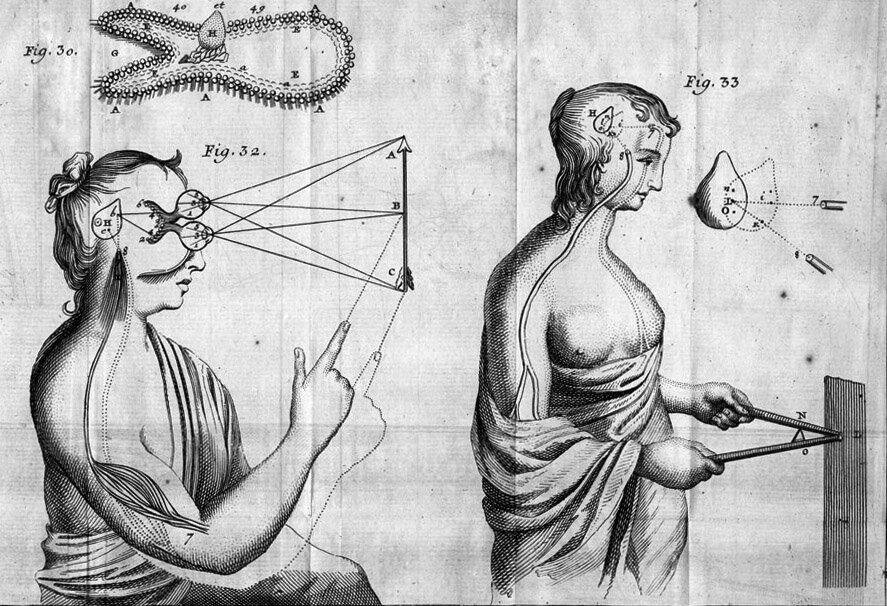
As science and philosophy grew, so did the use of diagrams. Thinkers in ancient Greece used geometric drawings to prove mathematical theorems. During the Renaissance, Leonardo da Vinci’s notebooks were filled with detailed anatomical sketches and inventive machines, all explained through diagrams. With the rise of modern science and engineering, diagrams became an essential language for innovation, allowing people to share and build upon complex ideas across different fields.
Why a Picture Works Wonders
Our brains are hardwired to process visual information incredibly fast. When we see a diagram, we can often grasp the main idea in a fraction of the time it would take to read a description. A wall of text forces us to piece together relationships one sentence at a time, but a diagram presents them all at once.
Imagine trying to assemble a new bookshelf using only written instructions. Now imagine doing it with a step-by-step diagram. The visual guide makes the process much smoother because it shows you exactly how the pieces connect. Words can be ambiguous, but a well-drawn diagram is direct and clear.
Because diagrams are more abstract than objects/manipulatives but more concrete than mathematical symbols, they can provide a valuable bridge between initial and advanced learning stages.
Diagrams Everywhere
Once you start looking, you’ll see diagrams everywhere. They are fundamental tools in almost every field imaginable.
In science, diagrams illustrate everything from the structure of an atom to the flow of energy in an ecosystem. Engineers rely on blueprints and schematics to design and build bridges, electronics, and software. In business, organizational charts show company structure, while flowcharts map out processes to find inefficiencies.
And of course, education relies heavily on them. From the charts on a classroom wall to the illustrations in a textbook, diagrams help us learn new concepts and connect ideas. They are a universal language for explaining how the world works.
What is the primary function of a diagram?
According to the text, why is our brain able to process a diagram faster than a paragraph of text describing the same concept?
Diagrams are powerful because they're simple. By learning how to read and use them, you gain a valuable tool for understanding and communicating complex information in any subject.