DevOps Fundamentals
Introduction to DevOps
Bridging the Gap
In the world of software, two crucial teams have traditionally worked in separate worlds: developers who write the code, and operations who manage the systems that run it. Developers want to push out new features quickly. Operations wants to keep everything stable and reliable. This tension often created a bottleneck, slowing everything down.
Imagine a restaurant where the chefs (developers) are constantly creating new dishes, but the kitchen staff (operations) can't update the menu or equipment fast enough to serve them. The result? Unhappy customers and a stressed-out team. DevOps was born from the need to fix this problem.
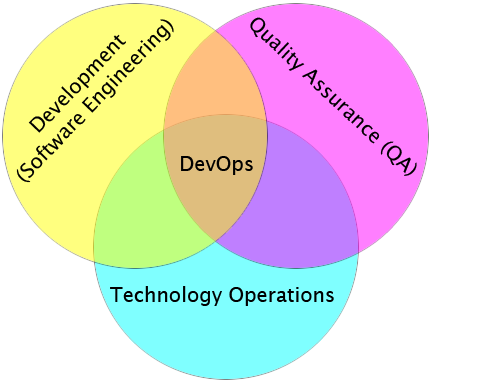
DevOps is a cultural and professional movement that emphasizes collaboration between software developers (Dev) and IT operations (Ops).
The core idea is simple: merge these two teams and their goals. Instead of a linear handoff from “Dev” to “Ops,” they work together throughout the entire software lifecycle, from planning and coding to testing and deployment. This isn't just about using new tools; it's a fundamental shift in culture and philosophy.
Objectives and Benefits
The main goal of DevOps is to shorten the software development lifecycle while delivering features, fixes, and updates that are high-quality and aligned with business goals. By breaking down the silos between teams, companies can achieve some significant benefits.
Faster Delivery: When development and operations teams collaborate, the entire process from writing code to deploying it in a live environment becomes smoother and faster. Automation handles the repetitive tasks, freeing up people to focus on creating value.
Improved Quality and Reliability: With everyone sharing responsibility for both building and running the software, there's a greater focus on quality from the start. Continuous testing and monitoring mean bugs are caught earlier, and systems are more stable.
Enhanced Collaboration: DevOps fosters a culture of shared ownership and communication. This leads to more effective teams, better problem-solving, and a more positive work environment. Everyone is working toward the same goal: delivering a great product to the customer.
The Three Pillars
Three key principles form the foundation of DevOps. While they sound technical, the ideas behind them are straightforward.
1. Continuous Integration (CI)
This is the practice of developers merging their code changes into a central repository frequently. Each time code is merged, an automated build and test sequence is run. This ensures that new code integrates well with the existing code and catches integration bugs early, before they become major problems.
Think of it like multiple authors writing chapters for the same book. With CI, they submit their work to an editor multiple times a day. The editor immediately checks if the new chapter fits with the rest of the book, rather than waiting until the end to find out that all the plotlines are contradictory.
2. Continuous Delivery (CD)
Continuous Delivery takes CI a step further. After the code is built and tested, it's automatically released to a testing or production environment. This doesn't mean every change goes live to customers immediately, but it ensures that you always have a version of your code that is tested and ready to be deployed at the push of a button.
This practice dramatically reduces the risk of releases. Because you're deploying small changes frequently, it's easier to troubleshoot any issues that arise. It makes deployments a routine, low-stress event instead of a rare, high-stakes one.
3. Automation
Automation is the engine that powers CI and CD. The goal is to automate as much of the software delivery process as possible, from building and testing to deployment and monitoring. By automating repetitive and error-prone tasks, teams can work more efficiently and consistently.
Automation is what makes it possible to build, test, and deploy code dozens or even hundreds of times a day. It’s the secret to achieving both speed and stability.
Ready to check your understanding of these core concepts?
What is the fundamental problem that the DevOps methodology was created to solve?
According to DevOps principles, what is the main advantage of making frequent, small deployments instead of large, infrequent ones?
By embracing these principles, teams can build and deliver software faster and more reliably than ever before. DevOps isn't a destination, but a journey of continuous improvement.