DevOps Fundamentals Explained
Introduction to DevOps
What is DevOps?
Software development used to be like a relay race. The development team would build a product and hand it off to the operations team, who would then be responsible for running and maintaining it. This handoff often created a wall of confusion, with developers focused on creating new features and operations focused on keeping everything stable. When things went wrong, it was easy for each side to blame the other.
DevOps changes this dynamic. The term itself is a blend of "Development" and "Operations." It’s a culture and a set of practices that bring these two teams together, encouraging them to work collaboratively throughout the entire software lifecycle, from design to development to production support.
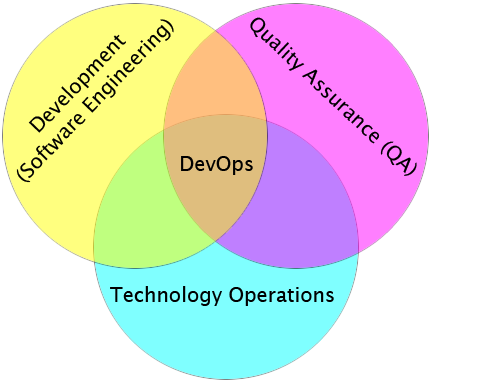
This approach emerged in the late 2000s, growing out of the Agile software development movement. While Agile helped teams build software in smaller, faster cycles, DevOps extended those principles to include the delivery and operational phases. The goal is to break down the silos between teams to create a single, unified process.
DevOps is a set of practices that combines software development (Dev) and IT operations (Ops) to shorten the software development lifecycle, deliver features, fixes, and updates frequently in close alignment with business objectives.
Objectives and Benefits
Why do companies adopt DevOps? The primary objective is to improve the flow of work from idea to reality. By uniting development and operations, teams can build, test, and release software faster and more reliably. This leads to several key benefits.
First, speed increases dramatically. With automated processes and better collaboration, teams can deploy new features and bug fixes much more frequently. This faster delivery cycle means businesses can respond to customer needs and market changes more quickly.
Second, product quality and reliability improve. When developers and operations staff share responsibility for the software, they build a better understanding of the entire system. This shared ownership, combined with frequent testing, helps catch bugs earlier and leads to more stable releases.
Ultimately, DevOps helps teams deliver better products to customers faster and with fewer issues.
Finally, collaboration gets a boost. Breaking down barriers fosters a culture of mutual respect and trust. Teams communicate more effectively, solve problems together, and become more efficient and innovative.
Core Principles
DevOps is guided by a few core principles that make this collaborative workflow possible. While there are many practices involved, three concepts form the foundation: continuous integration, continuous delivery, and automation.
Continuous integration (CI) and continuous deployment (CD) are at the heart of DevOps.
Continuous Integration (CI) is the practice of developers frequently merging their code changes into a central, shared repository. Each time code is merged, an automated process kicks off to build the software and run a suite of tests. This ensures that new changes integrate smoothly with the existing code and helps teams detect and resolve issues quickly, long before they reach production.
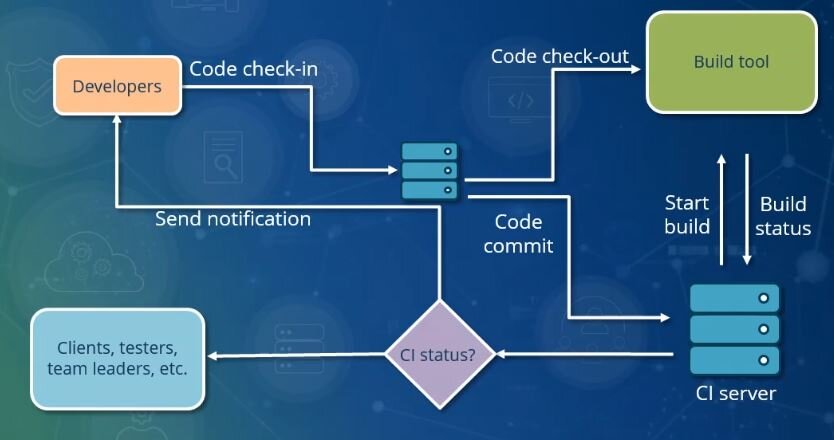
Continuous Delivery (CD) is the next logical step after CI. It automates the release of that validated code to a repository. With continuous delivery, you can decide to release new changes to your customers with the click of a button. The process ensures that you always have a version of your software that's been tested and is ready for deployment.
Automation is the engine that powers both CI and CD. DevOps culture emphasizes automating as much of the software development and deployment pipeline as possible. This includes everything from testing and code integration to infrastructure setup and deployment. Automation reduces the chance of human error, frees up developers and engineers to focus on more complex tasks, and ensures the entire process is repeatable and consistent.
What primary problem did the DevOps approach aim to solve in traditional software development?
Which of the following best describes the practice of Continuous Integration (CI)?
By embracing these principles, teams can create a smooth, efficient pipeline for delivering high-quality software.