DevOps Fundamentals
Introduction to DevOps
What Is DevOps?
Imagine a team of chefs (developers) and a team of waiters (operations). The chefs create amazing new dishes, but they just throw them onto a counter without talking to the waiters. The waiters have no idea what the dish is, who it's for, or if it needs to be served hot or cold. The result? Confused waiters and unhappy customers.
For a long time, this is how software was made. Developers would write code and then “throw it over the wall” to the operations team, who were responsible for running it. When something broke, the finger-pointing would begin. Was it bad code, or was it a problem with the servers?
DevOps was created to tear down that wall. It's a combination of cultural philosophies, practices, and tools that increases an organization's ability to deliver applications and services at high speed.
The name itself is a blend of “Development” and “Operations,” reflecting its core mission to unite these two worlds.
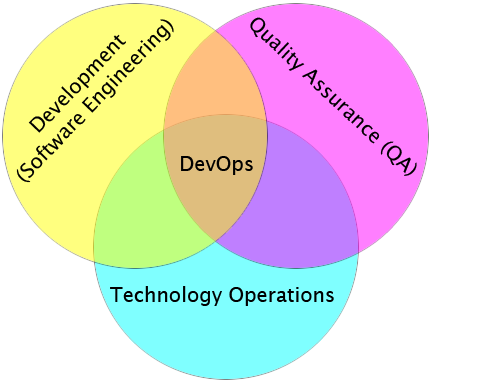
This approach evolved from Agile software development, which helped teams build software in smaller, faster cycles. But Agile mostly focused on the development part. DevOps extends those ideas all the way through to getting the software into the hands of users and keeping it running smoothly.
Why Does It Matter?
In today's world, companies need to move fast. They need to release new features, fix bugs, and respond to customer feedback quickly to stay competitive. The old, siloed way of working was slow, inefficient, and prone to errors. A simple update could take months to release.
DevOps changes that. By getting teams to work together and automating key processes, organizations can release software much more frequently and reliably. This means customers get new features faster, and the business can adapt to market changes without delay.
DevOps is a set of practices intended to reduce the friction between the software development (Dev) and the IT operations (Ops), resulting in higher quality software and a shorter development lifecycle.
Faster, more frequent releases also mean that when bugs do appear, they are usually smaller and easier to fix. The entire process becomes less risky and more predictable.
The Core Principles
DevOps isn't a specific tool you can buy or a job title you can assign. It's a mindset built on a few key principles.
Collaboration
The first and most important principle is collaboration. Instead of separate teams with separate goals, DevOps creates a single team with shared responsibility for the entire product lifecycle. Developers, operations engineers, quality assurance testers, and even security experts all work together from start to finish.
This shared ownership means everyone is invested in the final product's success. Communication is constant, feedback is welcome, and the focus is on solving problems together, not blaming others.
Automation
Humans are great at creative problem-solving, but we're not so great at performing the same repetitive task perfectly every single time. That's where automation comes in. The goal of DevOps is to automate as much of the software delivery process as possible, from building the code to testing it and deploying it to production.
The foundation of DevOps is automation, which improves efficiency across the software development lifecycle (SDLC) by automating repetitive processes.
Automation makes the process faster, more reliable, and less prone to human error. It frees up people to focus on tasks that require critical thinking and creativity, like designing new features or improving system performance.
Continuous Improvement
DevOps is not a destination; it's a journey of continuous improvement. Teams are always looking for ways to make their processes better, faster, and more efficient. This involves a tight feedback loop.
Teams release small updates frequently, monitor their performance closely, and use that data to make decisions. They learn from their failures, celebrate their successes, and constantly refine their workflow. This creates a culture where experimentation is encouraged and learning is a core part of the job.
Continuous learning is a critical component of DevOps.
Ready to check your understanding of these core concepts?
What is the primary problem that DevOps aims to solve?
How does DevOps relate to the Agile software development methodology?