DevOps Fundamentals
Introduction to DevOps
What Is DevOps?
In traditional software companies, there used to be a wall between developers and the operations team. Developers (Dev) would write code and then toss it over the wall to Operations (Ops), who were responsible for deploying and maintaining it. When something broke, finger-pointing was common. Dev would blame Ops for messing up the deployment, and Ops would blame Dev for writing buggy code.
This created slow, painful release cycles and a lot of frustration. DevOps emerged as a way to tear down that wall. It's not a specific tool or a job title, but a culture and a set of practices that bring development and operations teams together. The goal is simple: to build, test, and release software faster and more reliably.
DevOps combines people, processes, and technology to deliver value to customers continuously.
This approach grew out of the Agile software development movement. While Agile helped teams build software in small, quick iterations, it didn't solve the problem of getting that software into the hands of users. DevOps extends Agile's principles to cover the entire delivery pipeline, from a developer's keyboard all the way to production.
The Core Principles
DevOps is guided by a few key principles that work together to speed up and stabilize software delivery.
Collaboration is the foundation. Instead of working in separate silos, Dev and Ops teams work together, sharing responsibility for the software's entire lifecycle. This means better communication, shared goals, and faster problem-solving.
Automation is another pillar. Repetitive, manual tasks are prone to human error and slow things down. DevOps teams automate as much as possible, from building and testing code to deploying it. This frees up people to focus on more valuable work and ensures processes are consistent and repeatable.
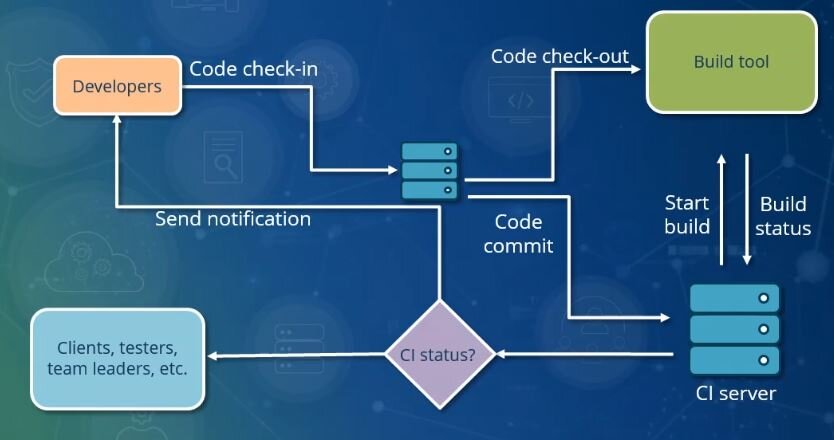
This leads us to Continuous Integration (CI) and Continuous Delivery (CD). CI is the practice of developers merging their code changes into a central repository frequently. Each merge triggers an automated build and test sequence. This helps catch bugs early, before they become bigger problems.
Continuous Delivery takes this a step further. After the CI stage passes, the code is automatically released to a testing environment. The goal is to always have a version of the software that is ready to be deployed to users with the push of a button. Some teams even practice Continuous Deployment, where every change that passes all the automated tests is automatically deployed to production.
Finally, there's monitoring. Once the software is live, DevOps teams continuously monitor its performance and stability. This provides a constant feedback loop, helping teams understand how their changes affect users and allowing them to spot and fix issues quickly.
Why It Matters
Adopting DevOps isn't just about changing how teams work; it's about delivering better results for the business. Organizations that embrace DevOps can release new features much more quickly, giving them a competitive edge. Think weeks or days instead of months or years.
Because the process is automated and changes are small and frequent, the final product is also more stable and reliable. When issues do occur, the team can respond and fix them faster. This improved workflow also leads to more productive and engaged teams, as they spend less time on manual chores and more time creating value.
DevOps is not just a set of tools; it's a cultural shift.
This is perhaps the most important takeaway. While there are many tools that support DevOps practices, the real change happens in the team's mindset. It’s about fostering a culture of shared responsibility, where everyone feels ownership over the product's success. It’s also about continuous improvement, where teams are always looking for ways to make their processes better and learn from their mistakes without blame.
Ready to check your understanding of these core concepts?
What primary problem in traditional software companies did the DevOps movement emerge to solve?
Which of the following best describes the core idea of Continuous Integration (CI)?
By focusing on collaboration and continuous improvement, DevOps helps teams build and deliver software that better meets the needs of their users.